Years ago, I tried working the way all the productivity books told me to work.
I configured Outlook to check my email only twice a day. I opened Slack only a few times. Everyone I worked with knew that if something was genuinely urgent, they could call or text me.
Almost no one did.
The system worked. I could concentrate. I was able to stay with difficult work for longer than a few minutes at a time.
My boss told me explicitly that I seemed aloof.
And I was punished for it.
I was ostracized. People spoke badly about me when I was not around. I was put on a performance improvement plan despite delivering exceptional results. I was responsible for more revenue and more revenue growth than either of the other two people with my job title, yet I was paid 25 percent less.
The organization benefited from the results while penalizing the way of working that helped produce them. The habits that made me more productive also made me less integrated into the team. I eventually hated working there. I spent two and a half years trying to make it work. The day they put me on the PIP, I quit. That was one step too far.
At the time, I thought I had solved the problem: control the notifications and protect the calendar. I had solved the mechanical part. I had not accounted for what my availability meant to everyone else.
That is why so many people can follow all the productivity advice and still be unable to do meaningful work. Focus is governed by the people around us.
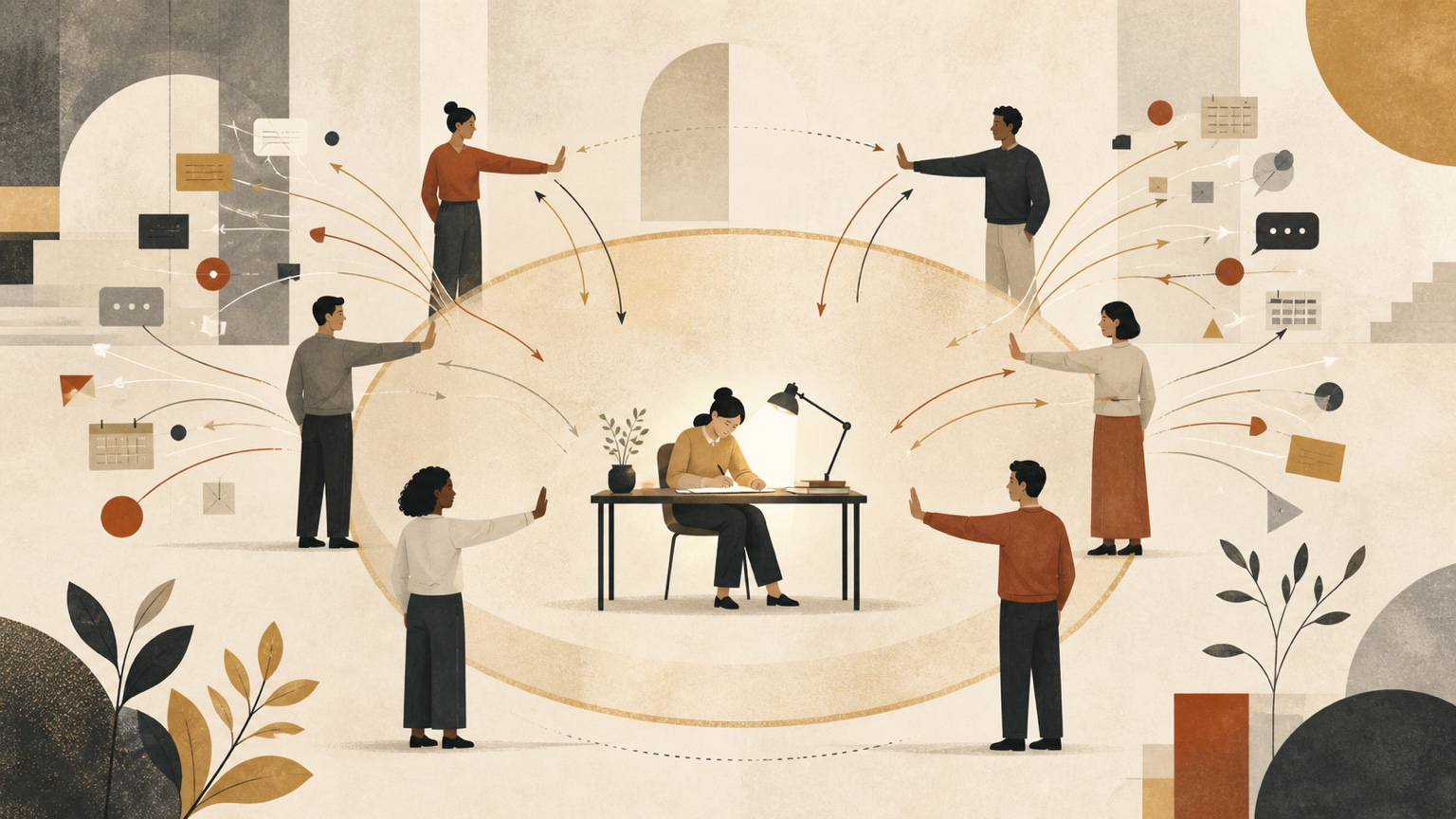
You can block your calendar and turn off every notification. If the people around you treat unavailability as a problem, you still do not have permission to focus.
We usually treat concentration as a matter of personal discipline. Turn off notifications. Block your calendar. Put your phone in another room. Learn to say no. Wake up earlier. Find the right application, routine, or method.
Those practices can help. They do not change what happens when your manager changes your priorities, a colleague treats every message as urgent, a client expects an immediate answer, or your team interprets delayed responsiveness as a lack of commitment.
We experience distraction individually, so we assume we should fix it individually.
In most workplaces, though, the people around us help create distraction and enforce the expectations that keep it going.
Productivity is social
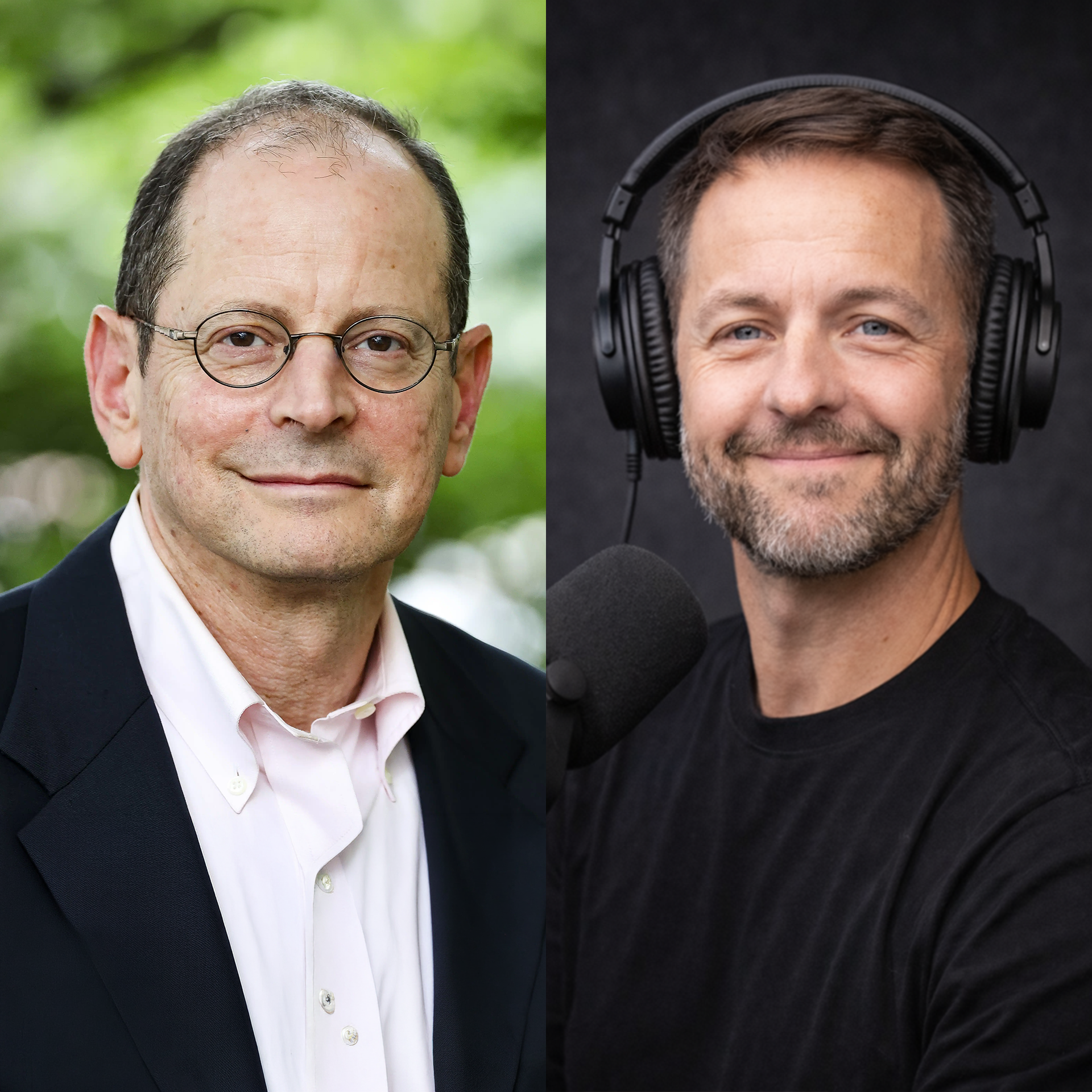
Shawn Vanderhoven came to a similar conclusion through a three-year study of leaders and teams. In my conversation with him for The Unfolding Thought Podcast, he explained that he and his collaborators began by asking a straightforward question: what prevents people from doing their best work?
A consistent answer was that people could not get deep. They were asked to switch tasks continually. Priorities kept changing. The people around them, often without intending to, made sustained attention nearly impossible.
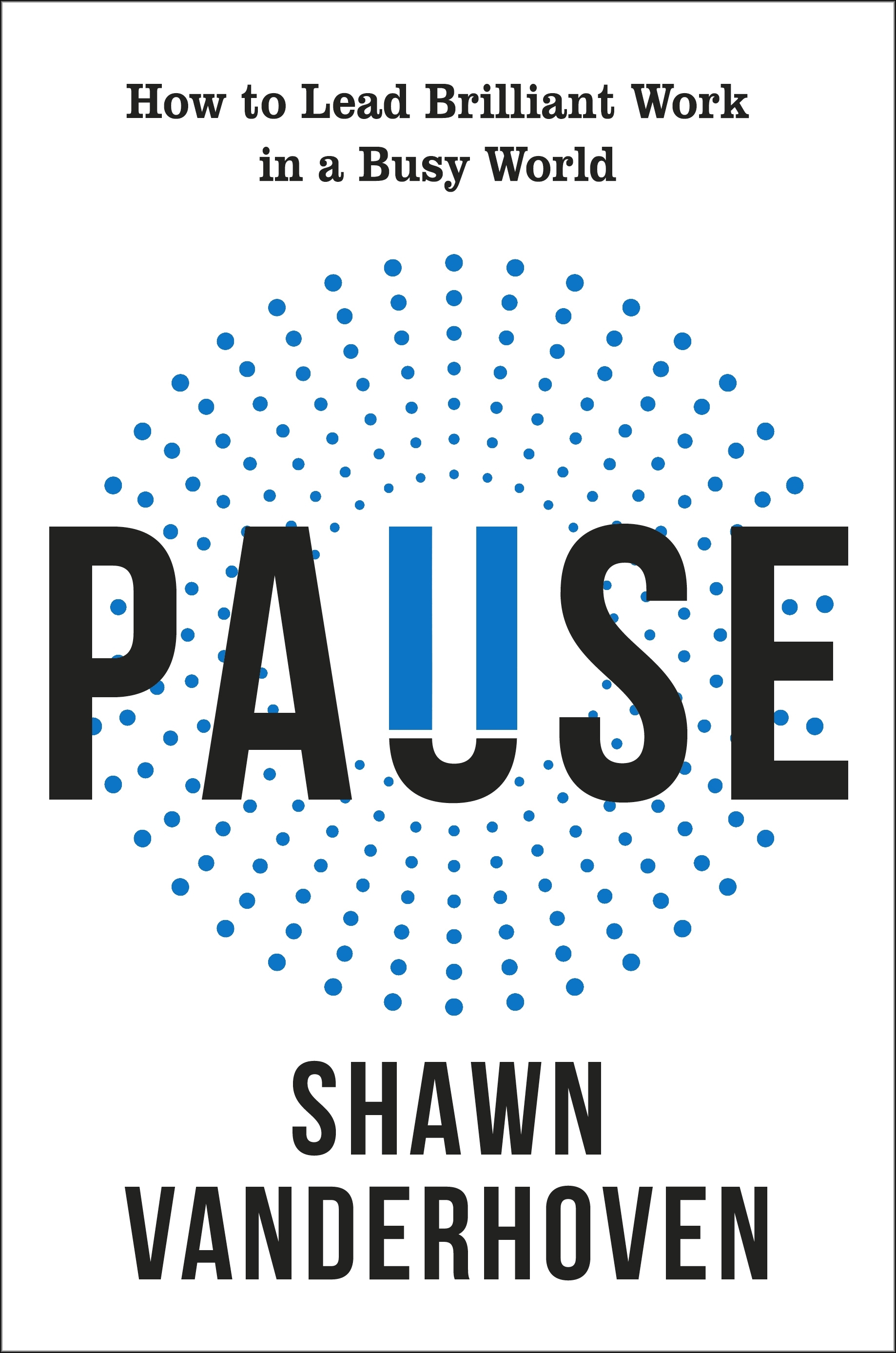
Vanderhoven and his team then studied leaders from 150 companies who appeared to create the opposite conditions. In Pause: How to Lead Brilliant Work in a Busy World, he reports that teams led by people who deliberately pause spend three times as much time on their largest projects.
The important word is led.
Vanderhoven is not saying that individuals have no responsibility for their attention. In our conversation, he acknowledged that unusually disciplined people can create a substantial amount of focus even in distracting environments. The problem is that they often pay for it socially. They are described as detached, unresponsive, inflexible, or difficult.
That describes what happened to me. My system protected my concentration, but it did nothing to protect my standing with the group.
Work depends on other people. We need information, decisions, cooperation, and trust. We also want our managers and colleagues to see that we are contributing. Once a group treats immediate availability as evidence of cooperation, focus starts to look like withdrawal. That becomes especially problematic in a remote environment, where managers cannot see you sitting at your desk, attending meetings, having conversations, or look over your shoulder to see what you are working on. They might read your apparent disconnection as you being out mowing the lawn or getting groceries while they are paying you to work.
The problem is not imaginary. Sophie Leroy’s research on attention residue found that when people switch away from unfinished work, part of their attention remains with the original task. They might have moved to the next meeting or message physically, but not cognitively. Research on collaboration overload has also shown how structures intended to increase cooperation can slow decisions, overwork employees, and place especially heavy demands on high performers.
Microsoft’s 2025 examination of workplace activity describes what this looks like at scale. Its telemetry showed a workday crowded with email, messages, meetings, and app switching. In the accompanying survey of 31,000 knowledge workers across 31 markets, 48 percent of employees and 52 percent of leaders said their work felt chaotic and fragmented. The widely repeated figure of 275 daily interruptions applies to the most heavily pinged 20 percent of users, so it should not be mistaken for the experience of every employee. Even with that qualification, the larger pattern is hard to miss: many companies have made near-continuous access to coworkers feel normal. Microsoft calls it the infinite workday.
The problem is not personal
If distraction were primarily an individual failure, personal productivity advice would be enough. We could teach people to manage their notifications and calendars, then hold them accountable for concentrating.
But a notification is only the final delivery mechanism. Someone decided to send the message. Someone created the expectation that it should receive a quick response. Someone scheduled the meeting, added another priority, or delegated a task without discussing what it would replace.
Vanderhoven calls the trail of distraction a leader leaves behind a digital wake. A manager might be highly focused on an important outcome while remaining unaware that each new request is fragmenting the attention of several other people. The manager experiences momentum. The team experiences interruption.
This can happen even when every request is reasonable. In fact, that might be the harder problem we have to solve.
Stephen Covey’s familiar illustration of priorities used a jar, large rocks, and pebbles. Put the large rocks in first, then allow the pebbles to fill the remaining space. Vanderhoven argues that the modern workplace has outgrown the illustration. The problem is no longer too many pebbles. We have more large rocks than the jar can hold.
Most of the opportunities in front of us might be genuinely worthwhile. The proposed campaign could work. The product improvement could matter. The client request is legitimate. The new AI initiative might eventually be essential. We still cannot do all of them well at the same time.
Once the jar contains more large rocks than it can hold, calling all of them priorities stops being useful. Someone has to decide what will not get done.
That decision belongs to leadership because employees cannot resolve conflicting organizational commitments on their own. If a manager announces three priorities while leaving ten existing obligations untouched, the team does not have three priorities. It has thirteen pieces of work and an additional burden: deciding which promises it is safe to break.
One of the practices Vanderhoven describes is exposing this hidden workload. After leaders identify the work that supposedly matters most, they ask people to put everything else they are still expected to do on the table. Only then can the group decide what to stop, shrink, postpone, or reassign.
Until the hidden work is visible, a new priority is simply another demand. Putting everything on the table reveals what the organization is actually committed to doing.
Deep work is not isolation
If distraction is social, it can be tempting to solve it by reducing the number of people, conversations, and interruptions around us. I understand the impulse. It is essentially what I tried years ago. The problem is that too much isolation carries its own cost.
In my earlier episode of The Unfolding Thought Podcast with Neel Doshi, he told me about an engineer who realized he had not spoken with anyone at work in four days. That might sound like an extraordinary opportunity for deep work. It could also produce loneliness, detachment, and the sense that the work is no longer connected to anything larger than the task itself.
Shawn made a useful distinction in our conversation: struggle can come from too much connection or too little. A person in meetings all day might be unable to think. A person working almost entirely alone might spend just as much cognitive energy wondering whether anyone sees the work, whether it matters, and whether they still belong.
A randomized experiment by Ethan Bernstein, Jesse Shore, and David Lazer helps explain why neither extreme works. The researchers compared groups with constant interaction, no interaction, and intermittent interaction. Constant interaction raised the average quality of solutions but made it less likely that a group would discover the best one. Isolation encouraged exploration but produced less consistent performance. Groups that interacted intermittently got the benefits of both. They could learn from one another without losing the independent exploration that led to better solutions.
What I take from that study is that good work needs a rhythm. We need time when nobody else can get at the problem through us, and we need regular points at which other people can challenge what we are seeing. Either extreme makes failure more likely.
A workable social contract defines when access is actually necessary and when concentration will be protected. It does not require everyone to disappear.
AI creates capacity
Imagine two similar companies adopting the same AI tools. One uses them to remove administrative work and return time to research, judgment, and thought. The other turns every saved hour into more assignments and expects every employee to cover more ground. Both can report a productivity gain, but they are building very different kinds of companies.
Shawn described this. AI makes it possible for him to take on work outside his normal expertise. The output might look good enough, particularly when he does not know the field well enough to recognize what is missing. When AI works in an area he understands deeply, however, he can see the distance between a plausible draft and excellent work.
AI can produce an answer. The harder question is whether the user knows enough to judge what it produced, another thing Neel Doshi and I touched on in our podcast discussion.
The research so far gives us good reason to take that problem seriously. A field experiment involving 758 Boston Consulting Group consultants found substantial improvements in speed and quality for tasks within the capabilities of the AI system used in the study. For a task outside that capability frontier, however, consultants using AI performed worse. The researchers call this the jagged technological frontier: two tasks that appear similarly difficult to a person might fall on opposite sides of what AI can do reliably.
This does not mean the productivity gains are imaginary. In a study of 5,179 customer-support agents, access to a generative AI assistant increased issues resolved per hour by about 14 percent on average. The largest improvements went to less experienced and lower-performing workers, while the most experienced workers saw little benefit. The results suggest that AI can spread effective practices, but they also show why it is misleading to speak of a single universal productivity effect.
A 2025 study of 319 knowledge workers adds another caution. Higher confidence in generative AI was associated with less self-reported critical-thinking effort, while greater confidence in one’s own ability was associated with more. This was a survey, not a causal experiment, so it does not prove that AI weakens thought. It does suggest that the way people understand their own responsibility changes when a confident machine enters the workflow.
Leaders can easily misread all of this. If AI reduces the time needed to produce an artifact, they might conclude that people need less time for the work. But production is only one part of knowledge work. Someone still has to choose the problem, define what good looks like, examine the result, notice what is absent, understand the consequences, and take responsibility for the decision.
Better tools can increase the need for thought because they give us many more possibilities to evaluate. A cheap draft is useful only if someone still knows how to decide whether it is good.
When AI saves five hours, the important management decision comes next: will those hours improve the work, or will they simply be filled with more work?
Who owns the time AI saves?
Suppose an AI tool saves an employee five hours each week.
What happens next?
Does the employee spend some of that time investigating a harder question, improving the work, learning something new, or talking with the people affected by it? Or does the organization immediately add five hours of additional assignments?
I think most companies will not answer explicitly. The calendar will answer for them. Once people can produce drafts and analyses faster, managers will ask for more of them. A person who can monitor three agents will be asked to monitor ten. The saved time disappears because there is always another worthwhile thing the company could do. It gets replaced by more volume, not more quality.
You can see the sensitivity to that tradeoff in the reaction to apparent “AI slop.” Someone comments on a social media post and gets told it must have been written by AI, even when it was not. This has happened to me. The person is reacting to the feeling that you are pushing quantity ahead of quality.
This is how AI could accelerate a company into having almost no deep work at all. It will not need to distract people in the familiar way. It can remove individual tasks while increasing the number of active projects, decisions, reviews, and conversations competing for attention.
Microsoft’s infinite-workday report makes the same danger unusually explicit: AI might offer a way out, but without a redesigned rhythm of work, companies risk using it to accelerate a broken system.
We should use the capacity, but we also need to decide what we want it for.
An AI-generated meeting summary should let some people skip the meeting. A first draft should leave more time to challenge its assumptions, not automatically create demand for three more drafts. Faster research should make room for a better decision about which evidence matters. Automated administrative work should give some time back to the work that still requires expertise.
None of those outcomes will happen because the tool makes them inevitable. They happen when leaders choose not to consume every minute the tool saves.
A social contract for focus
Leaders do not need to redesign the entire organization before they can improve the conditions for deep work. They do need to stop treating concentration as a private preference that employees should defend by themselves.
Make priorities include the work that will stop
If a new priority does not remove or shrink anything already on someone’s plate, it is another assignment. Put the existing work next to the new request and decide what stops.
Turn delegation into a discussion of tradeoffs
Before assigning new work, ask what the person is currently doing, what accepting the new task would displace, and what help would make the change possible. The question is not simply whether the new request matters. It is whether it matters more than the work it will replace.
Establish shared rules for access
Teams need to know what deserves an immediate response, which channels carry urgent requests, when delayed responses are acceptable, and how protected concentration will be communicated. A leader can use personal credibility to make focus socially safe. Employees should not have to appear uncooperative in order to think.
Design a rhythm between solitude and collaboration
Do not rely on constant availability to create connection, and do not rely on isolation to create focus. Give people predictable stretches to work independently and purposeful opportunities to compare, question, and reconnect.
Decide what AI-generated capacity is for
Do not measure the change only by counting output. Look at whether decisions improve, people learn faster, or the most important work receives more attention. If every efficiency gain creates another commitment, AI has not protected attention. It has increased throughput.
A useful place to begin is with the question Shawn recommends that leaders ask their teams:
What is distracting us right now, and what can we do together to win that attention back?
The work AI cannot do for us
Individuals still have responsibility for how they use their attention. No organizational policy can make someone care about excellent work. No manager can remove every interruption, and no team can protect unlimited periods of concentration.
But people cannot productivity-hack their way out of a culture that continually places belonging, responsiveness, and focus in conflict.
AI is making this conflict harder to ignore. We are able to create more, answer faster, and take on work that once seemed beyond our capacity. None of that tells us which opportunity deserves attention, when a plausible answer needs another hour of thought, or how to protect the relationships that make difficult work worthwhile.
Those are leadership decisions.
If a company consumes every minute AI saves, it might become faster while also becoming busier and shallower. Reserving some of the time for judgment, learning, and concentration would be a deliberate choice. It will not happen on its own.
AI will give many of us more time to think. Whether anyone is allowed to use it that way will depend on the people around them.

Listen to my full conversation with Shawn Vanderhoven on The Unfolding Thought Podcast.
Shawn’s book, Pause: How to Lead Brilliant Work in a Busy World, written with Anne Vanderhoven, is available from Amazon and other booksellers.