
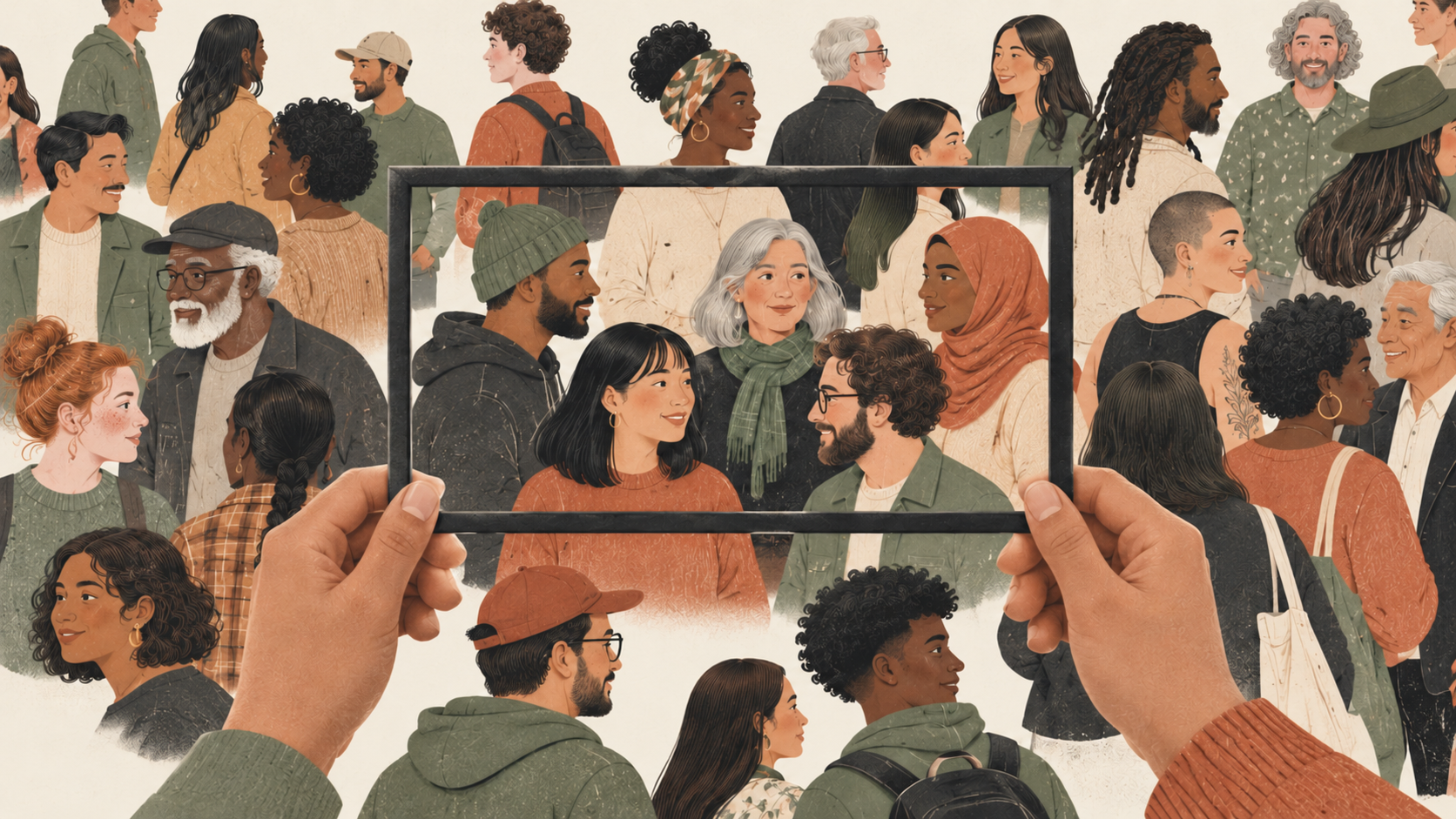
Meeting people unlike you can change your understanding of the world. It can also leave you much too confident that you understand it.
I was warming up our U11 club soccer goalie at practice one night when I asked whether he’d been going to the club’s goalkeeper sessions. He had. I asked whether a particular coach was running them, but he wasn’t sure who I meant.
I described the coach as having somewhat long hair.
Goalie: “Is he like you?”
Me: “How?”
Goalie: (hesitating) “Kind of short.”
I’m six feet tall. This seemed like relevant information.
I pointed out that, while I’m not super tall, I am taller than average.
His dad is considerably taller than I am. The goalie himself, although a bit shorter than me, is very tall for his age. I suspect both had something to do with my being classified as short. I pointed that out too. Apparently, goalkeeper practice now included a defense of my height.
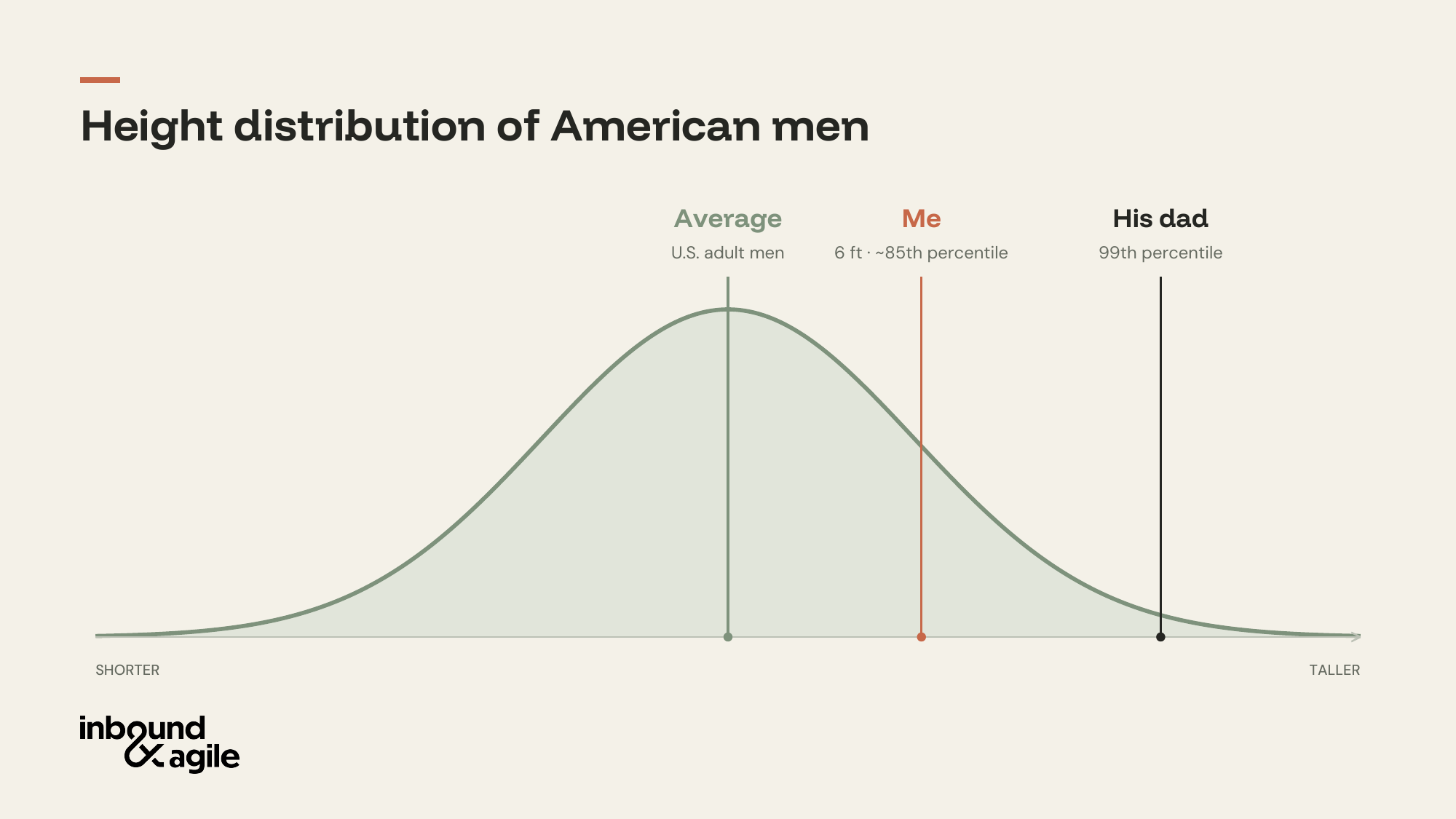
At six feet, I’m taller than about 85% of American men. His father is farther out toward the tall end of the curve. I’m closer to the average, but that doesn’t mean I’ll feel more typical to a kid who sees his dad every day.
He sees people of all sorts of heights. My guess is that his deep, recurring exposure to one especially familiar person carries more weight in his idea of what a grown man looks like.
I have a measurement. He has a dad.
What I’m interested in is how often the rest of us do some version of this with things that are considerably harder to measure.
We have our families, coworkers, friends, the people we went to school with. We hear their stories, watch their choices, learn what matters to them. Eventually, some of that becomes our understanding of how people are. And because we know these people well, that understanding feels earned.
And then we meet someone who doesn’t fit.
What do we do with that person?
The story wasn’t necessarily wrong
In my conversation with sociologist Ilana Redstone, author of The Certainty Trap, she told me about a friend who was having a serious disagreement with her husband.
The friend had a professional-development trip coming up. Her husband had a guys’ trip of his own planned around the same time. Given the strain in their marriage, he suggested that neither of them travel.
Ilana got angry on her friend’s behalf. This was a work opportunity, something her friend didn’t do often. His recreational trip wasn’t the same thing. The proposal sounded controlling.
Then, her friend came back with more context. Her husband was worried about what being apart during that conflict might mean for their marriage. Ilana could now see a reason for his proposal that didn’t depend on him being manipulative.
She hadn’t decided that he was necessarily right. She no longer needed a bad motive to explain his proposal.
The correction came from the same friend. Nobody needed to have lied. Ilana had heard something true and supplied an explanation it didn’t establish. We all do this. Constantly. The proposal to cancel the trips was one thing. The motive she attributed to it was another.
This is what makes her work more useful to me than a general appeal to be nicer. She wants us to get specific about what we think we know. What happened? What do we think caused it? What are we trying to accomplish? Which of those are we actually disagreeing about?
During our conversation, I connected this to culture. The people around us can agree about the missing part so thoroughly that we start treating an explanation we supplied as a fact. Now we have each other’s agreement as another reason to be certain.
That doesn’t require a room full of people who look alike.
Different people, some of the same filters
Let’s say you go to college and meet people whose lives have been very different from yours. Different religions, nationalities, family circumstances. You learn things you couldn’t have learned at home.
But look at what everyone you’re meeting has in common: they arrived at that university.
Imagine a university where the typical student scored between 1,200 and 1,400 on the SAT. Some scored lower and some higher, but most of the classmates you get to know come from that band. You could meet people from twenty countries while spending most of your time inside a narrow slice of the distribution.
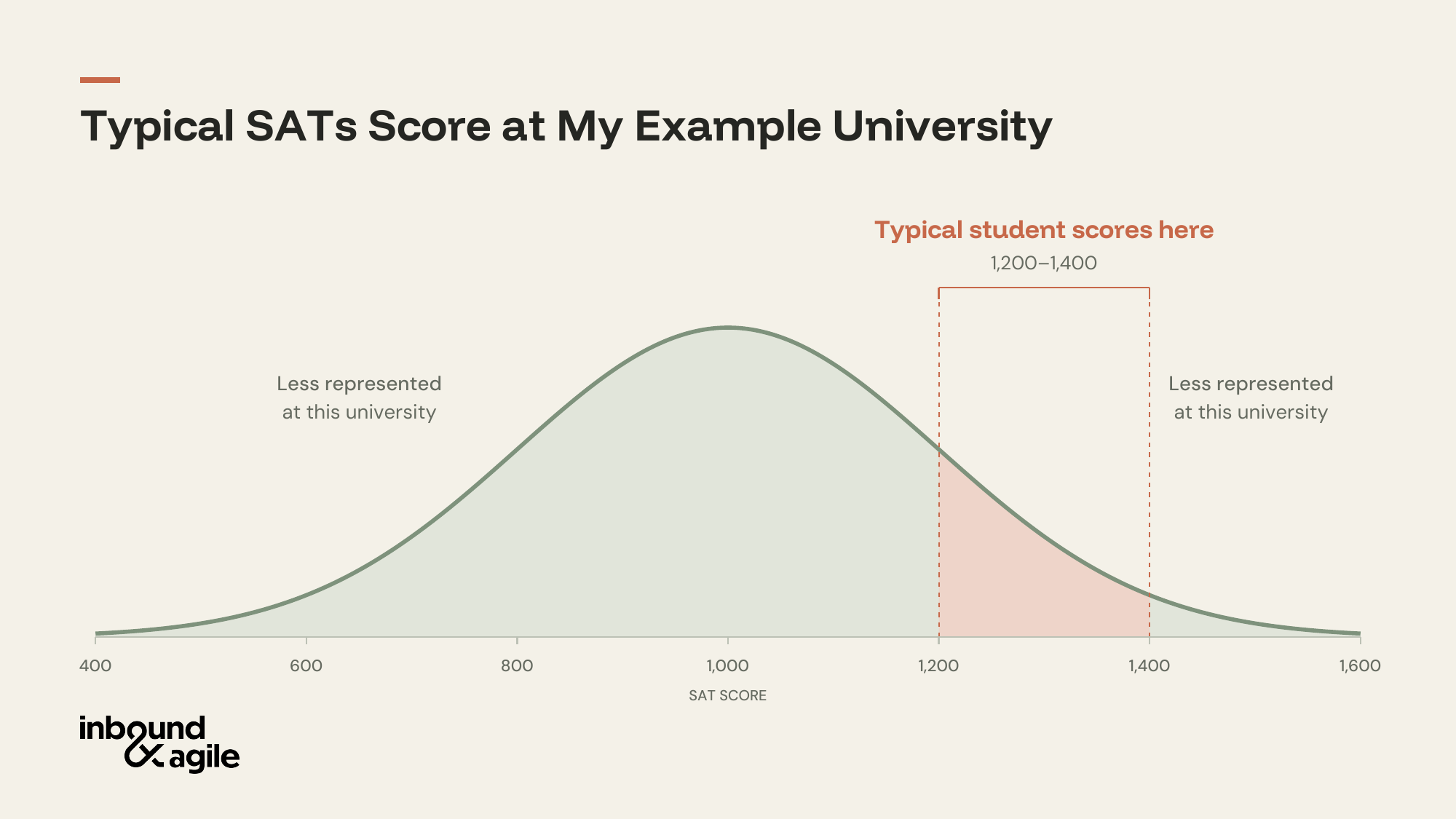
The university didn’t just select a set of SAT scores with shoes, jackets, and backpacks hanging off them. It selected people, along with the backgrounds and experiences they bring.
And this isn’t just about how biased or blind smartypants college people are. If I knew everyone on a poor block in Los Angeles, that wouldn’t make it a representative sample of the country either, even if we looked like a Little Rascals version of a United Colors of Benetton ad.

I grew up listening to Canadian radio and watching Canadian TV, then went to college 20 minutes from the border. My friends and I often crossed into Canada to go to comedy clubs.
For someone with less exposure than I’d had, those trips could feel like finally finding out what Canadians are like. But the Canadians we met were the ones at those clubs. Anyone too young, too far away, uninterested in comedy, or just unwilling to leave the house at night was missing. That last group now includes me. Apparently, I’m not just short. I’m also old…and boring.
During my MBA studies, I had a classmate from Saudi Arabia. I don’t recall having met anyone from there before, and I’d never had any deep interactions with a follower of Islam. Did getting to know him teach me far more than I knew before? For sure.

But even if I’d gotten to know 20 Saudi classmates, I’d still have met 20 people who had made it to the same American university. I’d know more about their experiences without knowing how typical those experiences were of Muslim men in Saudi Arabia.
The mistake comes when I turn “this is what my friend is like” into “this is what those people are like.” Limited experience becomes the basis for a claim about millions of strangers.
Malcolm X wrote in his autobiography about how his pilgrimage to Mecca challenged his beliefs about race and Islam. He had been a prominent minister in the Nation of Islam. Yet, years as a minister had not prepared him for the diversity of skin colors and interracial fellowship he encountered on the Hajj.
Knowing my groups well gives me a convincing reason to trust my judgment. I’m not making things up. I can name names. I can tell stories.
That’s what makes this blind spot so easy to miss. Meeting people unlike me can correct something I was wrong about and give me more confidence in a much larger claim I’ve never tested.
I mistake the range of people I know for the range of people there are.
The differences I haven’t learned to see
But even when someone makes it into my circle, I can miss what distinguishes their experience from other people’s.
In Persuade, Andres Lares and his coauthors tell a story about Australian courtroom wigs. Jeff Cochran asked Peter Dunning, who served as Queensland’s Solicitor-General, why lawyers wore them. Dunning explained that the wigs helped put everyone on the same level by reducing distinctions of appearance and status. So everyone looks the same, and the arguments can do the work, right?

Nope. Dunning acknowledged that he could tell an expensive wig from a cheap one.
If I walked into that courtroom, I might see a room full of people dressed alike. Someone who worked there could see distinctions I hadn’t learned to recognize. We could be looking at exactly the same people and noticing different things.
I can get to know someone whose life differs considerably from mine without understanding how their life differs from other people I would put in the same group. I might notice the religion we don’t share while missing differences in class, upbringing, or religious practice that matter enormously to them.
And my experience doesn’t come with a list of everything I failed to notice. I can feel increasingly familiar with a group while remaining unaware of distinctions its members navigate every day.
When the unexpected person becomes the problem
These gaps matter when I start making decisions for people I think I understand.
In a study of wealth perceptions, wealthier American participants assumed that the social circles and economic status of others was closer to their own than they were in reality. Those estimates were associated with seeing the economic status quo as fairer and opposing redistribution because they didn’t see those in difficult financial situations as being in nearly as difficult of a position as they actually were.
The study doesn’t establish that wealth or wealthy friends caused these views. It does give us a reason to question how readily we turn the people around us into an estimate of everyone else.
Suppose I’m enthusiastic about a program that reimburses workers for job-training courses once they finish. My friends can see how they’d use it. They can pay tuition, arrange their schedules, and wait for the money to come back.
Then someone the program is meant to help points out that they can’t pay the tuition up front. Even if they could, they can’t afford to give up shifts to attend the classes.
I can ask what would make the program usable for them. Or I can decide they’re making excuses and don’t really want to improve their situation.
The program may still help plenty of people. But I’ve taken someone’s explanation of why it wouldn’t help them and turned it into evidence that something is wrong with them.
I’d need evidence for that judgment. Disagreement alone doesn’t supply it. If agreement shows that I’ve understood the group, while disagreement shows that something has gone wrong with the person, what could anybody say that would change my mind?
I have given myself the right to decide whose experiences count when judging a policy meant to help those very same people.
That is a strange place to end up after thinking that I’ve opened my mind by traveling, meeting new people, and educating myself.
In the public preface to her forthcoming book, Presumption of Guilt, Ilana argues that institutions can treat contested interpretations as settled, turning disagreement into evidence of ignorance or moral failure. I can arrive at a version of that on my own, with nothing more sinister than a lot of people I know well and trust.
An unfamiliar view can sound unreasonable simply because I don’t know anyone I respect who holds it. But would someone who held that view have made it into my circle? Would I have stayed in the conversation long enough to find out anything else about them? I may be doing some of the filtering myself.
This is why the answer can’t simply be to collect more acquaintances. Ilana has made that objection herself: bringing another perspective into the room doesn’t necessarily make an unquestioned premise available for discussion. I can invite someone in and still rule out what they have to say.
A wider circle can help me discover that my picture is incomplete. It can’t decide every argument for me. Even an excellent survey of what people believe wouldn’t establish what I ought to believe, or which competing value ought to prevail.
My experience doesn’t supply your answer
I can give myself a very good story about why I understand outsiders. I’ve lived overseas twice: briefly in Germany and Sweden, then for a longer stretch in Germany.
When I lived in Germany, people made fun of my accent. To be fair, my accent in German is terrible. I know I can be difficult to understand. There were times when I asked people on the street for directions and, once I started talking, they walked away rather than dealing with the conversation.
In Sweden, I couldn’t speak the language and couldn’t get a job. There were Iraqi refugees there at the time, and I could recognize some shared difficulties in being an outsider trying to function in a place where you couldn’t communicate easily.
I knew something about struggling to function in another language. I didn’t know what it was like to be an Iraqi refugee, or to be Black in America, or to be a woman in many societies, or to face other forms of exclusion I hadn’t experienced.
Those experiences did help me notice how much of ordinary competence depends on being able to make yourself understood, and on other people being willing to try. I can use that to become more attentive to someone struggling through a conversation. I can also decide that I already know what they need because I’ve been the outsider too.
In 25 experiments by Tal Eyal, Mary Steffel, and Nicholas Epley, asking people to imagine someone else’s perspective did not consistently help them judge that person’s thoughts or feelings more accurately. Sometimes people became more confident without becoming more accurate. In the final experiment, talking to the person did improve accuracy.
Imagination still has a use here. Ilana suggests trying to imagine how someone could arrive at a position I find objectionable without being stupid or malicious. If I can see another route to their conclusion, my explanation for why they hold it has some competition.
But an explanation I’ve imagined is still something I came up with. Finding a possible route to someone’s position isn’t the same as finding out how they actually got there.
My experience can help me think of a question I wouldn’t otherwise have asked. It doesn’t let me answer on the other person’s behalf.
And their answer may disappoint me. They may not share the priorities of my friends. They may interpret a familiar experience differently. They may have a view I continue to think is badly mistaken, for reasons I should be able to explain without claiming to know their character.
But if someone shows up who doesn’t fit my understanding of their group, I can’t make respecting their experience depend on their confirming mine.
That person doesn’t have to become the new rule. But I do have to let them count.
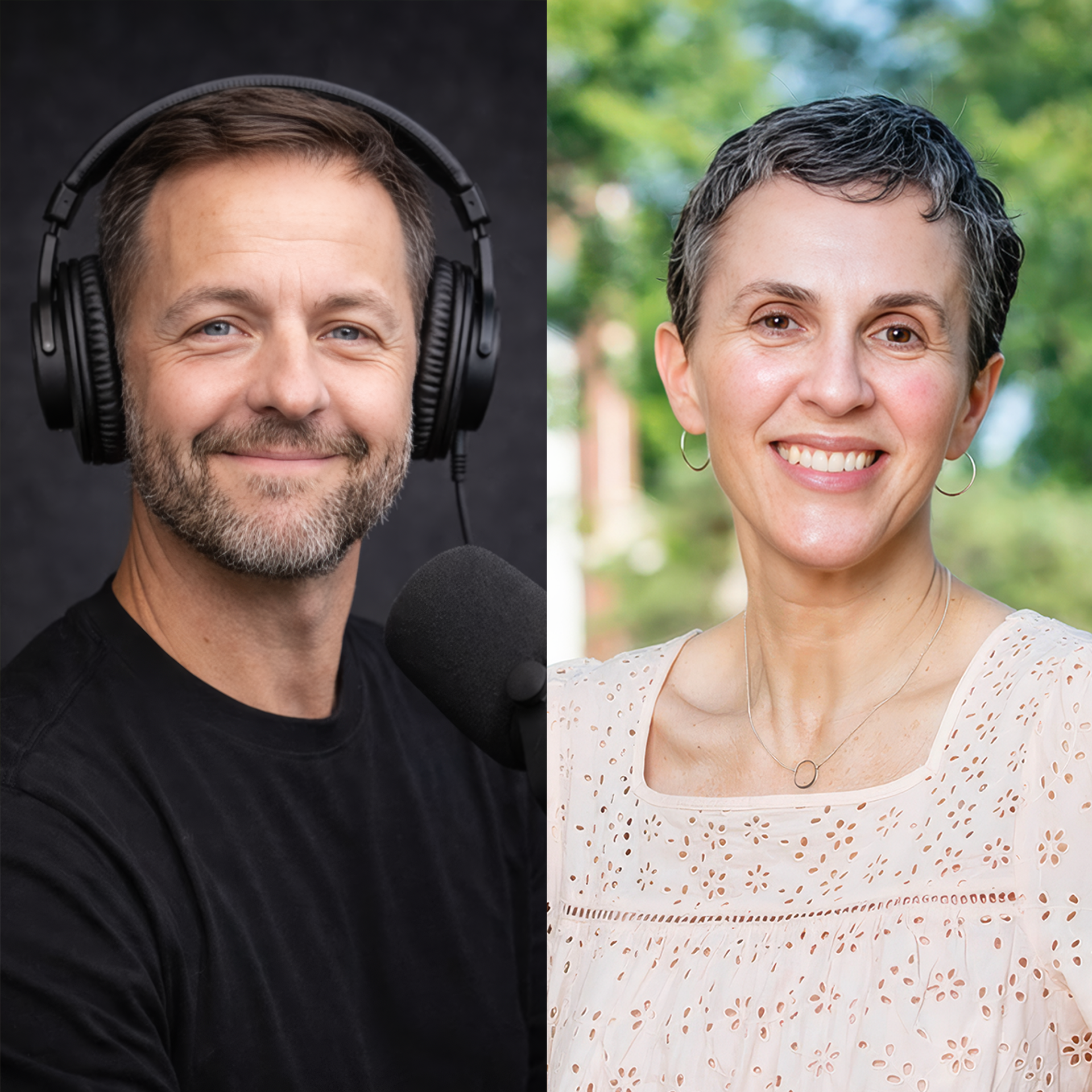
This essay grew out of my conversation with Ilana Redstone on The Unfolding Thought Podcast.
Sources and further reading
- Cheryl D. Fryar and colleagues, Anthropometric Reference Data for Children and Adults: United States, August 2021–August 2023. National Center for Health Statistics, 2025. The height comparison uses adult men ages 20 and older.
- Ilana Redstone, The Certainty Trap: Why We Need to Question Ourselves More—and How We Can Judge Others Less. Pitchstone Publishing, 2024.
- Eric Pratum, conversation with Ilana Redstone for The Unfolding Thought Podcast, 2026.
- Malcolm X, as told to Alex Haley, The Autobiography of Malcolm X. See also his letter from Mecca, reproduced in South Street Journal, May 11–24, 1995, p. 9.
- Andres Lares, Jeff Cochran, and Shaun Digan, Persuade: The 4-Step Process to Influence People and Decisions. Wiley, 2021. Chapter 6, “Time and Place,” section “Peruke, You Say?”
- Rael J. Dawtry, Robbie M. Sutton, and Chris G. Sibley, “Why Wealthier People Think People Are Wealthier, and Why It Matters.” Psychological Science 26(9), 2015, pp. 1389–1400.
- Ilana Redstone, public preface to Presumption of Guilt: How Equating Inequality with Injustice Fractured American Democracy, July 1, 2026. The author announces publication in spring 2027.
- Ilana Redstone, “The Verdict Is the Tell.” The Certainty Trap, August 4, 2026.
- Tal Eyal, Mary Steffel, and Nicholas Epley, “Perspective Mistaking: Accurately Understanding the Mind of Another Requires Getting Perspective, Not Taking Perspective.” Journal of Personality and Social Psychology 114(4), 2018, pp. 547–571.