Category: Unfolding Thought

  • If Integrity Requires Heroism, the System Is Already Broken

    If Integrity Requires Heroism, the System Is Already Broken

    Robert Coram’s biographies praise people who chose principle over career. They also expose a failure that should scare all of us:

    Too many institutions need exceptional courage to hear ordinary truth.

    In 1967, Lieutenant General Victor “Brute” Krulak went to the White House with an argument President Lyndon Johnson did not want to hear.

    The United States was prosecuting the Vietnam War through search-and-destroy operations and attrition. Krulak believed the decisive contest was for the security and allegiance of the people living in South Vietnam’s villages. The Marines could and should fight large enemy formations, he argued, but destroying units and counting bodies would not by itself defeat an insurgency.

    Robert Coram reconstructs what happened next in Brute, his biography of Krulak. According to that account, Krulak told Johnson that American strategy was producing unnecessary casualties and that responsibility reached the top of the government, “including you, Mr. President.” If the president did not change course, Krulak warned, he would lose the war and the next election.

    Johnson rose, placed a hand on Krulak’s shoulder, and ushered him out without another word.

    Lieutenant General Victor “Brute” Krulak in uniform against a cream, charcoal, and brass editorial background.
    Lt. Gen. Victor H. Krulak.
    Cover of Brute by Robert Coram.
    Brute by Robert Coram.

    Coram argues that the confrontation helped cost Krulak a fourth star and the job he wanted most: Commandant of the Marine Corps. Johnson later selected another Marine. Krulak retired as a three-star in 1968.

    It would be too easy to turn the scene into a polished parable in which a truth-teller confronts a villain, pays the price, and is vindicated by history. Coram’s biographies, however, preserve achievement, ambition, contradiction, collateral damage, and uncertainty in the same frame.

    The easy lesson in Krulak’s story is that leaders should admire moral courage. The harder lesson is that a president responsible for a war needed the information Krulak carried. Why did delivering it have to resemble a career-ending act of heroism?

    The fork in the road tests more than character

    When I interviewed Coram for The Unfolding Thought Podcast, he explained what he had looked for in the military figures he chose to write about. He wanted people who reached a fork in the road, did what they believed was right, and paid a price.

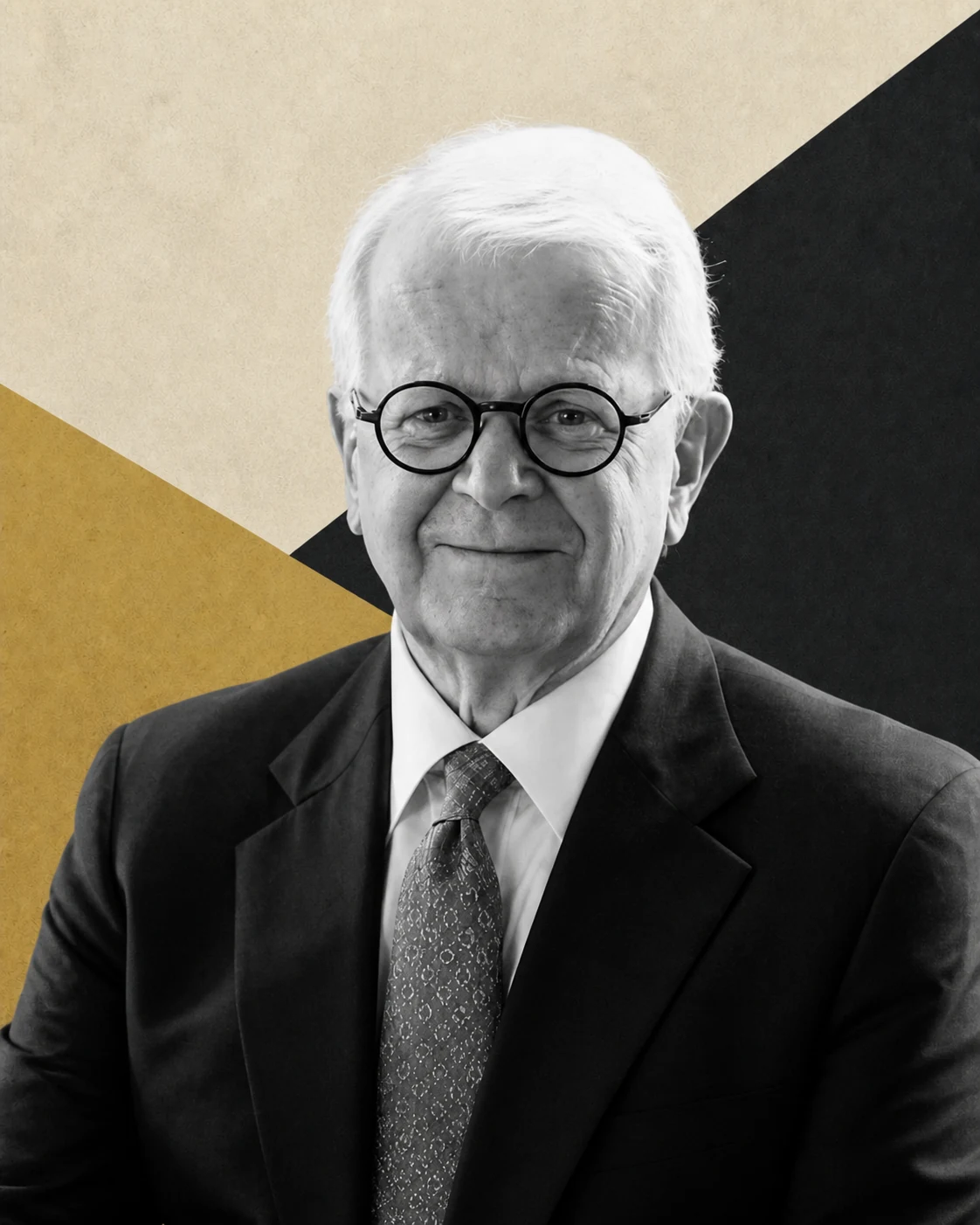
    Robert Coram in a dark suit and round glasses against a cream, charcoal, and brass editorial background.
    Robert Coram.

    That is a powerful test of character.

    A moral fork tells us what a person does when duty, self-interest, loyalty, and fear point in different directions. It reveals something that no résumé, values statement, or performance review can. Coram found versions of that test in Krulak; in fighter pilot and military theorist John Boyd; and, at an almost unimaginable physical extreme, in Medal of Honor recipient and Vietnam prisoner of war George E. “Bud” Day.

    But the fork can also reveal something about the road builder and not just the traveler.

    When people must repeatedly choose between doing good work and preserving a viable career, the institution is not merely discovering their character. It is manufacturing the conflict. It is making personal courage compensate for defects in how information travels, how authority responds, and how careers are governed.

    Some moral choices will remain costly in any organization worth serving. No process can make courage unnecessary. But when routine truth-telling predictably requires career-threatening heroism, the price is no longer just evidence of the employee’s virtue. It is a leadership metric.

    A heroic culture can still be a silent culture

    Organizations often talk about candor as if it were a personality trait:

    • Good employees speak up.
    • Courageous leaders welcome bad news.
    • Weak people stay quiet.

    Decades of organizational research describe a more relational problem. New York University professor Elizabeth Morrison defines upward voice as employees voluntarily communicating suggestions, concerns, or information about problems to people higher in the hierarchy.

    Silence is not the absence of information. It is the withholding of information that may already exist somewhere lower in the system.

    That means a quiet meeting is ambiguous. Everyone may agree. Or the people who disagree may have decided that the cost of speaking is not worth paying.

    In a study of 3,149 employees and 223 managers, James Detert and Ethan Burris found that managerial openness was more consistently related to improvement-oriented voice than transformational leadership was. Employees’ sense of psychological safety helped explain the relationship. The effect of leader behavior was especially strong among high performers, the very people an organization can least afford to train into silence.

    The point is not that every leader must be gentle or that every employee must feel comfortable. Psychological safety, as Amy Edmondson originally defined it, is a shared belief that a team is safe for interpersonal risk-taking. It makes learning behaviors such as asking for help, reporting mistakes, and challenging an assumption more possible. It does not make every assertion correct, remove performance standards, or exempt anyone from the consequences of deliberate misconduct.

    Coram’s account of Krulak contains a small scene that makes the larger problem visible. During a visit to Vietnam, Krulak asked Marines what they thought. They gave him answers he did not expect and did not like. Afterward, he asked his son, Navy chaplain Victor Krulak, what was wrong with the battalion.

    His son suggested that people elsewhere might have been telling the general what he wanted to hear.

    Coram writes that the possibility appeared not to have occurred to Krulak, even though Krulak himself knew that subordinates often manage what senior officers see.

    This does not diminish the courage Krulak later showed with Johnson. It makes the case more valuable. The same person can be unusually willing to carry unwelcome truth upward and still make it difficult for truth to travel upward to him.

    Candor is not secured by placing one brave person in the hierarchy. It has to survive every level of the hierarchy.

    “To be or to do” is both a challenge and an indictment

    John Boyd made the decision point explicit.

    Coram’s Boyd follows the fighter pilot from the cockpit to the Aerial Attack Study, energy-maneuverability theory, the F-15 and F-16 development battles, and the body of work later associated with the OODA loop. Boyd’s accomplishments depended on extraordinary concentration, technical insight, a network of allies, and an appetite for conflict that often made him nearly impossible to ignore and just as difficult to manage.

    John Boyd in flight gear against a cream, charcoal, and brass editorial background.
    Col. John Boyd.
    Cover of Boyd by Robert Coram.
    Boyd by Robert Coram.

    He divided officers into people who wanted “to be” somebody and people who wanted “to do” something.

    Coram shows Boyd applying that test to Air Force officer James Burton. Burton had refused an order to alter a chart comparing aircraft performance because the alteration would create a lie. He was removed from his Pentagon job and passed over for promotion. Boyd told him he had reached a fork: he could pursue the promotion and its trappings, or continue the work he believed was right. He could not, Boyd said, have a normal career and do the good work.

    As a moral challenge, “to be or to do” draws a clear line. As an organizational condition, it should be alarming.

    Why should a normal career and good work be incompatible?

    What information will never reach a decision-maker if the price is obvious before anyone speaks?

    How many capable employees will make the sensible choice, protect their families and futures, and leave the unaltered chart in a drawer?

    This is where hero stories can mislead managers. We admire the outlier who accepts the sacrifice and then quietly build systems that assume the next person will do the same. When the next person does not, we call it a character failure rather than asking what the incentives were designed to produce.

    Boyd also shows why an institution cannot simply reward combativeness. He could be brilliant, abrasive, domineering, and wrong. His crusades imposed costs on colleagues and family members who did not choose them.

    An organization that depends on finding a hero is fragile. A stronger one preserves the function Boyd and men like him serve: challenging assumptions, demanding evidence, and testing doctrine, without requiring every reformer to become him.

    Coram’s exception protects the argument from hero worship

    Coram told me that one of his four military subjects did not fit his moral-fork rule: World War II fighter pilot Robert Lee Scott Jr.

    Brigadier General Robert Lee Scott Jr. in Air Force dress uniform against a cream, charcoal, and brass editorial background.
    Brig. Gen. Robert Lee Scott Jr.
    Cover of Double Ace by Robert Coram.
    Double Ace by Robert Coram.

    Scott was a real combat pilot and a double ace. He flew guest missions with pilots of the American Volunteer Group, the original Flying Tigers, and later commanded the regular Army Air Forces’ 23rd Fighter Group. His 1943 memoir, God Is My Co-Pilot, became a bestseller and then a film. He also told stories so fluently and so often that the border between experience, performance, and memory could become difficult to locate.

    Cover of Robert Lee Scott Jr.'s 1943 memoir God Is My Co-Pilot.
    Scott’s 1943 memoir, God Is My Co-Pilot.

    In one late version of the book’s origin story, Japanese rounds struck Scott’s aircraft from behind and drove rivets from the armor behind his seat into his back. After landing, he was supposedly operated on without anesthesia in a candlelit cave, where the title appeared to him on the cave wall. Coram found that the cave revelation was absent from the original book, that he could find no injury record, and that Scott had not received a Purple Heart. Those absences do not prove that every element was invented, but they leave the later account without the evidence that should support it.

    Scott matters here because moral courage is not a method for determining truth. Neither sincerity, confidence, sacrifice, nor opposition to authority proves a claim. Institutions need people to raise unwelcome information, and they need disciplined ways to test it.

    Those principles reinforce one another.

    If only safe claims can be voiced,
    evidence is filtered before examination.

    If every contrarian claim is celebrated as brave, dissent becomes theater.

    A serious truth-telling system protects the messenger long enough to evaluate the message.

    What ordinary people usually do at the fork

    The most revealing moral fork in Coram’s body of work may not belong to a pilot or general.

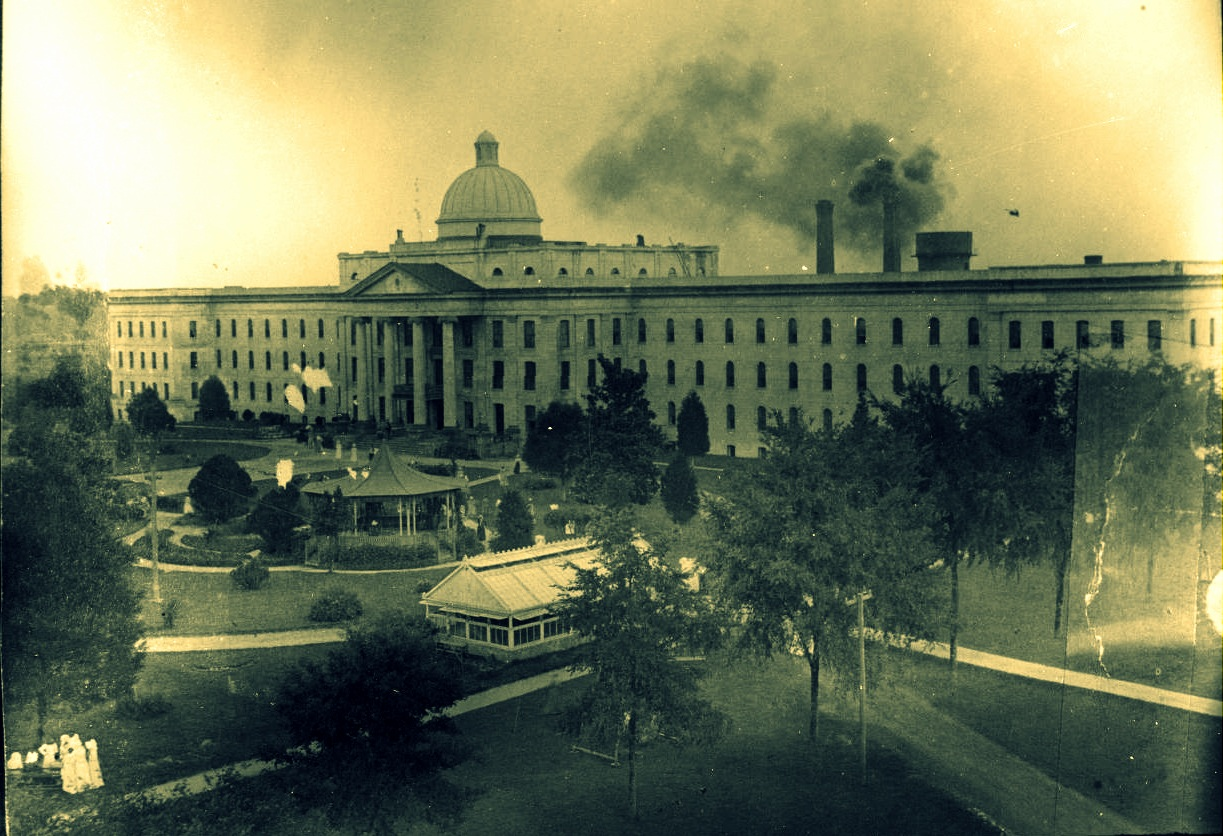
    In his memoir Ink, Coram recalls working in 1959 as an untrained attendant at Georgia’s state mental hospital in Milledgeville. By then, it was less a hospital in the ordinary sense than a vast custodial city. The institution averaged more than 11,800 patients in the late 1950s. It sprawled across roughly 200 buildings and 2,000 acres and, by the 1960s, was described as the largest mental hospital in the world.

    That scale did not produce more care. The New Georgia Encyclopedia records overcrowding, “conscious neglect,” and an institution often able to meet only basic daily needs rather than provide appropriate treatment. In a place that large, abuse could disappear into wards, bureaucracy, and sheer numbers.

    That helps explain the importance of Jack Nelson’s investigation for the Atlanta Constitution. His 1959 reporting documented experimental drugs given without patient or family consent, major surgery performed by a nurse without supervision, and staff and doctors drunk on duty. The series would win the 1960 Pulitzer Prize.

    Cover of Ink by Robert Coram.
    Ink by Robert Coram.

    Coram admired Nelson. He understood that this was what a newspaper could do: enter a closed institution and force powerful people to answer for what happened inside.

    Then, Coram writes, a doctor ordered him to dispose of boxes of medicine to hide them from Nelson’s reporting. Coram believed the labels, dates, and drugs might matter to the investigation. He flushed the pills down a patient toilet, carried the packaging to a dump, and said nothing when the reporter returned.

    He believed the material might be evidence. He recognized the choice. He obeyed the institution anyway.

    “I wanted to help him,” Coram writes. “But I did not.”

    It is tempting to read that sentence as a verdict on the young man. I read it as a warning to anyone who designs work for other people.

    Most employees are not Bud Day. They should not have to be.

    They have mortgages, health insurance, reputations, visas, commissions, pensions, children, and an accurate understanding of what authority can do to them. They watch what happens to the first person who raises a problem. They notice whether the concern is investigated, whether the leader becomes curious or offended, and whether the messenger’s next assignment quietly disappears.

    The employee who remains silent may be making a moral mistake. The organization that makes silence rational is making a management mistake.

    The price rarely stops with the person who speaks

    Coram’s biographies also complicate the idea of individual sacrifice by showing who else pays.

    Bud Day endured five years, seven months, and thirteen days as a prisoner of war, including periods of prolonged torture. Dorie carried that captivity into public life, organized with other POW families, preserved information, kept their household functioning, and later lived beside the physical injuries and recurring nightmares that came home with him. Mary Boyd and her children experienced a different version of cost: absence, volatility, financial strain, and the work required to preserve the ideas for which John Boyd received public credit.

    George E. “Bud” Day in uniform against a cream, charcoal, and brass editorial background.
    Col. George E. “Bud” Day.
    Cover of American Patriot by Robert Coram.
    American Patriot by Robert Coram.

    Those family accounts do not erase Day’s courage or Boyd’s achievements. They complete the ledger.

    We recognize, celebrate, and talk about a few heroes, but the cost of their heroism is paid not only by them. It is also paid by the people around them.

    Organizations usually record the visible price: the stalled promotion, the resignation, the lost command. The cost that migrates into a home, a colleague’s workload, a customer’s risk, or a caregiver’s life often disappears from the scorecard. Calling the employee heroic can become a way of praising a sacrifice the institution has no intention of accounting for.

    Build for candor before you need courage

    Values statements are useful only if the operating system makes them credible. An organization that wants truth before a crisis can build for it in at least six ways.

    1. Give unwelcome information a route around the hierarchy

    An open-door policy still requires an employee to walk through the boss’s door.

    NASA’s Aviation Safety Reporting System was designed around a different insight. Aviation workers can voluntarily report safety incidents to an independent program that keeps identities confidential, removes identifying details, and offers limited protection from penalties for qualifying unintentional violations. Deliberate and criminal acts are not sheltered. The design does not confuse learning with impunity; it reduces the personal risk that prevents useful safety information from entering the system.

    Most organizations do not need a miniature NASA. They do need a channel whose independence, confidentiality, response time, and escalation rules are real rather than decorative.

    2. Make dissent part of the work, not a personality contest

    Do not wait for a natural contrarian to challenge the plan. Assign the function.

    Before commitment, ask one group to assume the decision has failed and construct plausible reasons why. Gary Klein’s premortem works because it gives knowledgeable skeptics permission to voice reservations before failure converts them into hindsight. Rotate the dissent role so that disagreement does not become one person’s identity or one person’s career risk.

    Require the decision owner to state what evidence would change the decision. “Convince me” is not a standard; it is an invitation to contest status. A falsifiable threshold is a standard.

    3. Make the most powerful person speak last

    If the senior leader announces a preference first, every answer that follows has been contaminated by information about what the hierarchy wants.

    Collect judgments independently before discussion when possible. Ask for disconfirming evidence, not just concerns. Replace “Does anyone disagree?” with questions that require content: What assumption is carrying the most risk? What would we expect to see if we are wrong? Who has information that does not fit the current story?

    Then wait long enough for an answer.

    4. Keep a decision record that can survive memory

    Record the decision, material assumptions, competing interpretations, predictions, unresolved concerns, owner, and review date. The purpose is not bureaucratic self-protection. It is to keep the organization from rewriting what it once believed after the outcome is known.

    Scott’s stories show how repetition can harden a satisfying account. A contemporaneous record gives later reviewers something other than confidence and status to examine.

    5. Review outcomes without defending rank

    In my conversation with former Royal Australian Air Force fighter pilot and Afterburner CEO Christian “Boo” Boucousis on The Unfolding Thought Podcast, the debrief was the central subject. Boo described an operating rhythm used after every mission, successful or not: compare the objective with the actual result, identify the cause of any gap, and choose a concrete action for the next mission. His organization applies the same discipline to business teams. The purpose is to convert experience into usable intelligence while keeping rank and ego from controlling the account.

    The simplicity is deceptive. A useful debrief has to remain a professional inquiry rather than a trial, a victory lap, or a briefing in which subordinates discover what the leader wants them to say. Preserve competing accounts. Separate facts from inference. Assign changes and return to see whether they occurred.

    6. Audit what happens to the messenger

    Nonretaliation cannot be measured by counting how many people were formally fired for speaking up. Career penalties are often quieter: a missed invitation, a lower-visibility assignment, exclusion from information, an unexplained performance downgrade, or the conclusion that advancement now lies elsewhere.

    Track whether people who raise consequential concerns remain, advance, and continue to contribute. Ask them what happened after they spoke. Review whether concerns were acknowledged, investigated, and closed. Hold leaders accountable for retaliation and for teaching teams through visible behavior that candor is futile.

    The Government Accountability Office’s recent review of federal disclosure systems reaches a similar practical conclusion: accessible confidential channels, credible protection against retaliation, consistent accountability, and visible leadership commitment all influence whether people trust a speak-up system.

    Moral courage is a virtue. It is not an operating system.

    Coram is right to admire Krulak’s willingness to carry an unwelcome judgment to Johnson. The choice revealed the general’s sense of duty and the relative value he placed on career and country. We need people who will act that way when a consequential truth has no safe route to power.

    But admiration can stop the inquiry too early.

    The leader’s question is not only, Will someone be brave enough to tell me? It is also, What expectations have I created about what happens to people who tell me something I do not want to hear?

    A sound institution cannot remove every moral fork. It can keep routine evidence, doubt, error, and disagreement from becoming tests of personal martyrdom. It can make candor ordinary enough that exceptional courage is reserved for exceptional circumstances.

    When doing the work and keeping a viable career repeatedly point down different roads, the organization has confused a character test with a management system.

    Moral courage is a virtue. It should not be an operating system.

    The episode and sources

  • AI Is Not the Next Printing Press. It May Be the Next Reformation.

    AI Is Not the Next Printing Press. It May Be the Next Reformation.

    AI is not just changing what machines can do. It is changing how we understand our own value, our place in the world, and what it means to be human.

    On Christmas Day in 1521, a communion wafer fell onto the floor of a church in Wittenberg.

    This was not an ordinary Mass. Andreas Karlstadt had come dressed in the clothing of an ordinary person, not the vestments of a priest. He gave laypeople both the bread and the wine and invited them to take Communion even if they had not confessed. Many had not observed the required fast. Some were even said to have drunk brandy. About a thousand people reportedly came to participate in a service that openly broke with the religious practice they had known all their lives.

    Unless you understand the world these people inhabited, those details can sound like minor violations of church etiquette.

    They were not.

    For a Christian in early sixteenth-century Western Europe, the Mass was the moment when a priest did something no ordinary person could do. He consecrated bread and wine. In the inherited theology of transubstantiation, the substance of the bread became the body of Christ while the appearances of bread remained. The wafer still looked and tasted like bread, but worshippers understood themselves to be encountering the real presence of Christ.

    The priest’s vestments marked him as someone set apart for that responsibility. Confession prepared a person to receive the sacrament without approaching God while burdened by unforgiven sin. Fasting prepared the body for the encounter. Laypeople usually received Communion infrequently, often only at Easter. When they did receive it, they ordinarily received only the bread, placed in the mouth by a priest. These practices were not random rules layered around a symbolic meal. They expressed an entire understanding of the relationship between God, the Church, the priest, the body, sin, and salvation.

    Karlstadt challenged almost all of it at once. His ordinary clothing questioned the spiritual difference between a priest and everyone else. Communion without confession rejected the requirement that communicants first seek forgiveness through priestly confession. Eating and drinking beforehand treated the required bodily discipline as unnecessary. Giving the wine to laypeople challenged a practice that had separated priest from congregation for centuries.

    He was not simply asking them to treat the wafer as ordinary bread. At that point, Karlstadt still affirmed Christ’s real presence in Communion. He was asking them to inhabit a new account of who could approach and handle the sacred.

    Then two consecrated wafers fell, one onto a man’s coat and another onto the floor. Karlstadt told the people to pick them up.

    They would not.

    These were not defenders of the old order. They had come because they believed reform was necessary. They were willing to defy the canons of All Saints, inherited ritual, and their own political ruler. Yet touching the Host meant touching what they had spent their lives believing was the body of Christ. That was a boundary their bodies would not let them cross. Karlstadt had to retrieve the wafers himself.1

    Worshippers in a sixteenth-century church hesitate as a communion wafer lies on the floor
    The Christmas Day 1521 service in Wittenberg.

    The people in that church had changed their minds before they had changed their instincts. They were ready to reject the old rules, but not yet ready to touch what those rules had taught them was sacred.

    That is what a real change in worldview looks like. An old system can lose its intellectual authority before it loses its hold on the body.

    This is not another technology

    This is the part of artificial intelligence I think we are missing.

    We keep comparing AI to the printing press, electricity, radio, the internet, and social media. Those technologies did astonishing things. They changed what people could do, how quickly they could do it, how far an idea could travel, who could speak, and how people behaved.

    The crucial word is how. Those technologies also affected identity and meaning, sometimes profoundly. But their central effect was to change how human beings acted in the world. They changed the conditions of life without generally making people across almost every level of society wonder whether human contribution itself was becoming unnecessary.

    AI is becoming a different kind of event because people believe it will not merely change their work. They believe it may eventually do their work better than they can and remove the need for them to do it at all.

    Once that premise takes hold, the questions escalate quickly.

    If AI can perform enough of my work to make my role unnecessary today, or will be able to soon, what is my place in the world? What is my purpose? What am I worth? If work is one of the main ways I contribute to other people, what happens when that contribution no longer requires me? What is a human life for then? Do human beings matter anymore? Do I matter? Will my children?

    Those are not forecasts about what AI will actually accomplish. They are questions people can begin asking as soon as they believe replacement is coming. A life can be reorganized by an expectation before the prediction comes true.

    Machines have threatened jobs before, sometimes on a vast scale. What is distinctive now is that generative AI has carried replacement anxiety into an unusually broad range of occupations built around language, interpretation, judgment, creativity, and leadership. The question can reach a manager, doctor, lawyer, teacher, artist, writer, programmer, executive, or public official in essentially the same form: if the ability that made me useful can be reproduced without me, where does my value now reside?

    AI does not need to replace all of those people for the worldview to begin changing. It only has to make replacement feel plausible.

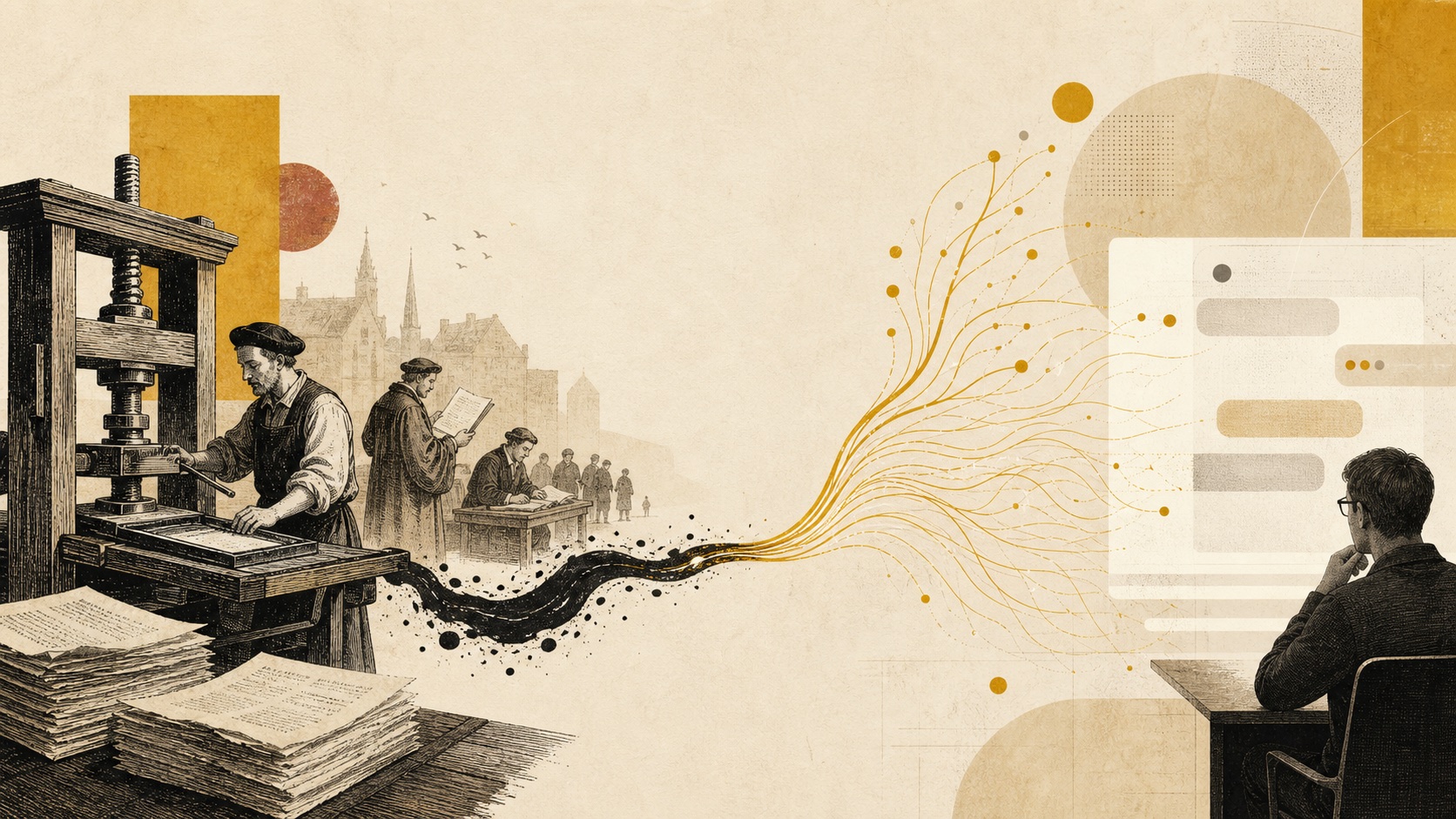
    That is why I think the Protestant Reformation gives us a better comparison than the printing press.

    I am not saying AI is a religion. I am not saying the twenty-first century will repeat the sixteenth. I am saying both events force people to reconsider a world that had made sense. They destabilize the institutions that explained what was true, who could know it, what made a life valuable, and where an ordinary person fit within the whole.

    The printing press was an extraordinary technology that helped the Reformation spread. The Reformation was the crisis of meaning.

    AI is the technology. The crisis gathering around it is about how we make meaning.

    A world that made sense

    To understand why the Reformation changed so much of western and central Europe so profoundly, we have to begin by taking the world before it seriously.

    Many people in late-medieval Latin Christendom did not merely hold a list of Catholic beliefs. They inhabited a world in which visible and invisible reality were joined.

    The church building made that world physical. A parishioner could look from the ordinary people crowded into the nave, to saints painted on a screen, to the crucified Christ above it, to images of the Last Judgment, heaven, hell, and purgatory. Beyond the screen, at the altar, the priest brought Christ into the church in the consecrated bread. Diarmaid MacCulloch describes this as a floor-to-ceiling account of the Christian story. Creation, sin, suffering, death, judgment, and eternal life were not ideas discussed somewhere else. They surrounded a person while that person stood in church.2

    The same system organized life outside the building. Church bells marked the day. Fasts, feasts, Advent, Lent, Easter, and Christmas gave the year its shape. Baptism brought an infant into the Christian community. Confession and penance addressed sin. Church law helped govern marriage, sex, and inheritance. Guilds, monasteries, and confraternities joined work, charity, status, and prayer.

    Purgatory offered an account of what happened to the saved who still needed to be purified after death. Masses, prayers, alms, pilgrimages, relics, and indulgences gave the living something meaningful to do for parents, spouses, children, and friends who had died. A family paying for a Mass was not simply purchasing a service from a church. Within that world, the family was still caring for someone it loved.

    This was why the Church mattered. It did not merely tell people what to believe on Sunday. It explained where the dead had gone, why suffering existed, how guilt could be forgiven, which work was holy, who had authority, how time should be lived, and what a human life was for.

    That system was neither uniform nor peaceful. Clergy could be corrupt. Popes pursued money and power. Local practices varied, and reform movements long predated Luther. Still, the late-medieval Church was not an empty shell waiting for one brave man to expose it. It met real spiritual needs. Even its abuses drew power from needs people genuinely felt.

    That was true of indulgences. An indulgence addressed punishment for sins already forgiven. Within the larger account of confession, penance, and purgatory, it made sense. An indulgence campaign connected fear for the dead with papal authority, local politics, banking, and the financing of St. Peter’s Basilica in Rome.3

    When Luther challenged the indulgence campaign in 1517, he pulled on a thread connected to almost everything.

    At first, he was arguing about repentance, grace, punishment, and pastoral care. He was not yet presenting a complete new church. But the disagreement could not remain narrow because his opponents eventually made authority the issue. If the pope and the accumulated teaching of the Church supported the practice, what right did a provincial friar have to contradict them?

    That question forced another: what if the pope was wrong?

    Then another: what if a church council could be wrong?

    Then another: what if the practices through which Christians had sought forgiveness, cared for the dead, distinguished holy lives, and understood salvation were not merely imperfect, but based on a fundamental error?

    The controversy stopped being about the proper use of indulgences. It became an argument about who could say how reality worked.

    Luther’s answer altered the structure of the Christian life. He argued that a person was justified by God’s grace through faith, not by accumulating merit. Scripture, not the pope or accumulated tradition, was the final authority against which doctrine had to be judged. Baptism and the shared priesthood of believers gave ordinary Christians a spiritual standing that did not depend on membership in a separate religious caste. Monastic vows did not create a higher class of Christian. Ordinary work performed in faith could be a vocation.

    Each claim answered a theological problem. Together, they changed where a person stood in the universe.

    Within Lutheran and other Protestant accounts, a monk or nun was not necessarily closer to God than a parent, farmer, merchant, or servant. Priests remained important, but no longer belonged to a spiritually superior estate. Clergy could marry. Care for the dead changed when purgatory and Masses for souls were rejected. Images that had mediated sacred presence could be condemned as idols.

    A monk who had understood his vows as a path to holiness could discover that the path itself was a mistake. A nun who had been given to a convent by her family could be told that leaving, marrying, and raising children might be more faithful than remaining. A priest could become a husband and father. A family that had endowed Masses for its dead could learn that those Masses accomplished nothing. A craftsperson could hear that ordinary labor was a calling from God, while a student preparing for an ecclesiastical career could watch that entire career structure collapse.

    This was not liberation in one clean direction. It was disorientation.

    In Wittenberg, the changes moved so quickly that some students questioned whether their education had any point. The attack on private Masses threatened clerical livelihoods. When monasteries closed, land changed hands, men and women had to find new places in households and local economies, and poor relief had to be reorganized. When reformers removed images, they did not merely redecorate churches. They stripped away objects through which generations had understood sacred history and encountered the holy.45

    Western and central Europe did not move together from one worldview to another. It fractured.

    Catholics, Lutherans, Reformed Protestants, Anabaptists, and others offered incompatible accounts of the Eucharist, baptism, salvation, church government, and political obedience. Families divided. Refugees crossed borders. Rulers and churches built rival settlements through catechisms, schools, law, discipline, and force. Religious fracture became entangled with political revolt, state formation, persecution, and war. Catholic reformers also clarified doctrine, built institutions, and renewed their own account of authority.5

    The world had not become meaningless. It had become a place in which the old sources of meaning no longer settled the most important questions.

    That is the change I want us to see.

    The printing press helped claims move faster and farther. It made controversy cheaper to reproduce and harder to contain. But the press was not the thing that caused a priest to marry, a family to stop paying for Masses for the dead, a ruler to seize a monastery, or a worshipper to stare at an empty space where a saint had stood.

    The Reformation did those things because it changed what the world meant.

    The world AI found

    The modern world is not united by one church, one theology, or one account of salvation. We disagree about religion, morality, politics, human nature, and almost everything else.

    Yet our institutions still depend on a mostly unspoken account of the person.

    We use human performance to distribute income, status, opportunity, and recognition. Schools reward writing, reasoning, memory, and problem solving. Professions issue credentials meant to prove knowledge and judgment. Employers pay more for abilities that are difficult to acquire and scarce in the labor market. People build identities around being able to do something that someone else needs.

    Ask someone what they do, and the answer will usually be a job.

    That is not an accident. For many people, work provides income, but it also provides structure, community, status, competence, and a way to explain one’s contribution. Becoming good at difficult work changes a person. The failures, repetitions, corrections, mentors, and unusual cases become part of how that person sees the world.

    This account of human value has always been morally incomplete. A person is not worth more because that person writes better, calculates faster, remembers more, or earns a higher salary. Still, our schools, firms, professions, and labor markets regularly behave as though useful performance is evidence of both economic and personal value.

    Then a machine begins producing the performance.

    That is the disruption.

    The most important thing about generative AI is not that it can make a document, image, plan, diagnosis, or recommendation more quickly. It is that those outputs often functioned as evidence of a human capacity. A finished essay implied that a student had read and synthesized. A legal analysis implied that a lawyer had interpreted. A diagnosis implied that a clinician had reasoned. A strategy implied that a leader had decided. A painting implied that an artist had imagined and made.

    Now the artifact can appear without proving what we thought it proved.

    That is destabilizing enough. But the fear goes further. If a machine can produce every economically valuable performance better than the people who once produced it, what are the people for? What is their purpose? Where do they find the recognition that tells them they matter? What is the meaning of a life that appears to be needed by no one?

    AI did not invent the weakness in our assumptions. It exposed how much meaning we had asked work and performance to carry.

    It does not matter yet whether the fear is right

    There is an obvious objection to this argument.

    AI cannot actually do all the things people fear it will do. It makes elementary mistakes. It invents facts. It often needs a human to define the problem, gather the right information, recognize an error, and take responsibility for the result. A strong performance on a benchmark does not mean a system can replace a person in the messy conditions of a real job.

    All of that is true.

    It is also beside the point I am making.

    I am not arguing that AI will eliminate every profession or that a machine is already more valuable than a person. I am arguing that a large number of people now fear that their future usefulness is being placed in competition with a machine. Because our institutions have taught people to locate identity, security, and recognition in useful work, I think that fear can become a question about personal value.

    This is not a fringe anxiety. In 2025, Pew Research Center found that 52 percent of American workers were worried about AI’s future workplace impact, and 32 percent expected it to leave them with fewer opportunities. In a separate survey, 64 percent of American adults expected AI to mean fewer jobs over the next 20 years. Across 31 countries, Microsoft and LinkedIn found that 45 percent of knowledge workers worried AI would replace their job.7910

    The fear reaches the next generation. In a 2026 study, Common Sense Media found that 57 percent of parents with children under 18 believed AI would make it harder for their children to find jobs. Nearly half of the young people surveyed worried about AI’s effect on their economic future, 49 percent thought it would make finding a job harder for them personally, and 59 percent thought people like them would have a harder time.11

    Those surveys do not show that AI will cause mass unemployment. They do not show that workers believe their lives are literally worth less. They establish something important here: people already believe the ground is moving beneath them.

    The anticipation becomes part of the event.

    So, what happens when you believe there may be no job for you to get? What do you study? Do you borrow money for a degree? Do you spend years mastering a profession that may not want beginners by the time you arrive? Do you save for a future you cannot picture? Do you have children when you are not sure how they will support themselves or where they will find a place to contribute?

    These questions can change decisions before any forecast is proved. In Deloitte’s 2025 survey of more than 23,000 Gen Z and millennial respondents across 44 countries, more than six in ten of the respondents who used generative AI worried that it would eliminate jobs and said the concern was motivating them to seek work they considered safer from disruption.12

    The International Labour Organization offers an important counterweight. It estimates that one in four jobs worldwide has some exposure to generative AI, but says transformation is more likely than full replacement. Exposure is not disappearance. A task is not a job, and a benchmark is not a workplace.6

    Still, the distinction between transformation and replacement does not settle the question of meaning. An OECD survey found that most workers using AI thought it complemented their abilities, while about half of the users in finance and almost half in manufacturing also believed it had made some of their own skills less valuable.8

    Think about that. A person can become more productive and feel less valuable at the same time.

    The fear is already entangled with people’s sense that they matter. In an American Psychological Association survey, workers worried that AI would make their duties obsolete were substantially more likely than other workers to say they did not matter to their employer or coworkers. The survey cannot prove that AI anxiety caused those feelings. It does show that fear of obsolescence and felt insignificance are arriving together.13

    This is how a worldview begins to shift. The new account does not have to be true, complete, or stable. It only has to make the old account stop feeling certain.

    When work stops explaining our place

    Now imagine believing that the noun is about to disappear.

    You do not have to lose your job for that belief to change you. A student can look at the field that once promised a future and wonder whether it is foolish to enter. A midcareer professional can look at years of accumulated skill and wonder whether the market will still recognize it. A parent can look at a child and wonder what preparation could possibly be enough. Someone choosing whether to start a family can wonder whether the next generation will have any economically useful place at all.

    The actual labor market may eventually prove some of those fears wrong. It may produce new roles, new industries, and forms of work we cannot yet name. But a worldview is not only a description of what is objectively true. It is the set of assumptions through which people decide what is worth doing.

    If I believe no employer will need my skill, the belief changes whether I develop it. If I believe entry-level work will vanish, the belief changes whether I pursue the profession. If I believe my children will enter a world in which machines outperform them at every economically valuable task, the belief changes how I imagine their future.

    That is why the anticipation matters so much.

    For many people, a job has been the most ordinary proof that there is a place for them. Someone needs what I can do. Someone will exchange part of the world’s resources for my contribution. Other people can describe me through the role, and I can describe myself through it.

    When that proof becomes uncertain, the question is larger than, “How will I earn money?”

    It becomes, “Where am I needed?”

    The Reformation created a similarly profound disruption in vocation. Before it, monks, nuns, and priests occupied a religious estate set apart from ordinary household and economic life. Protestant reformers attacked that hierarchy. A monastery was not necessarily a place of higher holiness. Marriage, parenting, civic office, farming, craft, and household labor could all be callings in which a person served God and neighbor.

    That change supplied one influential inheritance for the modern idea that ordinary work can express a calling. The later history is long and complicated, and our current habit of identifying ourselves with jobs cannot be credited to the Reformation alone. But the connection between work, identity, contribution, and purpose remains powerful. We want work to mean something because we want our lives to mean something.

    AI presses directly on that connection.

    The important issue here is not whether AI will actually eliminate a particular job. It is what happens when a teacher, programmer, designer, accountant, lawyer, doctor, manager, or writer begins to believe the activity through which that person contributed will no longer require a person.

    The question changes from, “How will I do my work?” to, “Why would anyone need me to do it?”

    That is the difference between a technological adjustment and a worldview-changing event. A new tool changes the method. The belief that human contribution itself is becoming unnecessary changes the person who imagined having a place in the world.

    It is not only what AI is capable of doing that matters. It is what people think its capabilities mean about them.

    What is a person worth when performance is no longer unique?

    This is where the analogy reaches its deepest point.

    The Reformation forced people to ask how grace, faith, sacraments, penance, merit, and the Church’s mediation fit together in the relationship between a human being and God. What made one life holy and another ordinary? Who could speak with spiritual authority? What did freedom mean, and what obligations remained?

    AI presses a different question, but one at a similar depth: why does a person matter?

    For a long time, we have answered partly by pointing to abilities. Humans reason. Humans use language. Humans create art. Humans solve problems. Humans understand one another. Humans exercise judgment.

    But even if a person had no grand theory of human uniqueness, there was usually a simpler answer available: I can do something that other people value.

    For many people, some role, task, trade, service, form of care, or exercise of judgment offered a way to contribute. The work might not be glamorous or deeply fulfilling. It might even be miserable. Still, being needed offered a basic form of recognition. There was a place for me because there was something I could do.

    Now a system can produce behavior associated with many of those abilities.

    We can respond by moving the boundary. Perhaps humans reason better in unusual situations. Perhaps humans possess consciousness, embodiment, emotion, moral responsibility, relationships, or a lived history that a machine lacks. Those differences may be real and essential.

    But notice what happens if our defense of human value remains a performance contest.

    If people matter because they write better, then an improvement in machine writing weakens the argument. If people matter because they diagnose more accurately, the argument becomes vulnerable to the next medical benchmark. If people matter because they create beautiful images, every advance in image generation appears to subtract from human uniqueness.

    That should make us question the argument, not the people.

    A child does not have to outperform a model to possess dignity. A person with dementia does not lose value as memory fails. A disabled person is not less human because a machine can perform an activity that person cannot. A worker’s worth cannot be identical to the market scarcity of a skill.

    AI is not making human life less valuable. It is exposing how often we confused value with superiority, dignity with productivity, and meaning with economic usefulness.

    That could be a healthy correction.

    It could also be brutally destabilizing in societies that distribute income, status, health, housing, and opportunity according to market value. Telling people that their dignity is unconditional does not pay a mortgage when an employer has decided their skill is no longer scarce.

    The economic and existential questions therefore cannot be separated.

    If work is one of the main places people experience contribution, and if our institutions treat productive output as the basis for security and respect, AI can create a crisis of meaning even while increasing total wealth. A society can become more productive while many of its members feel less necessary.

    The problem is not simply that a machine might become more like a person.

    The problem is that we built a world in which people were valued as imperfect machines.

    AI makes that world harder to defend.

    If a machine can eventually do all economically valuable work better than all of us, the fear is not merely that we will lose our salaries. The fear is that we will lose the most ordinary evidence that somebody needs us. What is my value then? What is my purpose? What is a life for when its contribution appears unnecessary? Those questions may rest on a false account of human worth, but that does not make them less real to the person asking.

    A worldview is not replaced by proving that the old one has a flaw. It is replaced when people and institutions learn to live inside another account of who they are.

    Where the comparison stops

    A serious analogy has to tell us where it fails.

    The Reformation was not a technology. It was a collection of religious, political, economic, and social movements within Latin Christendom. It unfolded across generations through churches, rulers, cities, families, wars, markets, and competing doctrines. AI is a technology being deployed around the world in societies with very different histories and accounts of human meaning.

    I am not arguing that a model company is a new church, a programmer is a new Luther, or a chatbot is a religion.

    Nor am I arguing that radio, electricity, industrialization, the internet, or social media left human meaning untouched. They had enormous effects on human life and identity. But they primarily transformed our how: how we moved, worked, communicated, produced, consumed, and organized daily life.

    AI can press more directly on our why. Why am I needed? Why does my work matter? Why should I develop an ability a machine may soon perform better? What gives a person purpose when useful performance is no longer distinctly human? The other technologies changed the conditions in which we pursued meaning. AI is beginning to make people question some of the sources from which they drew meaning in the first place.

    The analogy is not between a model and Luther. It is between two periods in which an inherited account of a person’s place in the world stopped settling the most important questions.

    The work of making meaning

    The first thing we have to do is understand what kind of change this is.

    If we treat AI as another technology, we will respond with the familiar questions. How do I use it? How do I work faster? Which skills should I learn? Which jobs will grow? Which rules should govern it?

    Those are useful questions. They are questions about how.

    They do not answer the question AI has placed underneath them: what really is my worth?

    The Reformation matters as an analogy because it shows what happens when a civilization’s inherited answer to a question like that stops feeling certain. People do not simply update a belief and continue living as before. They reinterpret their past. They reconsider their obligations. They make different decisions about work, family, authority, education, community, and the future. The disruption travels outward from an altered account of who a person is and what a life is for.

    That is already the kind of pressure AI is creating.

    The parent wondering whether a child will ever find work is not merely planning for a new labor market. The parent is trying to imagine whether the child will have a recognized place in the world. The professional afraid that years of expertise will become worthless is not merely calculating future income. The professional is asking whether the life spent developing that expertise still adds up to something. The young person looking at a machine that can write, code, draw, diagnose, and advise is not only choosing a major. That person is trying to identify a form of contribution that will still prove there was a reason to develop into someone.

    We should not dismiss those fears by insisting that AI will create new jobs. It may. We should not intensify them by pretending we know that human labor will disappear. We do not.

    The deeper problem is that both answers leave the same assumption untouched: a person’s worth depends on remaining economically useful.

    As long as that is the answer, every improvement in AI will feel like a reduction in human value. Every new benchmark will move the boundary behind which we try to protect our importance. We will say that machines can write but cannot reason, then that they can reason but cannot judge, then that they can judge but cannot care. If our worth always rests on the next task a machine cannot perform, we have made human value contingent on the machine’s limitations.

    That is not a stable place to stand.

    We have to put the more difficult question at the forefront: what makes a human life valuable even when that life is not the most efficient way to produce an output?

    Answering it will require more than reassuring slogans. We can say that every person has dignity, that relationships matter, that care matters, that experience matters, and that responsibility matters. But we also have to ask whether we believe those things deeply enough to live by them when productivity points in another direction.

    This is hard work because the old account is built into us.

    Return one last time to Wittenberg.

    The people at Karlstadt’s service had accepted enough of the new theology to break rules that had ordered Christian practice for generations. Yet when the wafer fell, the old world was still present in their hesitation. Their explicit beliefs had changed before their embodied understanding of reality had changed.

    We can see the same divide in ourselves.

    Most of us would reject the claim that a person’s worth equals a salary, a title, or the scarcity of a skill. We know that a child matters before the child can work. We know that an older person does not become worthless upon retirement. We know that illness, disability, unemployment, or dependence does not erase someone’s humanity.

    Yet when a machine performs a valued skill better or faster, many of us feel the threat personally. We do not experience it merely as a new method. We experience it as evidence that we may be worth less.

    Our stated belief is that human value exceeds useful performance. Our reaction reveals how much of the old worldview remains in the body.

    That is why the earlier point about worldviews matters so much. It is not enough to say the old account of our worth was flawed. We have to learn to live inside another account of who we are.

    If we can answer the question of human worth in a way that survives being outperformed, we do not have to treat every advance in AI as evidence of our own disappearance. We may still have serious reasons to worry about jobs, income, power, and inequality. But we will not have to confuse the loss of a task with the loss of a self.

    If we cannot answer it, we will keep defending our value through whatever work machines have not yet mastered. That territory may continue to shrink. Long before every job is actually replaced, we may experience ourselves as replaceable altogether.

    And then the question, “What is the point of life?” will no longer sound rhetorical.

    That is why the printing press comparison is too small.

    The printing press changed how ideas moved. Radio changed how voices traveled. Electricity changed how power could be used. The internet changed how information could be reached. Social media changed how people published and gathered attention.

    AI is changing how people understand their own purpose, value, and place in the world.

    It is changing the why.

    AI is not just another technology.

    It is creating worldview-shattering pressure, and we need to understand it as such.

    Notes and sources

    1. Lyndal Roper, Martin Luther: Renegade and Prophet (Random House, 2017), chapter 10, especially pp. 218–224 and 235. Roper describes Karlstadt’s Christmas 1521 service, its theological and political context, the dropped wafers, and the communicants’ refusal to touch them. Roper also notes that the brandy story came through hostile reporting and was later repeated by Luther.
    2. Diarmaid MacCulloch, The Reformation: A History (Penguin, 2005), introduction and chapter 1, especially “Seeing Salvation in Church” and “The First Pillar: The Mass and Purgatory.” MacCulloch reconstructs the late-medieval Church as a vigorous system in which the physical and spiritual, the living and dead, and everyday and eternal life were joined.
    3. Roper, Martin Luther, introduction, especially pp. 1–6, on the social, sacramental, political, and financial system surrounding the indulgence campaign. See also MacCulloch, The Reformation, chapter 3.
    4. Roper, Martin Luther, chapters 9–10, especially pp. 218–230, on the Wittenberg reforms, the collapse in university enrollment, threats to clerical careers, changes to poor relief, iconoclasm, and the struggle over secular authority.
    5. MacCulloch, The Reformation, introduction and chapters 4, 14, and 16, on uncontrolled early reform, the Peasants’ War, confessionalization, institutions, family, vocation, and everyday life. See also Roper, Martin Luther, chapters 12–13 and 16.
    6. International Labour Organization and NASK, “Generative AI and Jobs: A Refined Global Index of Occupational Exposure” (2025). The report estimates that one in four jobs worldwide has some exposure to generative AI while emphasizing that transformation is more likely than full replacement.
    7. Luona Lin and Kim Parker, “U.S. Workers Are More Worried Than Hopeful About Future AI Use in the Workplace,” Pew Research Center, February 25, 2025.
    8. OECD, “The Impact of AI on the Workplace: Main Findings from the OECD AI Surveys of Employers and Workers” (2023). The surveys covered more than 5,000 workers and 2,000 employers in finance and manufacturing across seven countries.
    9. Pew Research Center, “How the U.S. Public and AI Experts View Artificial Intelligence” (April 3, 2025). The survey included 5,410 U.S. adults and a separate sample of 1,013 AI experts.
    10. Microsoft and LinkedIn, “AI at Work Is Here. Now Comes the Hard Part,” Work Trend Index Annual Report (May 8, 2024). The findings draw on a survey of 31,000 knowledge workers across 31 countries.
    11. Common Sense Media, “Generation AI: What Kids and Families Think About AI” (March 2026). The national U.S. study surveyed parents and young people ages 12 to 17 about AI, education, employment, and the future.
    12. Deloitte, “2025 Gen Z and Millennial Survey” (May 14, 2025). The survey included 23,482 respondents across 44 countries.
    13. American Psychological Association, “2023 Work in America Survey: Artificial Intelligence, Monitoring Technology, and Psychological Well-Being” (2023). The association between obsolescence worry and feeling insignificant at work is correlational.
  • AI Cannot Decide What Your Business Is For

    AI Cannot Decide What Your Business Is For

    Every AI deployment turns vague values into executable instructions. If leaders do not define purpose, knowledge, and reality, the system will borrow its philosophy from metrics, training data, and vendors.

    Imagine a leadership team announcing its AI strategy in one sentence: We will achieve the same growth with 15 percent fewer people.

    That may be a target. It may even be a responsible response to difficult economics. But it is not a compelling account of what the organization hopes to become. It tells employees which cost should fall, not which capability should rise. It describes subtraction as though subtraction were a future.

    Michael Schrage raised a version of this problem in our recent conversation. The trouble with treating AI chiefly as a source of efficiency is not only that the ambition is small. It is that the ambition supplies the system with a purpose. The tools are then asked to optimize labor cost, cycle time, or output without anyone having to say what the work is ultimately for.

    AI does not make philosophy irrelevant. It makes philosophy operational.

    Once a model can recommend, rank, route, generate, negotiate, or act, words such as value, quality, loyalty, productivity, and risk can no longer remain inspiring abstractions. They have to become instructions. Someone, somewhere, must decide what counts as evidence, which categories matter, which tradeoffs are acceptable, and whose outcomes deserve priority.

    If leadership does not make those choices deliberately, the choices do not disappear. They are inherited from the data, the metric, the workflow, or the vendor.

    The danger is not only that AI will fail. It is that AI will faithfully optimize a purpose no one examined.

    Philosophy is already in production

    In his MIT Sloan Management Review essay, “Philosophy Eats AI,” Schrage argues that AI systems inevitably embody positions on three old philosophical questions.

    Teleology asks what the system is for. Is a customer-service agent meant to close tickets, reduce expense, restore confidence, preserve a relationship, or help a customer make a better decision? These purposes overlap until they do not. At the moment of conflict, the system needs a priority.

    Epistemology asks what counts as knowledge. Which evidence may the system trust? Does a recorded click outweigh a customer’s explanation? Is a prediction sufficient grounds for action? How should the system treat uncertainty, disagreement, or information that does not fit its prior patterns?

    Ontology asks what kinds of things exist in the system’s world. Is a person a customer, a user, an account, a risk score, a member of a household, or a participant in a community? Which relationships are visible? Which are erased because the database has no field for them?

    These questions can sound academic until a system denies a loan, selects a job candidate, prioritizes a patient, assigns a sales lead, or decides which employee appears unproductive. Then ontology becomes a data model, epistemology becomes an evidence rule, and teleology becomes an objective function.

    Philosophy has entered production.

    The practical mistake is to imagine that a technically neutral system waits for human values to be added later. There is no neutral ranking, neutral threshold, or neutral definition of success. Every deployment encodes a view of what matters, even when that view arrives disguised as a default setting.

    When metrics become metaphysics

    Organizations need metrics. The problem begins when a proxy stops being treated as a partial representation and becomes the reality the system is permitted to see.

    Suppose a company defines loyalty as repeat purchases. That definition is measurable and useful. It is also incomplete. A customer might repurchase because switching is difficult, because a contract traps them, or because every alternative is worse. The metric registers all three as loyalty. An AI trained to increase the number may improve retention while degrading the relationship that retention is meant to represent.

    The same problem appears when knowledge work is reduced to visible activity. Messages sent, documents produced, tickets closed, or hours online are traces of work. They are not the work itself. Judgment often creates value by preventing unnecessary activity, reframing the question, or recognizing that the requested output should not exist.

    AI makes this confusion more consequential because it can optimize the proxy continuously and at scale. A weak metric in a monthly report can mislead a meeting. A weak metric embedded in an autonomous workflow can reorganize behavior across the company.

    When a metric becomes the target, it can become the organization’s working definition of reality.

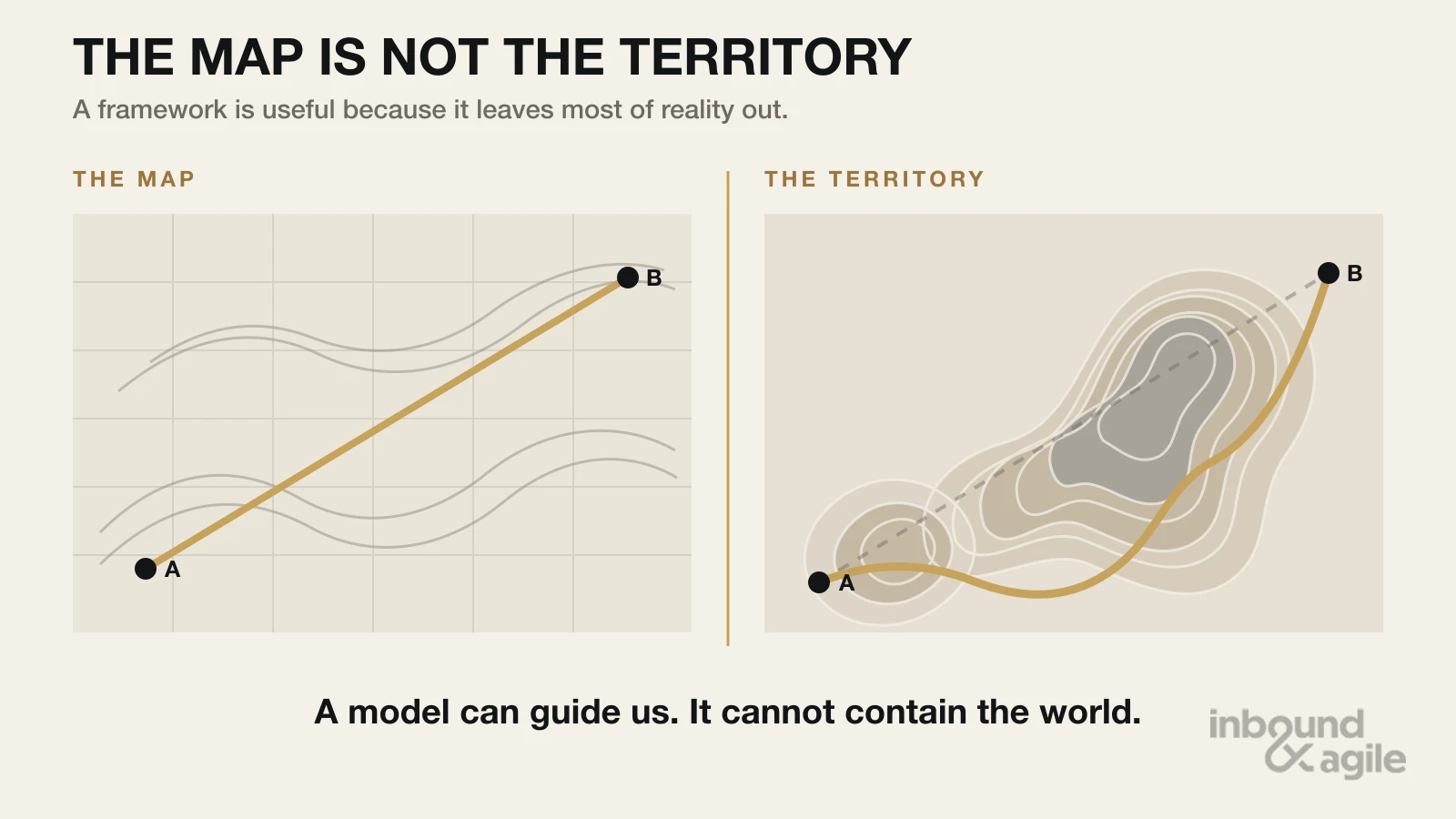
    This is why the familiar warning that “the map is not the territory” becomes a governance issue. The model will travel the map it is given. Leaders remain responsible for asking what the map excludes, who drew its borders, and whether arriving at the marked destination would actually count as progress.

    The accumulation of philosophical debt

    Technical debt accumulates when short-term engineering choices make future systems harder to change. Organizations now face a related problem: philosophical debt.

    Philosophical debt accumulates when fundamental questions are left unresolved but systems must still be built. The team does not agree on what a qualified lead is, so it automates the current scoring rule. Leaders have not settled what good service means, so the agent optimizes handle time. No one can define productive collaboration, so the dashboard counts individual output.

    Each choice is defensible as a temporary convenience. Together, they harden into an operating philosophy no one remembers choosing.

    The debt is easy to miss because the system can perform well by its own measures. It can become faster, cheaper, and more consistent. But consistency is not the same as correctness. A system can scale a category error with extraordinary reliability.

    This is one reason vendor selection alone cannot be an AI strategy. Vendors can provide capable models, safeguards, and implementation patterns. They cannot decide what your customers should become, what obligations you have to employees, or which forms of value your business should protect. When leaders leave those questions blank, product defaults fill the space.

    Agency raises the philosophical stakes

    The stakes rise as AI moves from answering questions to taking action.

    A conversational model can produce a flawed recommendation that a person ignores. An agentic system can convert the same flaw into a sequence of actions before anyone notices the premise. It can segment customers, change offers, move money, contact suppliers, or alter a workflow. Greater autonomy shortens the distance between an assumption and its consequences.

    This does not mean every decision needs executive review. That would defeat much of the value of automation. It means the boundary between machine discretion and human judgment must reflect the moral and strategic weight of the decision, not merely the model’s confidence.

    A model may be highly confident that a customer belongs in a low-value segment. Confidence does not answer whether the category is fair, whether the treatment will become self-fulfilling, or whether the company wants to build a relationship in which past value sets the ceiling on future attention.

    “Human in the loop” is therefore too vague to be a governance principle. Which human? At what point? With what information? Empowered to question which premise? Accountable to whom?

    Expert judgment should not be a ceremonial inspection step attached to the end of an automated process. It must help define the categories, evidence, exceptions, and purposes that shape the process from the beginning.

    Critical thinking is not a soft skill

    Schrage asks a bracing question in the episode: How do you contribute meaningful value when you are no longer the smartest creature in the room?

    One answer is that intelligence and judgment are not interchangeable.

    A model may generate more options than a team, retrieve more information than an expert, and expose patterns no individual could detect. It still cannot relieve leaders of the obligation to decide what deserves to be optimized. In fact, greater machine capability makes that obligation harder to avoid.

    Critical thinking in an AI-enabled organization is not simply the ability to spot hallucinations. It is the ability to examine the frame:

    • What problem have we decided this is?
    • What must be true for this recommendation to make sense?
    • Which values have been converted into variables?
    • What does the system make invisible?
    • Which outcome would falsify our theory of value?
    • Who benefits if the model is right, and who absorbs the cost if it is wrong?

    These questions are sometimes dismissed as slowing innovation. Used well, they do the opposite. They prevent a company from scaling a misunderstanding.

    Promptathons as organizational inquiry

    One of Schrage’s most exciting practices is the promptathon, a collaborative setting in which people use generative AI to explore problems, alternatives, and opportunities together. The important word is collaborative.

    Most workplace AI adoption begins as private experimentation. Individuals learn to write faster, summarize more, or automate pieces of their jobs. That can produce real gains, but it also keeps the organization’s assumptions hidden inside personal workflows.

    A well-designed promptathon can surface those assumptions. Different functions can ask the same model to describe a valuable customer, a successful project, or an acceptable tradeoff. The disagreement among the answers is not noise. It is evidence that the organization has been using shared words without a shared meaning.

    That makes the promptathon more than a prompt-engineering exercise. It can become a form of institutional philosophy conducted through prototypes. Teams can test how a definition behaves before embedding it in a system. They can compare what sales, service, finance, operations, and customers each mean by “value.” They can discover which disagreements require leadership decisions and which can remain productively plural.

    The goal is not consensus on every abstraction. It is enough clarity to know which purpose governs a particular system, which evidence it may use, and when competing values require escalation.

    A philosophy brief for every consequential AI system

    AI governance often begins with inventories, risk levels, privacy reviews, and technical controls. Those are necessary. They do not answer the prior question of what the system should be trying to accomplish.

    Before a consequential AI system enters production, its owners should be able to produce a short philosophy brief. It need not quote philosophers. It should answer seven practical questions:

    1. What is this system for? State the human or organizational outcome, not merely the task it performs.
    2. What evidence counts? Identify the data the system may trust, the uncertainty it must expose, and the claims it may not infer.
    3. What world does it recognize? Name the people, relationships, categories, and time horizons represented in the model, along with the important realities that remain outside it.
    4. Which tradeoffs require a person? Specify the conflicts the system may resolve and those that need accountable human judgment.
    5. Who should become more capable? Describe how customers, employees, or partners gain agency rather than merely becoming easier to manage.
    6. What counter-metric could reveal a false victory? Pair the primary objective with evidence that would show the system is winning the measure while losing the purpose.
    7. Who bears the downside? Make distribution visible. An average benefit can conceal concentrated harm.

    The brief will not eliminate disagreement. Its value is that it makes disagreement inspectable before software turns it into routine.

    The strongest AI strategy is not “What can this model do?” It is “What should this system make possible, for whom, and at what cost?”

    From cost effective to cost affective

    Near the end of our conversation, Schrage plays with the difference between effect and affect. Organizations want cost-effective AI, systems that achieve an outcome with fewer resources. He argues that they should also want “cost affective” AI, systems designed with human feeling, motivation, and identity in view.

    The phrase is more than wordplay. Technology changes not only what people produce, but how they experience themselves while producing it.

    An AI system can make an employee more capable, curious, and willing to exercise judgment. It can also make the same employee passive, monitored, and reluctant to think beyond the recommendation. A customer agent can help someone understand a difficult choice, or it can perfect the art of moving them through a funnel. Both systems may reduce cost. Only one enlarges the person.

    This suggests a more ambitious way to measure return on AI. Alongside time saved, errors reduced, and revenue created, ask whether the system improves the human capacity around it. Do people make better judgments after using it? Do teams ask better questions? Can customers act with greater understanding? Does expertise become more transferable, or merely more concentrated in the machine?

    Schrage has long argued that companies should ask not only how to create more valuable innovation, but how innovation can create more valuable people. That shift changes the unit of analysis. The person is no longer a cost adjacent to the technology. Human capability becomes one of the technology’s intended outputs.

    The advantage is clarity

    AI capability will continue to spread. Competitors will gain access to similar models, interfaces, and agents. The durable advantage will not be possession of the tool alone.

    It will be the clarity to give powerful tools a purpose worth pursuing, the discipline to distinguish evidence from convenience, and the imagination to define value as more than whatever happens to be measurable.

    Leaders sometimes hope AI will help them avoid hard choices by revealing the objectively best answer. More often, it reveals how much judgment was concealed inside the question. It forces a company to say what a good customer relationship is, what productive work looks like, which risks are acceptable, and what kind of organization it intends to become.

    Those are philosophical questions, but they are not luxuries. They are design requirements.

    AI cannot decide what your business is for. It can only make your answer more consequential.

    Michael Schrage, MIT researcher, innovation expert, and author.
    Michael Schrage, MIT researcher, innovation expert, and author

    This essay grows out of Eric Pratum’s conversation with Michael Schrage on The Unfolding Thought Podcast. Watch or listen to “Why Philosophy Will Matter More Than AI.”

  • AI Doesn’t Transform Work. Management Systems Do.

    AI Doesn’t Transform Work. Management Systems Do.

    AI can turn knowledge work from craft into process. Whether that produces a golden age of work or an AI slop factory depends on what leaders redesign around it.

    About an hour into my conversation with Neel Doshi, he described a chief technology officer who had a puzzle.

    The company’s engineers were coding faster with AI. The expected business improvement never appeared.

    Neel asked the question that should have come before the rollout: If accelerating engineering did not accelerate the company, what made anyone think engineering was the bottleneck?

    This is question about AI at work separates output from performance.

    AI can help a person write more code, produce more slides, generate more campaign concepts, summarize more meetings, and answer more email. Every one of those activities can increase while the organization stays exactly where it was or gets worse. The code waits for a decision. The slides create another review cycle. The campaign concepts converge on the same familiar ideas. The meeting summary gives ten people ten more things to read.

    The problem is not that the tool failed. The problem is that we accelerated one part of a system and called it transformation.

    Faster work is not necessarily a faster organization

    The early evidence on AI productivity is real, but it is not uniform.

    In a study of 5,179 customer-support agents, researchers found that a generative AI assistant increased issues resolved per hour by 14 percent on average and 34 percent among novice and lower-skilled workers. The tool appears to have helped less-experienced workers apply practices that stronger workers had already learned.

    A separate experiment with 758 consultants found similarly large gains on tasks that sat within AI’s capabilities. People with AI completed 12.2 percent more tasks, worked 25.1 percent faster, and produced higher-quality results. But on a task outside that capability frontier, the people using AI were 19 percent less likely to reach the correct answer.

    Then, there is the uncomfortable counterexample. In a randomized trial involving experienced open-source developers working in codebases they knew well, AI use made them 19 percent slower. Before the work, they expected AI to make them 24 percent faster. Afterward, they still believed it had made them 20 percent faster. The tools have improved since that 2025 study, and METR’s 2026 follow-up says newer systems probably produce more benefit, but selection effects made the size of that benefit impossible to estimate reliably.

    These findings do not cancel one another out. Together, they tell us something more important: “Does AI improve productivity?” is an underspecified question.

    Whose productivity? On what task? At what level of experience? Measured at what point in the workflow? Over what period? At what cost to the next person in the system?

    The practical unit of analysis cannot be the prompt or even the worker. It has to be the system that turns work into an outcome.

    If AI helps a copywriter produce twice as many drafts but the client still approves one campaign a month, draft production was not the constraint. If an engineer produces code faster but product decisions, security reviews, and customer adoption do not move, coding was not the constraint. If managers use AI to generate more feedback but employees need more time to interpret generic advice, the organization has transferred effort rather than eliminated it.

    Activity is easy to accelerate. Throughput is harder.

    From craft to process: why that phrase is dangerous

    Neel’s most provocative claim was this:

    “What AI can do for knowledge work is what mechanized factories did for manufacturing.”

    Manufacturing moved from craft toward process. Neel believes AI can do the same for knowledge work.

    It is an illuminating analogy, but only if we resist the easiest interpretation of it. Process does not mean that knowledge work becomes perfectly repeatable. It means we become more explicit about how work moves, where variation enters, who evaluates it, and how the system learns.

    Modern manufacturing was never as deterministic as it looks from a distance. Materials vary. Machines drift. Conditions change. People discover better methods. Systems such as the Toyota Production System and Six Sigma were built to notice and manage variation, not to pretend it had disappeared.

    Generative AI makes the variation more obvious. The same instruction can produce different answers. A model can perform brilliantly on one task and fail on another that looks almost identical. Its capabilities change. The surrounding data change. The meaning of “good” often depends on context that exists only in the heads of customers, operators, and subject-matter experts.

    That means expert judgment is not a final inspection step tacked onto an AI process. Judgment is part of the production system.

    This is where the factory analogy can mislead us. The worst version of industrialization reduces the person to a monitor of the machine: wait for output, check a box, fix the occasional defect. That would turn a great deal of knowledge work into the cognitive equivalent of watching a conveyor belt.

    The better analogy is a production system in which the people closest to the work can stop the line, diagnose a problem, change the method, and teach the improvement to everyone else.

    AI can make knowledge work more process-like without making people more machine-like. But only if leaders distribute the authority to question and improve the process. Otherwise, we will not get continuous improvement. We will get continuous generation.

    Four modes of AI augmentation, organized by individual versus collective use and unstructured versus structured use.

    Neel described four broad modes of augmentation. Most organizations begin in the lower-left corner and mistake that starting point for the whole field.

    The performance dip is real. It is not a blank check.

    Neel offered a useful definition of transformational change: performance gets worse before it gets better.

    People need to learn new tools, but that is the smaller part of the problem. They also have to learn how to delegate to a system that does not understand responsibility, how to evaluate fluent output that may be subtly wrong, how to break work into parts, how to give useful feedback, and how to decide when a human conversation is the shortest route.

    In the middle of that learning curve, an experienced person can reasonably think, “I could have done this faster myself.” Sometimes they are correct.

    Economists have described a related pattern as the Productivity J-Curve. General-purpose technologies often require investments that ordinary productivity measures do not capture well: redesigned processes, new skills, new organizational structures, and new business models. During the investment period, measured productivity can stagnate or decline. The gains arrive later, if the complementary changes actually work.

    That gives leaders a reason to tolerate a dip. It does not give them permission to romanticize failure.

    Not every valley leads somewhere. A team can get worse because it is learning, or because the use case is poor, the tool is unreliable, the work is badly designed, or the underlying problem was never worth solving. Calling every disappointment “transformation” is how a temporary experiment becomes a permanent drain.

    A responsible performance dip has boundaries:

    • A specific capability the team is trying to develop.
    • A real work outcome, not an adoption target.
    • A baseline against which the change can be judged.
    • A protected period for practice.
    • Clear risks that require human review.
    • A date when the team will decide whether to continue, change course, or stop.

    “Use AI more” satisfies none of these conditions. It is not a strategy. It is not even a complete instruction.

    Individual acceleration can create a collective tax

    One of the people Neel spoke with during an AI transformation was an engineer who had not talked to another person in four days. She was producing work, but the way the company had introduced AI was removing the collaborative part of the job, the part she enjoyed.

    It is tempting to dismiss this as a preference. Some people like quiet, independent work. Not every task needs a meeting, and collaboration can become its own form of bureaucracy.

    But knowledge work depends on more than the sum of individual outputs. Teams combine perspectives, expose assumptions, carry tacit context, notice weak signals, and decide what is worth doing. Those functions can be slow. They are also where much of the organization’s judgment lives.

    Recent research makes the tradeoff clear.

    In one experiment, access to AI ideas helped individuals write stories that evaluators found more creative and enjoyable. Across the group, however, the stories became more similar to one another. Everyone could improve locally while the collective pool of ideas narrowed.

    Another set of experiments found that human-AI collaboration improved immediate task performance but was followed by lower intrinsic motivation and more boredom when people returned to solo work. That does not prove AI will make work demotivating; the studies used bounded online tasks. It does warn us that the experience of performing better and the experience of developing capability are not the same thing.

    The collaboration evidence is not uniformly negative. A field experiment with 791 Procter & Gamble professionals found that individuals working with AI matched the performance of two-person teams without it. AI also helped technical and commercial professionals produce more balanced solutions, crossing some of the functional boundaries that usually shaped their ideas.

    That is a meaningful benefit. It also raises a management question: If AI can reproduce some benefits of a team for one task, what human capabilities still need a team to develop over time?

    The answer will differ by work. The point is to ask before collaboration disappears by accident.

    “AI native and people first” has to be testable

    Neel recommends that leaders describe the goal as “AI native and people first.” It is better language than “AI first” because it refuses to rank the tool above the people, customers, and purpose of the organization.

    But a phrase this appealing can become decoration. To mean anything, it has to change decisions.

    I would look for six signs.

    1. The organization measures the outcome of the system

    Do not lead with prompts written, licenses activated, hours “saved,” drafts produced, or agents built. Measure cycle time from need to usable outcome, downstream rework, error rates, customer response, decision quality, revenue, cost, or whatever the system exists to accomplish.

    The closer the metric is to clicking the AI button, the easier it is to mistake motion for value.

    2. Expertise is inside the loop

    Neel noted that he can detect weak AI writing about his own research but may not recognize errors in an explanation of quantum physics. That should determine where AI is used and who reviews it.

    The person who can judge the output needs enough context, time, and authority to change the process, not merely approve what the system hands them.

    3. The process preserves divergence before it converges

    When everyone begins with the same model, the model can become a hidden agenda setter. It defines the first set of possibilities, and people refine from there.

    For work that depends on novelty, teams should sometimes think independently before using AI, deliberately seek disconfirming views, and compare genuinely different approaches. Faster convergence is valuable only after the search space is rich enough.

    4. Learning is funded as real work

    If people are expected to learn only after their normal work is finished, the organization is choosing nights and weekends as its AI strategy.

    Protected practice time, real tasks, feedback from experts, and permission to discard a weak use case are investments in capability. A one-hour prompt-training session followed by an adoption quota is not.

    5. Leaders redesign their own work

    Leaders cannot remain at the level of saying, “Build an agent for that.” They need direct experience with the tool’s strengths, failure modes, and demands on judgment.

    More importantly, they need to change the calendars, approvals, meeting habits, decision rights, and incentives that keep everyone else working in the old way. Technology added on top of an unchanged management system usually becomes one more layer of work.

    6. The organization protects contribution, not just employment

    Neel’s hopeful scenario is a “golden age of work” in which AI helps more people solve problems and improve the systems around them. That requires more than promising not to eliminate jobs.

    People need consequential choices to make, skills to build, colleagues to learn with, and evidence that their contribution changed the outcome. A job can survive while everything motivating about it is removed.

    The scarce resource is no longer production

    The cost of producing a plausible draft has collapsed. The cost of deciding what deserves attention has not.

    As generation becomes abundant, several things become scarcer: trustworthy judgment, distinctive ideas, shared context, willingness to revise, and the motivation to take ownership of an outcome. Those are not soft concerns around the edge of AI adoption. They are the constraints that determine whether faster generation becomes value or noise.

    Neel is right that AI creates an unusual opening. Organizations can use it to give more people access to context, coaching, and the ability to improve work that once felt fixed. They can also use it to increase output, centralize control, weaken apprenticeship, and fill every channel with artifacts no one needed.

    The technology does not choose between those futures. The management system does.


    Eric Pratum and Neel Doshi, guest on The Unfolding Thought Podcast.
    Eric Pratum with Neel Doshi for The Unfolding Thought Podcast.

    Listen and read further

  • The Debrief Is Where Experience Becomes Intelligence

    The Debrief Is Where Experience Becomes Intelligence

    Something Christian “Boo” Boucousis said during our recent conversation on The Unfolding Thought Podcast has been sticking with me: fighter pilots debrief everything.

    They debrief good missions. They debrief bad missions. They debrief missions interrupted by weather or equipment problems. They do not wait for something dramatic to go wrong, and they do not assume that doing the work again means they learned from doing it the first time.

    Most businesses do.

    Think about a project that did not go as planned. Maybe it was a marketing campaign that did not produce enough qualified leads. Maybe a product launch was late. Maybe a good employee left, a client relationship deteriorated, or a strategy everyone liked never produced the expected result.

    What normally happens next?

    People explain. The audience was wrong. Sales did not follow up. The client changed the brief. Someone missed a handoff. The market shifted. We did not have enough time. The technology did something strange.

    Any one of those explanations might be true. Several might be true. But, more often than I think most leaders would like to admit, the explanation is accepted because it is plausible, not because anyone really tested it. The meeting ends, everyone goes back to work, and a few months later the organization encounters a suspiciously similar problem wearing different clothes.

    That is experience. It is not necessarily learning.

    Experience is only evidence. It becomes learning when it changes what you do next.

    Most companies repeat more than they iterate

    Businesses like to say they are iterative. Agile companies work in sprints. Marketing teams run experiments. Product teams release versions. Leaders collect metrics and talk about continuous improvement.

    But repetition and iteration are not the same thing.

    If you run the next sprint with the same assumptions, incentives, decision rights, and behaviors, you did not iterate. You just started over. If you collect customer feedback, put it in a report, and then proceed with the plan everyone already preferred, you did not close a feedback loop. You documented feedback.

    Boucousis makes a useful distinction between speed and velocity. Speed is movement. Velocity includes direction. A business can answer emails faster, create more content, ship more features, and hold more meetings while moving very quickly in the wrong direction.

    This is one reason a good debrief actually begins before the work. You need to know what you are trying to achieve well enough for reality to disagree with you.

    “Launch the campaign” is not a useful objective. That is an activity. “Create 40 qualified sales conversations from this audience without taking acquisition cost above the level we agreed upon” is an objective. It gives you a result to compare with an intention.

    The same is true of meetings, hires, technology implementations, and nearly everything else. “Install the CRM” tells you what people will do. It does not tell you what should be different when they are done. Without that difference being made explicit, the team can complete every task, celebrate the launch, and still have no reliable way to know whether the work was worth doing.

    We explain results before we understand them

    Human beings are very good defense attorneys for our own decisions.

    When a result is poor, circumstances were difficult. When a result is good, our strategy was smart. We might not say it that bluntly, but most of us can find a story that protects what we already believed about ourselves, our teams, and our choices.

    This is not because everyone is dishonest. It is because the story arrives almost immediately. We experience the result through our own expectations, identities, incentives, and incomplete view of what happened. By the time the meeting begins, each person might already have a different version of reality.

    The Plan-Brief-Execute-Debrief model Boucousis uses tries to slow that down with four questions:

    1. What was the objective?
    2. What result actually occurred?
    3. What caused the difference?
    4. What action will change before the next attempt?

    The sequence is important. Start with what you intended. Then describe what happened before explaining it. Otherwise, the explanation has a way of changing the standard by which the result is judged.

    You have probably seen this. A team misses its revenue goal, but the conversation quickly shifts to how much awareness the campaign created. A project is late, but everyone focuses on how much they learned while building it. A new system is barely used, but the implementation is called a success because it went live.

    Awareness, learning, and launching might all be valuable. They are not substitutes for the result you said you wanted before the work began.

    This is also why success needs to be debriefed. Success is much easier to accept and therefore easier to misunderstand. A good result can hide a bad process, an unrepeatable advantage, a near miss, or an assumption that happened not to hurt you this time. Research on after-event reviews found that people who examined successes and failures improved more than those who reviewed failures alone.

    If the campaign worked, you still need to know why. Otherwise, you may take the wrong lesson from it and confidently repeat the part that mattered least.

    This is not an excuse to avoid accountability

    Whenever a conversation turns toward systems, context, and root causes, someone worries that personal responsibility is about to disappear. If everything is a system problem, can anyone ever be held accountable?

    Of course they can.

    A person may have ignored evidence, violated a standard, failed to prepare, or simply not done the job. A leader may also have created incompatible incentives, withheld information, assigned responsibility without authority, or punished someone the last time they raised an uncomfortable issue. Both can be true.

    The point of a debrief is not to make responsibility disappear. It is to make responsibility more accurate.

    Most organizations use accountability too late. They invoke it after the result, when everyone is looking for the person who should own what went wrong. Real accountability starts before execution. It requires a clear objective, an owner, visible constraints, agreed evidence, and the ability to question the plan before everyone commits to it.

    It also requires people to be able to say what actually happened.

    If telling the truth about the work is dangerous, the debrief is theater.

    Boucousis describes debriefing as nameless and rankless. I like the intention, but rank does not disappear because the highest-ranking person says it has. Everyone watches what happens to the first person who contradicts the leader, admits an embarrassing mistake, or says that the favored strategy did not make sense.

    If that person is humiliated, interrupted, ignored, or quietly punished later, the organization still learns a lesson. It is just not the lesson the leader intended. People learn that protecting the story is safer than examining the result.

    Psychological safety sometimes gets described as making everyone comfortable. That is not how I think about it. It is what makes productive discomfort possible. Research on debriefing and psychological safety connects it with speaking up, sharing information, and learning from errors. Safety makes the evidence available. Accountability makes the evidence matter.

    Root cause can become too neat

    A few years ago, I wrote about how businesses tend to self-diagnose and then go straight to a specialist. Revenue is down, so the company decides it has a website problem and hires someone to build a new website. Six months later, the website is new, the underlying problem remains, and everyone is looking for the next solution.

    A debrief should help with this, but only if people resist the desire for an explanation that feels cleaner than reality.

    Organizations like a single root cause because a single cause creates a sense of control. The campaign failed because the offer was weak. The product was late because one team missed a handoff. The client left because the account lead did not communicate.

    Maybe. But complex outcomes usually emerge from several conditions interacting with one another. A weak offer might have worked with a different audience. A missed handoff might not have mattered if the project had enough slack. Poor communication might have been recoverable if months of inconsistent delivery had not already weakened the relationship.

    The goal is not to make the past look inevitable. The goal is to improve what the organization believes before it acts again.

    Sometimes that means ending the debrief with, “We do not know yet.” I would rather hear that than a confident story supported by little evidence. “We do not know whether the audience or the offer was the primary constraint, so our next test will separate them” is a useful conclusion. It turns uncertainty into a better next action.

    This is where red teaming can help. The red team is not there to complain or to make the meeting more dramatic. Its job is to ask what would make the preferred explanation false, which assumptions the next plan depends upon, and what an outsider might notice that the team has learned to ignore.

    AI will make the learning problem more obvious

    AI lowers the cost of doing things. We can produce analysis, copy, code, plans, reports, experiments, and variations much faster than before.

    That sounds like an unqualified advantage until you remember that organizations already have trouble learning from the amount of work they do now.

    When production becomes cheaper, the bottleneck shifts. Judgment, attention, and organizational memory become more valuable because the business now has more actions, results, and explanations to sort through.

    AI can help an organization remember. It can also help the organization repeat a bad explanation much faster.

    AI can compare a stated objective with the reported result. It can find contradictions across accounts, identify causes that recur across projects, retrieve a prior lesson during planning, and red-team a proposal before reality does it for you. Research systems such as Reflexion have even shown that an AI agent can use feedback, create a reflection, retain it as memory, and improve a later attempt.

    But storing a meeting transcript is not the same as creating organizational memory. A report is not intelligence simply because it contains more information. The lesson has to show up when someone is about to make a relevant decision, and it has to change what the person or system does.

    AI also cannot decide which purpose is worth pursuing, which tradeoff is acceptable, or whether a local success damaged the larger system. If the destination and values are vague, AI can help you move faster without helping you move in a better direction.

    What I would actually put in a debrief

    I do not think every project needs a long, ceremonial meeting. In many cases, 15 focused minutes would be an enormous improvement over the hour-long status meetings people are already attending.

    I would make the team answer these questions:

    1. What did we intend to change? Not what did we intend to do. What effect were we trying to create?
    2. What actually happened? Describe the result before anyone explains it.
    3. What evidence supports our explanation? Separate what we know from what we think.
    4. What else could explain the result? Give someone permission to challenge the explanation everyone prefers.
    5. What will we do differently next time? Name the action, the owner, and the condition that should trigger it.
    6. Where will this lesson live? Put it somewhere the next person will encounter it before repeating the decision.
    7. When will we find out if we learned the right lesson? The corrective action needs its own review.

    That final question matters. A corrective action is still a hypothesis. It might be reasonable and still fail. If no one checks, the organization can turn a mistaken lesson into a new standard operating procedure and call that learning.

    What changed because of the conversation?

    The advantage is not simply moving faster. It is learning faster.

    A business with a high learning rate does not need every decision to be right. It needs wrongness to become visible, discussable, memorable, and useful. It needs leaders who can tolerate evidence that complicates their own story. It needs success to be examined instead of merely celebrated.

    When the debrief is over, ask one last question: What changed because of this conversation?

    If the answer is nothing, you had a meeting. You did not debrief.


    This essay develops ideas from my conversation with Christian “Boo” Boucousis, CEO of Afterburner and a former Royal Australian Air Force fighter pilot. Watch or listen to “Why Fighter Pilots Debrief Everything” on The Unfolding Thought Podcast.

    Christian “Boo” Boucousis, former fighter pilot and CEO of Afterburner.
    Christian “Boo” Boucousis, CEO of Afterburner and former Royal Australian Air Force fighter pilot
  • When Success Makes a Soccer Club Weaker

    When Success Makes a Soccer Club Weaker

    What happens when a small youth soccer club develops a team that becomes better than the supposedly elite clubs around it?

    In an open system, the team would earn stronger competition and the club would gain status. In much of American youth soccer, there is no automatic path upward. The club’s best players are more likely to leave for organizations that already possess the right league badge. The original club can point to those departures as evidence that its coaches did good work, but the team that produced the evidence has been dismantled.

    Success can make the institution that created it weaker.

    That paradox reveals an information problem disguised as a competition problem. Parents are buying player development they cannot directly inspect, so they rely on league badges, wins, roster placement, facilities, and social proof. Then, when a smaller club produces convincing evidence of development, the system can move that evidence to organizations whose status has already been established.

    A system that cannot reliably elevate good development or expose poor development cannot tell parents which is which. Eventually, the appearance of development becomes easier to sell than development itself.

    This was the tension I kept hearing in my second interview with Rory O’Neill on The Unfolding Thought Podcast. Rory has spent years coaching and building youth soccer programs. Much of our conversation concerned closed leagues, pay-to-play, promotion and relegation, and the incentives around player movement. Underneath those issues is a harder question: how can a market reward good development if the people buying it cannot confidently recognize it?

    The person paying and the person developing are not the same

    In a simple purchase, one person may play every important role. I buy a sandwich, eat it, decide whether it was good, choose whether to return, and suffer the consequences if it makes me sick.

    Youth sports divide those roles among several people:

    • The parent pays.
    • The child receives the coaching.
    • The coach claims the expertise to evaluate development.
    • The parent usually decides whether the family stays or leaves.
    • The child bears most of the long-term consequences.

    Those forms of power can point in different directions. A child may need harder competition, less playing time, a different position, more unstructured practice, or an honest explanation that progress has stalled. None of those experiences is guaranteed to make the payer happy today.

    Calling the parent “the customer” is commercially accurate and developmentally incomplete. Calling the child “the customer” sounds principled but ignores who controls the revenue. The mistake is assuming that one word can describe a relationship in which payment, benefit, expertise, choice, and risk are divided.

    When satisfaction is visible and development is not, the system learns to sell satisfaction.

    Parents are buying something they cannot easily inspect

    Economists describe some expert services as credence services. Even after buying them, the customer may not be able to determine whether the right service was provided. Most patients cannot independently evaluate a medical diagnosis. Most car owners cannot inspect a transmission repair. Most parents cannot watch a practice and determine whether the coach made the right tradeoffs for a player’s development over several years.

    Youth development is especially difficult to judge because the result is partly counterfactual. The relevant question is not simply, “Is this player better than last year?” A growing child receiving almost any regular practice may improve. The harder question is, “How much better would this child have become in a different environment?” Families never get to observe both futures.

    When buyers cannot inspect the underlying quality, they look for signals. A winning record is a signal. A famous coach is a signal. Travel is a signal. Facilities are a signal. Being selected for an “elite” roster is a particularly powerful signal because it tells the parent that another authority has already evaluated the child.

    Signals are not useless. A strong league may provide better competition. A selective roster may contain better players. Winning may reflect good coaching. The danger comes when a signal becomes easier to produce and sell than the result it is supposed to represent.

    That distinction matters in a closed system. MLS NEXT membership is awarded through an application and evaluation process that considers philosophy, governance, coaching, player development history, affordability, geography, and other factors. Those are reasonable things to examine. But membership is still a selected certification, not a competitive rank that every club can continuously earn on the field. To a parent, the badge can therefore look like objective proof even though the route to obtaining it is more complicated.

    The short feedback loop usually wins

    A player’s development may take ten years. A club’s renewal decision arrives every season. A parent’s frustration can arrive after one lineup.

    The shorter loop produces louder information. The club sees a complaint, a departure, or an unpaid invoice immediately. It may not know for years whether a technically gifted 12-year-old learned to solve problems, whether a late-maturing player received enough patience, or whether a confident 15-year-old learned to accept responsibility.

    Organizations tend to manage what they can observe. Research on performance measurement and incentives has long warned that measurable proxies can distort behavior when they are mistaken for the harder-to-measure goal. In youth soccer, renewals, wins, league status, and roster size are easy to count. Development is not.

    This does not require bad people. A caring coach can know that a player needs a difficult truth. A well-intentioned director can know that a team should emphasize learning rather than a weekend result. But if telling the truth causes the family to leave, while reassurance protects the revenue that pays the coach, the business model has made honesty expensive.

    A coach can be serving the child and risking the customer at the same time.

    A more honest hierarchy would help, but it would not solve the whole problem

    Rory argues that promotion and relegation would make American soccer more meritocratic. A team that performs well could earn stronger competition. A club could not preserve status without repeatedly earning it through open competition simply because it already belonged to the right league.

    That would create useful information. Results would have consequences, and success could open a path that is currently controlled by membership decisions. In that sense, promotion and relegation is not just a sporting preference. It is a mechanism for testing claims.

    But a more objective team hierarchy is not the same as an objective development system. A club can win by recruiting the strongest current players rather than improving the players it has. It can favor early-maturing children, use conservative tactics, narrow positions, and reduce experimentation. A standings table can tell us which team won. It cannot tell us how much each child learned.

    The United States Olympic and Paralympic Committee’s American Development Model emphasizes age-appropriate development, access, quality coaching, fun, and attention to skill and effort. Those goals remind us that competitive results are one signal among several. Replacing a league badge with a winning record would improve one feedback loop while leaving the larger measurement problem intact.

    Success can make the club that produced it weaker

    Consider a small club that develops an unusually strong team. If that team cannot earn access to a higher level of competition, its best players may leave for clubs that already possess the desired badge. The original club can point to those departures as evidence that its coaches did good work, but the team that produced the evidence has been dismantled.

    Success has made the institution that created it weaker.

    That is more than an issue of fairness. It is a loss of information. Parents evaluating the original club no longer see the strong team. They see the remaining roster and the higher-status clubs that absorbed its players. The visible proof migrates away from the people who created it.

    There are attempts to address this. The MLS NEXT Development Grant Program can reward a qualifying elite academy when a player reaches specified professional milestones. That is meaningful progress, but eligibility is narrow and the grant goes to the immediately preceding qualifying academy. Many origin clubs and earlier coaches remain outside the mechanism.

    International soccer offers a broader idea. FIFA’s Clearing House distributes training compensation and solidarity contributions to clubs involved in a player’s development. The details are complex, and no payment system perfectly identifies causal contribution. The important principle is that development should leave some value behind for the institution that helped create it.

    If success causes your best evidence to leave, the system is not rewarding development. It is consuming it.

    Development needs a better scoreboard

    No single measure will solve this. That is the point. When the goal is complex, a responsible system uses several imperfect signals and makes their limitations visible.

    A club that claims to develop players should be able to show more than trophies and placements. It should be able to explain what it is trying to develop, how coaches assess progress, and what families should expect when the child’s needs conflict with the team’s short-term result.

    • Are individual goals documented and revisited over time?
    • Do assessments include technical, tactical, physical, and psychological development rather than one coach’s overall impression?
    • Can another qualified observer review a player’s progress?
    • Do players receive meaningful opportunities to apply what they are learning?
    • Does the club track voluntary retention, player enjoyment, affordability, injuries, and burnout alongside wins?
    • When a player advances elsewhere, does the originating club receive financial or reputational credit?
    • Are families told clearly that development does not guarantee a roster label, starting role, scholarship, or professional future?

    FIFA’s talent-identification guidance calls for a clear philosophy, defined player profiles, comprehensive scouting environments, player observation, data analysis, structured selection, and a process that can operate over the long term. A child cannot be reduced to one tryout, one coach, or one team result. Neither can the quality of the environment developing that child.

    Make the truth less expensive

    Transparency will not remove conflict. It can make conflict more honest.

    Before a season begins, clubs can separate the development promise from the status promise. They can explain how playing time is decided, what “elite” means, what evidence coaches use, and how a family can appeal or seek an independent view. They can make it easier for a child to move when another environment would be better. They can reward coaches for long-term progress and candor, not only wins and renewals.

    Parents also have a role. If we say we want development but punish every decision that makes our child uncomfortable, the club learns what we actually value. If we treat a badge as proof, we help turn the badge into the product. If we demand guarantees that no honest coach can make, reassurance will eventually displace judgment.

    The goal is not to make parents passive. It is to give them better information and clearer expectations so that dissatisfaction can reveal a real problem rather than merely the distance between a development process and an imagined outcome.

    This is not only a youth sports problem

    The same information problem appears in schools, healthcare, consulting, nonprofits, elder care, and business services. One person may pay, another may use the service, a third may evaluate quality, and the consequences may arrive after the contract ends.

    Customer satisfaction matters in all of those settings. It can tell us whether the payer received the experience they expected. It cannot, by itself, tell us whether the institution fulfilled its purpose. Leaders need to ask who pays, who benefits, who can judge quality, who decides whether the relationship continues, and who bears the cost if it fails. If the answers name different people, the most visible feedback is not necessarily the most important.

    American youth soccer does not lack people who care about children. It lacks a reliable way to keep care, truth, revenue, and development pointing in the same direction. Until development becomes more visible and more valuable to the institution producing it, status will remain easier to market than progress.

    The question is not whether American youth soccer has coaches capable of developing players. It is whether the system can recognize their work before success dismantles the proof.

    Listen and read further

    Rory O’Neill and Eric Pratum on The Unfolding Thought Podcast.
    Listen to Rory O’Neill on The Unfolding Thought Podcast.
  • The Cloud Has a Utility Bill. Who Pays When the Forecast Is Wrong?

    The Cloud Has a Utility Bill. Who Pays When the Forecast Is Wrong?

    What happens when a technology company explores building the same data center in several states, encourages each one to compete for the project, chooses the place that offers the best combination of price and speed, and walks away from the rest?

    Long before the decision is made, utilities and communities have already begun studying substations, transmission, generation, reserve capacity, land, incentives, and staffing. That planning costs real money. Some equipment and contracts may need to be reserved years before anyone knows whether the server racks will arrive.

    Who bears that cost when the company chooses somewhere else? Usually not the company that created the competition.

    The company keeps the option to change its mind. Utilities, communities, and ratepayers can be left with the cost of preparing for a future that never arrives.

    That is the less obvious infrastructure problem underneath the AI boom. It is not simply that data centers need enormous amounts of electricity. It is that technology companies can make fast, reversible bets while the systems competing to serve them must begin making slow, difficult-to-reverse commitments.

    That was the tension I kept hearing in my interview with Peter Kelly-Detwiler on The Unfolding Thought Podcast. Peter has spent decades in electricity markets. He describes data centers that place enormous interconnection requests because access to power may determine whether an AI investment succeeds. He also describes utilities trying to distinguish committed demand from speculative demand when the cost of guessing wrong can remain on customer bills for decades.

    AI moves in quarters. The grid moves in decades.

    The cloud has encouraged us to think of computing as nearly weightless. A company adds capacity, moves a workload, or releases a new model, and the change appears to happen everywhere at once. The physical system beneath that experience moves differently.

    Power plants, transmission corridors, and substations are not software deployments. They require land, equipment, permits, financing, engineering, and public consent. Once built, they are expected to serve customers long enough to recover their cost.

    Meanwhile, the demand forecast is changing at software speed. Lawrence Berkeley National Laboratory’s 2025 update estimated that U.S. data centers used about 4.7 percent of the nation’s electricity in 2024. Its reference case reaches 11.8 percent in 2030, while the modeled range runs from 9.5 to 15.3 percent. The authors caution that those bounds are not a confidence interval and that the most extreme assumptions are unlikely to occur together. The uncertainty is not a flaw in the research. It is evidence of the problem planners face.

    The North American Electric Reliability Corporation’s 2025 long-term assessment says data centers account for most of the projected increase in electricity demand over the next decade. It also describes projects that slow down, disappear, or consume far less than originally requested. In Texas, planners reduced projected demand from newer data centers after operating sites used, on average, about half of the capacity they had requested.

    The same forecast can therefore contain a real signal and a large amount of noise. The system may need much more power. It does not follow that every proposed megawatt will appear where and when an application says it will.

    A request for power is not the same as demand

    A developer benefits from preserving options. If it can apply for capacity in several regions, it can compare timelines, incentives, energy prices, regulatory conditions, and construction risks before choosing a site.

    That is rational behavior for the developer. It becomes a system problem when every option is treated as a commitment.

    If five utilities each prepare to serve the same project, society may reserve equipment, engineering time, and capital for four facilities that will never exist. If every utility heavily discounts every request, the one project that is real may arrive before the grid is ready.

    Traditional forecasting tries to estimate which future is most likely. That is necessary, but it cannot answer the more important governance question: who should carry the cost when the forecast is wrong?

    The problem is not uncertainty. The problem is allowing one party to create uncertainty while another party pays for it.

    A forecast should not be a blank check

    When a utility builds dedicated infrastructure for a large customer, the customer is receiving something more valuable than electricity. It is receiving an option on future capacity.

    An option has value even if it is never exercised. Equipment may be ordered. Other customers may be told that capacity is unavailable. A transmission plan may be changed. Capital that could have served another need may be committed.

    The contract should make that option visible. Deposits, milestone payments, minimum-demand charges, exit fees, and long-term commitments are not punishments for innovation. They are ways to keep a private option from becoming a public liability.

    This principle is now moving into regulation. The Federal Energy Regulatory Commission has called for cost-recovery agreements that protect other customers if infrastructure is built for a large load that does not arrive as planned. The point is straightforward: the party best positioned to judge whether a project is real should retain a meaningful share of the risk that it is not.

    A forecast should guide an investment. A contract should decide who carries the risk if the forecast is wrong.

    Speed to power has a price

    Peter uses the phrase “compute heat rate” for the electricity price at which the value of additional computation no longer justifies operating the data center. The concept matters because it reveals how differently an AI company and an ordinary customer may value the same megawatt-hour.

    For most businesses and households, electricity is a meaningful operating expense. For a company racing to train or deploy a valuable model, electricity can be the input that determines whether billions of dollars of chips produce revenue or sit idle.

    That can make time-to-power more important than the price of power. It explains the interest in co-located generation, private power plants, batteries, and temporary arrangements that let a project begin operating before the larger grid connection is ready.

    There is nothing inherently wrong with paying for speed. The problem comes when the price is hidden in another customer’s bill, in reduced reliability, or in infrastructure that remains after the business case disappears.

    The best new load may be a flexible one

    A data center is often described as a load, as though it were simply an enormous appliance. That leaves out an important possibility. Some computational work can move in time, move to another location, or briefly draw on onsite storage and generation.

    That flexibility can be valuable because the grid is built for its most difficult hours, not its average hour. A facility that avoids adding to the annual peak can consume more total electricity without requiring the same amount of new capacity.

    Electric Power Research Institute modeling found that shifting portions of data-center demand away from constrained hours reduced peak demand, the need for firm capacity, and the average price of electricity supplied to the facilities. EPRI is also testing operational approaches through its Data Center Flexible Load Initiative.

    Flexibility should not be treated as a hopeful description. It should be a measurable operating commitment. Different workloads have different latency, availability, and geographic constraints. A promise to reduce demand is useful only if the grid operator knows how much, how quickly, for how long, and with what consequences.

    The same is true of reliability. NERC’s work on emerging large loads warns that data centers can change consumption quickly enough to create risks the grid was not designed to manage. The facility cannot claim the reliability benefits of grid connection while treating its own electrical behavior as someone else’s problem.

    Build what remains useful when the forecast is wrong

    Uncertainty does not justify paralysis. It should change the order in which investments are made.

    Some improvements create value across many possible futures. Better sensors and dynamic line ratings can reveal when existing transmission lines safely carry more power. Advanced conductors can move more electricity through an existing right-of-way. Storage can reduce short peaks and improve power quality. More planners, engineers, and regulatory capacity can shorten decisions without pretending the decisions are simple.

    The Department of Energy describes these grid-enhancing technologies as faster ways to unlock capacity from infrastructure that already exists. They do not eliminate the need for new generation and transmission. They buy time, improve utilization, and remain useful if a particular data center never appears.

    Larger dedicated investments should follow stronger evidence of commitment. They can be staged against financing, land control, equipment orders, construction progress, and binding load agreements. The evidence required should rise with the irreversibility of the decision.

    • How much of the requested load is supported by committed capital and construction milestones?
    • Which investments benefit the wider system and which exist only for this customer?
    • What flexibility can the customer demonstrate and contractually guarantee?
    • Who pays if the project arrives late, operates below forecast, or disappears?
    • Which decisions can be staged, and which would be difficult to reverse?

    The grid does not need certainty about AI. It needs commitments proportional to the uncertainty AI creates.

    Planning is becoming a form of risk design

    The AI electricity debate is often framed as a choice between acceleration and restraint. Build everything quickly and risk higher costs, stranded assets, and reliability problems. Move slowly and risk losing investment, innovation, and economic opportunity.

    That framing is too narrow. The more useful question is how to make a sequence of decisions that remains sensible across several plausible futures.

    We do not need to know exactly how many proposed data centers will be operating in 2035. We need connection rules that distinguish curiosity from commitment. We need contracts that put project risk close to the party creating it. We need flexible operating agreements that make new demand useful to the grid when possible. We need public investments that retain value even when a private forecast fails.

    AI may transform the economy. It may also pass through investment cycles that make today’s confident forecasts look naive. The grid has to function in either case.

    That is why the deepest infrastructure skill is no longer prediction. It is designing commitments, options, and safeguards so that we can build before uncertainty disappears without pretending uncertainty has disappeared already.

    A household should not become an involuntary venture investor merely because someone else’s investment happens to plug into its grid.

    Listen and read further

    Peter Kelly-Detwiler and Eric Pratum on The Unfolding Thought Podcast.
    Listen to Peter Kelly-Detwiler on The Unfolding Thought Podcast.
  • When the Process Outlives the Problem It Was Built to Solve

    When the Process Outlives the Problem It Was Built to Solve

    An institution can be orderly, disciplined, and increasingly ineffective at the same time.

    That kind of failure is hard to see because it still looks like competence.

    The weekly report arrives on time. Every project clears the required stage gate. The dashboard is green. The audit finds no missing fields. Yet customers are leaving, quality is slipping, decisions take longer, and the people closest to the work have learned that raising an anomaly creates more trouble than ignoring it.

    Nothing is obviously broken because the organization has become excellent at demonstrating fidelity to its process. The difficulty is that fidelity to process and fidelity to purpose are not the same thing.

    That distinction is what I kept returning to after my conversation with Eliot Frick on The Unfolding Thought Podcast. Frick makes a much larger philosophical argument about whether modernity has entered the final stage of its life. His description of late-stage systems is immediately recognizable in organizations.

    A system begins with generative power. It solves problems that could not previously be solved. Its methods become credible because they work. Over time, however, the methods become inseparable from the system’s identity. When results deteriorate, the system rarely concludes that its operating assumptions may be exhausted. It concludes that people are no longer following them faithfully enough.

    So it adds oversight, tightens compliance, and treats deviation as the cause of decline. The process that once produced the outcome becomes the ritual through which the organization proves it still deserves to exist.

    A process is a memory of a problem

    Most recurring processes began for a reason. Someone shipped defective work, exposed the company to risk, made an expensive decision without enough evidence, or forced other people to reconstruct information that should have been recorded. A checklist, review, approval, or report was created to keep that failure from recurring.

    When the process works, the original problem becomes less visible. New employees encounter the solution without experiencing the conditions that made it necessary. They know the form must be completed but not what judgment the form was meant to improve. They know who must approve a decision but not what uncertainty that approval was supposed to reduce.

    The process is therefore a kind of organizational memory. It preserves an answer after the question has faded.

    That can be useful. We do not want every generation of employees to rediscover fire safety or financial controls from first principles. But a memory becomes dangerous when the organization cannot distinguish the enduring purpose from the historical method. Conditions change while the ritual remains. Eventually, people measure whether the process occurred because they have lost the ability to measure whether it still helped.

    Success teaches a system what to stop noticing

    Every successful institution develops an operating grammar. It creates categories, incentives, reporting systems, professional language, and approved ways of reasoning. This grammar lets large groups coordinate. It also makes the organization increasingly good at recognizing what it already knows how to see.

    James March described a related tension as the difference between exploiting old certainties and exploring new possibilities. Exploitation improves what the organization already knows how to do. Exploration searches for something better but produces uncertain returns. March’s warning was that adaptive systems often refine exploitation more quickly than exploration. That can make them effective in the short run and self-destructive over time.

    The problem is not that managers foolishly choose the old over the new. The old process comes with evidence, owners, budgets, benchmarks, and political support. The alternative begins as a question. One side can produce a forecast. The other can only promise learning.

    The imbalance compounds. The more an organization invests in a process, the more careers, systems, and explanations depend on that process remaining legitimate. Evidence that fits the current model is easy to absorb. Evidence that challenges the model arrives looking incomplete, undisciplined, or irrelevant.

    A failing institution often becomes more faithful to its process as it becomes less capable of producing its purpose.

    Threat makes the rulebook harder

    Declining results ought to create curiosity. In practice, they often create rigidity.

    Barry Staw, Lance Sandelands, and Jane Dutton’s work on threat rigidity describes two common responses to adversity: information processing narrows and control constricts. Organizations rely more heavily on familiar knowledge, reduce the number of voices involved, centralize authority, and formalize procedure.

    Those responses are understandable. A threat creates urgency, and coordination can matter more during an immediate crisis. The problem comes when a short-term crisis response becomes the operating model for a system whose assumptions are failing. The organization reduces variation at precisely the moment it most needs alternatives.

    This creates a cruel feedback loop. The system produces weaker results. Leadership tightens the system to protect performance. Tighter control suppresses dissent and experimentation. The organization receives less information about why the system is failing. Its leaders become even more convinced that inconsistent execution is the problem.

    People who question the process are then easy to cast as undisciplined. Yet they may be carrying the information the process was designed to exclude.

    Collapse stories can be another form of loyalty

    Frick makes a surprising argument about stories of collapse. We assume that someone predicting the end of a system has escaped its influence. Often the opposite is true.

    The defender says the institution must be saved. The critic says it must be destroyed. Both keep the institution at the center of the imagination. The defender uses its categories to explain what must continue. The critic uses the same categories to explain what must end. Neither has necessarily described what could make the old conflict less important.

    This pattern appears in organizations whenever two factions fight over control of a process whose usefulness neither side is examining. One department wants stricter enforcement. Another wants the process abolished. Both assume the available choices are compliance or rebellion.

    The opposite of defending a failing system is not attacking it. Both can keep the system at the center.

    A more useful question is what problem the process was built to solve and whether that problem still exists in the same form. If it does, perhaps the method needs repair. If it does not, the fight over the method may be consuming attention that belongs somewhere else.

    A new system may not win the old argument

    Thomas Kuhn’s account of scientific revolutions is helpful here. Transformative ideas do not always emerge by accumulating better answers inside the accepted model. Anomalies build until a different framework can organize them.

    A new framework may not defeat the old one by its own measures. It can change which observations matter, which problems deserve attention, and what counts as an explanation. Questions that once felt decisive can become smaller or disappear.

    Organizations routinely make this transition harder than it needs to be by requiring every experiment to justify itself with the current system’s metrics. But those metrics contain assumptions about value, time, quality, and risk. An idea that tests the assumptions cannot always prove itself using measures designed to preserve them.

    This does not mean experiments should escape accountability. It means their first obligation may be to produce information rather than scale, efficiency, or immediate financial return. Leaders need to know what the experiment is trying to learn and what evidence would cause it to stop. That is different from demanding that it look like a small version of the established business.

    Leadership is the preservation of options

    Frick uses the word “aperture” for a protected opening through which unfamiliar possibilities can develop. The metaphor matters because most new ideas do not begin with enough power to survive the full force of an established institution.

    A leader does not need to believe every unconventional proposal. Most will be incomplete, and many will fail. Leadership requires preventing the current operating system from eliminating all unfamiliar ideas before any can produce evidence.

    Amy Edmondson’s research on psychological safety helps explain one condition for such an opening. Teams learn when people believe they can take interpersonal risks. That does not mean conflict disappears. It means uncertainty, error, and disagreement can enter the conversation without immediately becoming evidence that someone does not belong.

    Authenticity matters too. Research by Charlan Nemeth, Keith Brown, and John Rogers found that a genuinely held minority position produced better quantity and quality of solutions than several forms of assigned devil’s advocacy. An organization does not receive the full benefit of dissent by appointing someone to perform disagreement inside a meeting whose real boundaries remain untouched.

    Leadership does not require knowing what comes next. It requires refusing to let the present eliminate every alternative.

    What protecting an aperture looks like

    Protected exploration does not have to mean an innovation lab separated from the real work. It can begin with a few operating choices:

    • Separate delivery work from exploratory work so the two are not judged by identical expectations.
    • Give small experiments explicit sponsors, modest budgets, and expiration dates.
    • Ask which measures reflect the purpose and which merely prove compliance.
    • Record anomalies before explaining them away.
    • Invite authentic dissent from people who actually hold a different view.
    • Require experiments to produce learning before requiring them to produce scale.
    • Periodically ask what problem each recurring process still solves.
    • Retire rituals whose connection to outcomes can no longer be demonstrated.

    These practices will not reveal the next paradigm on command. That is not the promise. Their value is that they preserve variation long enough for the organization to learn from it.

    Jim Dator’s four generic futures include continuation, collapse, discipline, and transformation. Frick’s argument rearranges that sequence, but the categories remain useful. Organizations are usually comfortable planning for continuation. They can imagine collapse because fear supplies the story. They understand discipline because tightening control feels actionable.

    Transformation is harder because it cannot be fully described in the language of the system it may replace.

    The practical question is therefore not whether modernity, an industry, or a company is truly at the end of its life. The better question is diagnostic: are our institutions still producing results, or are they spending more of their energy demonstrating loyalty to the way those results used to be produced?

    A process deserves protection when it remains connected to purpose. When that connection is gone, enforcing the process more intensely will not restore it. Leadership begins by noticing the difference and preserving enough room for another possibility to become visible.

    Listen and read further

    Eric Pratum and Eliot Frick on The Unfolding Thought Podcast.
    Listen to Eliot Frick on The Unfolding Thought Podcast.
  • Fake News Works Because Trust Usually Does

    Fake News Works Because Trust Usually Does

    Most of what holds modern life together is something we rarely notice: we trust what we have not verified.

    When we pay for a product, we trust that the thing inside the box is the thing described on the outside. We trust that it will not poison us, catch fire, or quietly fail in a way the seller already knew about. We also trust that if the product turns out to be bad, the seller or manufacturer will make it right.

    They may have warranties, contracts, reputations, and laws encouraging them to do so. But none of those lets us verify the product before every purchase or guarantees that someone will behave honorably afterward. The transaction happens first. Proof, if it comes at all, comes later. Every ordinary purchase therefore includes a small, unsecured loan of confidence.

    The same thing happens when we eat at a restaurant, turn on a faucet, board an airplane, fill a prescription, or cross a bridge. We do not run a chemical analysis on lunch. We do not inspect the water system, audit the maintenance log, or calculate the load-bearing capacity beneath our feet. We rely on long chains of people and institutions whose work we will never personally examine.

    Trust is not merely a soft virtue. It is infrastructure. It lets us act without requiring every person to become an investigator, engineer, chemist, lawyer, and auditor before breakfast.

    News used to sit inside that same background of ordinary trust. A reader could disagree with a newspaper or think a television network was biased while still assuming that reporters were trying to describe events that had actually happened and that editors would not knowingly publish an invention as fact. That trust was never perfect and never deserved to be absolute. But it was substantial enough that a headline could function as information rather than the beginning of a forensic investigation.

    Now the same screens, formats, and social signals carry reporting, opinion, advertising, satire, propaganda, and synthetic material produced at almost no cost. We still have to trust because nobody can verify everything. Yet we are less certain which signals deserve that trust. That is what makes fake news such a difficult problem. It exploits a habit we cannot simply abandon.

    That was the idea I kept returning to after my conversation with Ming Ming Chiu on The Unfolding Thought Podcast. Chiu studies how people communicate, create, mislead, disagree, and learn together. At first those subjects may look like separate research programs. I think they belong to one problem: how do groups remain open enough to think together without becoming easy to manipulate?

    The usual answer to misinformation is some version of “be more skeptical.” That is directionally right but structurally incomplete. A society in which nobody trusts anyone may circulate fewer lies. It will also struggle to circulate knowledge, organize work, or solve problems. We need a better process for deciding what deserves trust without destroying trust itself.

    Most of life runs on unverified trust

    Every claim carries more possible questions than we have time to ask. Who produced it? What did they observe? What did they omit? Which incentives shaped the presentation? Could an alternative explanation fit the same evidence?

    Trust compresses those questions. It substitutes a working judgment about a person, institution, or process for a complete investigation. That is not intellectual laziness. It is how finite people operate in a world with more information than any one mind can evaluate.

    This is why falsehood cannot be understood only as bad content. It is also an attack on the systems people use to economize attention. A fabricated story borrows the visual grammar of journalism, the intimacy of a friend’s recommendation, or the authority of a confident speaker. It tries to collect the benefit of trust without paying the costs that make trust warranted.

    A society that trusts nothing may be harder to deceive. It will also be unable to do much of anything.

    The dependence runs both ways. Lies need a background of truth to remain cheap. If every email were fraudulent, email fraud would stop working. If every headline were invented, headlines would lose their power. Deception is parasitic. It needs ordinary reliability to create the expectation it violates.

    A lie designed to move is different from a lie designed to hide

    Chiu and his colleagues make a useful distinction between personal lies and fake news. A personal lie often tries to become invisible. It may be designed to end an inquiry, avoid a consequence, or keep someone from acting. Fake news is usually built for the opposite purpose. It wants attention. It wants movement. It asks the reader to click, share, fear, donate, vote, buy, or join.

    That difference changes the writing. A message built to travel may address “you,” ask questions, activate emotion, or attach itself to an identity. It does not have to offer the most coherent account of reality. It has to become consequential before careful judgment catches up.

    We also make a mistake when we treat every share as evidence of belief. People pass information along for many reasons. They may find it funny, alarming, identity-affirming, or simply worth asking others about. Someone can share a claim while still wondering whether it is true. Yet distribution systems often collapse all of those motives into the same observable event: engagement.

    That ambiguity is useful to a manipulator. The platform sees circulation. Other people see apparent social proof. The original sharer’s doubt disappears from view.

    The attacker needs a conversion, not a consensus

    We tend to imagine propaganda as an attempt to make most people believe the same false thing. Sometimes it is. But mass agreement is not always necessary.

    A scammer does not need everyone to respond. A political operation may need only a small number of people to become more afraid, more cynical, less likely to vote, or more willing to act. A fabricated health claim may be commercially successful if it reaches one unusually vulnerable audience. The relevant question is not always, “How many people believed this?” It may be, “Did the right person act?”

    Misinformation does not need universal belief. It needs the right person to act.

    Artificial intelligence makes that problem more precise. A message no longer has to be merely plausible to a demographic category. It can be adjusted to an individual’s interests, language, anxieties, and prior responses. In a series of experiments involving 1,788 participants, researchers found that language-model-generated messages became more persuasive when they were personalized with information about the recipient.

    The old economics of persuasion required choosing a message that was acceptable to many people. The emerging economics can generate many messages and discover which one moves each person. This is not just a bigger megaphone. It is a feedback system.

    Distrust is a defense that destroys the asset

    If deception exploits trust, the obvious defense is to withdraw trust. But skepticism applied without discrimination can deepen the same problem it is meant to solve.

    People rarely stop trusting altogether. More often, they transfer trust. When institutions, journalists, scientists, and unfamiliar people are treated as presumptively corrupt, identity becomes the shortcut. The trustworthy source becomes “someone like us.” A community that rejects external authority may become more dependent on insiders, even when those insiders have weaker methods and stronger incentives to distort.

    That is one reason echo chambers are resilient. They do not eliminate trust. They concentrate it and make it conditional on belonging. Evidence from outside the group becomes suspicious because of where it came from. Evidence from inside acquires credibility because it confirms the relationship.

    “Trust nothing” therefore cannot be the foundation of media literacy. Nobody has enough time or expertise to verify everything from first principles. The more durable goal is calibrated trust: confidence that rises and falls with the quality of the process, not with the familiarity of the speaker.

    Politeness is part of the truth-seeking system

    This is where Chiu’s work on creativity and disagreement becomes unexpectedly relevant.

    It is tempting to treat politeness as a matter of tone, useful for comfort but secondary to whether an argument is correct. Chiu’s research suggests something more consequential. In a study of group problem solving, disagreement was associated with more small creative advances, while rude actions were associated with fewer. In a separate study of online political debates, polite disagreement was associated with receiving more audience votes and winning more often.

    The point is not that civility makes a claim true. It is that respectful communication helps keep potentially useful contributions in the system long enough to be examined. Rudeness changes what people are willing to say, how carefully others listen, and whether a partial insight survives contact with the group.

    Correctness is not self-executing. A correct person who cannot be heard, or who causes everyone else to retreat into defensive positions, may contribute less to a group’s eventual understanding than an imperfect person who makes continued inquiry possible.

    This distinction matters online, where we frequently confuse aggression with rigor. Humiliating someone for sharing a false claim may establish the responder’s intelligence to an audience. It may also make the original sharer less willing to reconsider, and it signals to everyone watching that uncertainty carries social risk.

    If our goal is truth rather than performance, the question is not merely whether a correction is accurate. It is whether the correction improves the group’s ability to think.

    Add friction to the claim, not the relationship

    One of Chiu’s own practices offers a practical starting point. When he disagrees with someone, he first asks, “What is this person saying that I think is right?”

    That question is not an obligation to manufacture agreement. It is a way to separate respect for the person from acceptance of the claim. It forces the listener to understand before attacking and gives the conversation a piece of shared ground. From there, the evidence, logic, and assumptions can be tested more directly.

    Respect people. Test claims.

    The same separation can shape platforms and institutions. Friction should be attached to the moment a claim moves, not to a person’s basic membership in the conversation. Ask whether someone has read the article before sharing it. Surface the source. Show the date. Make uncertainty visible. Add a pause before a highly emotional claim is amplified.

    Small prompts can matter. A meta-analysis of 20 experiments involving 26,863 participants found that brief reminders to think about accuracy reduced intentions to share false news by about 10 percent. That will not solve coordinated deception. It does show that some sharing happens because the environment makes reaction more immediate than reflection.

    A ten percent reduction may sound modest. At the scale of a social platform, modest changes in the probability of sharing can alter what millions of people encounter. More importantly, an accuracy prompt does not require treating every user as an enemy. It interrupts an action while preserving the relationship.

    Shared reality is maintained, not inherited

    Individuals cannot outwork industrial-scale deception. Media literacy matters, but no curriculum can make every person an expert in medicine, economics, climate science, warfare, law, and every other subject that may appear in a feed. Personal vigilance is one layer of defense, not an excuse for platforms and institutions to avoid responsibility.

    Healthy information systems need provenance, transparent moderation, meaningful appeal, and friction that reflects the possible harm of amplification. They need institutions willing to show their work and correct errors without pretending that error and fraud are the same thing. They need education that teaches people how knowledge is made, not only how to spot a suspicious headline.

    Most of all, they need norms that let scrutiny and cooperation coexist.

    Chiu’s research points toward a useful symmetry. Misinformation becomes powerful when it exploits our relationships while bypassing our judgment. Productive disagreement does the reverse: it protects the relationship so that judgment can become more demanding.

    That is disciplined trust. It does not ask us to believe people because they are familiar, polite, or on our side. It asks us to preserve enough mutual regard to investigate claims together, then place confidence in processes that expose themselves to evidence, correction, and challenge.

    The opposite of fake news is not a world in which nobody believes anything. It is a world in which trust is earned, claims encounter thoughtful friction, and disagreement helps us get closer to the truth instead of driving us farther apart.

    Listen and read further

    Eric Pratum and Ming Ming Chiu on The Unfolding Thought Podcast.
    Listen to Ming Ming Chiu on The Unfolding Thought Podcast.
  • A Better Statistic Does Not Mean a More Stable Life

    A Better Statistic Does Not Mean a More Stable Life

    For decades, one of the most familiar explanations for persistent poverty in America began with the timing of childbirth.

    Have a child too young, the story went, and education becomes harder, work becomes less stable, marriage becomes less likely, and poverty becomes more difficult to escape. Delay parenthood, finish school, find work, and the odds should improve.

    Young women changed their behavior.

    The teen birth rate fell 78 percent between 1991 and 2021. In her episode of The Unfolding Thought Podcast, sociologist Kathryn Edin describes an even more striking generational shift inside the birth cohort she helps lead. About 40 percent of the mothers had given birth before age 22. Among their daughters, the figure was about 15 percent.

    Then Edin adds the sentence that should unsettle the entire causal story: the young adults are not doing well.

    The long-term verdict is not yet in. The Future of Families and Child Wellbeing Study is collecting its age-27 wave during 2026. But the evidence already presents a challenge. If people change the behavior that was supposed to explain the outcome, and the outcome does not improve proportionally, the explanation was incomplete.

    Teen parenthood can make an already difficult path harder. That is not in doubt. What deserves more scrutiny is the leap from “this event increases risk” to “this event explains the system.”

    A better statistic can be a genuine achievement while still concealing an unstable life.

    We changed the sequence, not the odds

    The appeal of a behavioral explanation is that it offers both a cause and a remedy.

    If early childbirth causes poverty, reducing early childbirth becomes an anti-poverty strategy. If dropping out causes poverty, increasing enrollment becomes an anti-poverty strategy. If unemployment causes poverty, moving people into jobs becomes an anti-poverty strategy.

    Each proposition contains truth. None is sufficient.

    A sequence of milestones can describe the lives of people who became economically secure without identifying what made those milestones valuable. Education pays when the credential is credible, the institution is affordable, and the labor market rewards it. Work pays when hours are dependable, wages exceed the cost of showing up, and one sick child does not end the job. Delayed parenthood creates options when the intervening years contain real opportunities to build a life.

    Otherwise, the sequence becomes a set of instructions for waiting.

    A policy can change the sequence of a life without changing the odds that govern it.

    Annual income erases time

    Edin’s most important distinction may not be between poverty and prosperity. It may be between low income and instability.

    Annual income compresses twelve months into one number. Two households can report the same income while living in different economic worlds. One receives a predictable paycheck every other Friday. The other moves through full weeks, shortened weeks, canceled shifts, emergency expenses, and months when earnings and bills arrive in the wrong order.

    The Federal Reserve’s 2024 household survey found that 29 percent of adults experienced at least occasional month-to-month income variation. Eleven percent said that variation made it difficult to pay bills. Among adults with family income below $25,000, 19 percent struggled with bills because their income varied.

    The damage is not limited to the missing dollars. Volatility creates secondary costs.

    • A late rent payment becomes a fee and then an eviction filing.
    • An unreliable car causes a missed shift, which reduces the next paycheck.
    • A temporary move changes a child’s school and a parent’s commute.
    • A short workweek makes a training payment unaffordable, turning an unfinished credential into debt.

    Averages treat these events as fluctuations around a mean. Families experience them as a sequence in which one disruption changes what becomes possible next.

    Poverty is not only a shortage of resources. It is a shortage of planning horizon.

    Welfare reform strengthened work and weakened the floor

    The honest account of welfare reform is neither triumph nor catastrophe.

    Edin credits the Earned Income Tax Credit with helping make low-wage work pay. Research by Bruce Meyer and Dan Rosenbaum found that EITC expansions accounted for a large share of the increase in employment among single mothers during the period they studied. More mothers entered formal employment, and many families benefited.

    At the same time, the replacement of Aid to Families with Dependent Children with Temporary Assistance for Needy Families removed the guarantee of cash assistance and gave states much wider discretion over the funds.

    A Congressional Research Service analysis estimated that 79 percent of people eligible for family cash assistance received it in 1994. By 2018, 26 percent did. A more recent CRS review notes that the number of families receiving assistance fell from 5.1 million in 1994 to about 1 million in 2024. It also explains that caseload reduction itself helped states meet federal work standards, whether or not the families outside the program were employed.

    That is a measurement problem disguised as an administrative success.

    A smaller caseload may mean fewer families need help. It may mean fewer eligible families receive it. It may mean the application process is harder, the benefit is less useful, or the state spent the money elsewhere. The number cannot tell us which story is true.

    A safety net has not succeeded because fewer people touch it. It has succeeded when fewer ordinary shocks become catastrophes.

    The success sequence assumes a success structure

    The young adults in Edin’s cohort have absorbed the message. They are delaying children, trying to finish school, and trying to establish themselves in the labor market.

    But the institutions supporting that sequence are uneven.

    College is not one experience. A student who attends full time with family support is not following the same path as a student moving in and out of courses around changing work schedules. Starting college is not finishing. Finishing is not necessarily obtaining a credential with labor-market value. Edin describes young adults trying to follow the script in fits and starts, including some who attended for-profit trade schools and were left with credentials that did little for them.

    The safety net introduces another paradox. Much of it is organized around dependent children. Several major benefits are available only, or far more substantially, to households raising children. Young adults who delay parenthood may therefore spend precisely the years when they are trying to build stability with less support than they would receive after having a child.

    This is not an argument for early parenthood. It is an argument against a system that tells people to postpone a milestone and then withholds much of its support during the postponement.

    The success sequence is usually presented as personal discipline. Its results depend on public and economic structure: stable work, useful education, affordable housing, transportation, health coverage, and enough cash continuity to survive a setback without abandoning the plan.

    The success sequence assumes a success structure.

    Meaning is not a luxury good

    Edin complicates the story further when she describes what motherhood meant to the women she interviewed.

    Many did not treat a child as a casual decision or marriage as unimportant. They often held marriage to an extraordinarily high standard and saw motherhood as one of the few available roles through which they could create meaning, identity, and a contribution that mattered.

    That finding is easy to mishandle. It does not make the economic demands of early parenthood disappear. It does reveal an assumption embedded in middle-class advice: people can defer meaning because institutions will provide other credible sources of progress while they wait.

    A good job offers more than wages. It offers mastery, relationships, identity, and a future a person can imagine inhabiting. Education can do the same when it provides belonging and visible progress rather than repeated administrative friction. Communities do it by giving people places to gather, contribute, and be known.

    When those institutions fail, postponement is not experienced as patient investment. It can feel like life has been placed on hold without a reliable date for its return.

    Social infrastructure belongs in the mobility equation

    Near the end of the episode, the conversation moves from income and family formation to bowling alleys, libraries, cafés, religious congregations, nonprofits, and the places where people repeatedly encounter one another.

    These can sound like amenities beside the seriousness of wages and housing. They are part of the economic system.

    A large Nature study of social capital and mobility found that economic connectedness, measured through friendships across class lines, was strongly associated with upward mobility. A companion study found that institutions matter not only because they expose people to one another, but because their structure affects whether exposure becomes friendship.

    A room containing different kinds of people is not yet a relationship. A program that makes people interact once is not yet social infrastructure. Trust is built through repeated contact, shared work, and enough time for people to become more than categories to one another.

    Those relationships can carry information, references, transportation, childcare, expectations, and the quiet confidence that someone will answer when a plan goes wrong. They extend the planning horizon.

    Measure whether a life can absorb a shock

    The decline in teen births is real progress. The mistake would be treating it as proof that the original theory of poverty was correct.

    A more serious evaluation would ask what happened after the statistic improved:

    • How often does a household fall below a minimum cash floor during the year?
    • How predictable are work hours thirty days in advance?
    • How long does recovery take after a car repair, illness, or missed paycheck?
    • Does starting education lead to completion, and does completion lead to earnings?
    • How many moves, school changes, and job losses follow one income interruption?
    • Does a young adult have dependable relationships beyond the household?
    • Can a person make a six-month commitment with reasonable confidence about next month?

    Those measures are less tidy than a birth rate, poverty line, enrollment count, or welfare caseload. They are closer to the thing policy is supposed to improve.

    A stable life is not one in which nothing goes wrong. It is one in which ordinary problems remain ordinary.

    Edin’s work asks us to look past the apparent solution and investigate the life that followed. Young women changed. The statistic changed. If the promised mobility does not follow, the next question is not what else is wrong with them.

    It is what we failed to change around them.

    Listen and read further

    Eric Pratum and Kathryn Edin on The Unfolding Thought Podcast.
    Listen to Kathryn Edin on The Unfolding Thought Podcast.