Category: Leadership

  • Company Culture Does Not Just Happen

    Company Culture Does Not Just Happen

    Most people treat their company culture like it’s something that is inevitable, like something that will arise or change regardless of what they do. This occurs at both the leadership and the worker levels.

    At the leadership level, not seeing that culture is something that you do rather than something that just happens crushes the ability of the group to move toward a preferred future, toward a better culture.

    George Washington Carver said:

    Where there is no vision, there is no hope.

    George Washington Carver

    At the worker level, not seeing that culture is something that you do rather than something that just happens contributes to a sense of helplessness, to a sense of victimhood.

    Paraphrasing the Bible, Ralph Waldo Emerson said:

    Where there is no vision, a people perish.

    Ralph Waldo Emerson

    And both of these contribute to finger pointing. Leadership points to the workers, saying they just won’t do or be the way they are supposed to do or be. And, workers point to leadership, saying they lack vision, are tyrants, don’t want things to be better or different, don’t care about the staff, etc.

    Most of the time, both are wrong. Most people want to be part of a strong culture, but because they lack the understanding that culture is not inevitable–it is something you do–they fail to realize that they contribute to the undesirable situations they wish would change.

    The culture problem is multifold.

    One

    If you believe that something is inevitable, you lose the understanding of and motivation for doing the work that actually brings that thing about. Why work on your company culture when it’s just going to be (or become) what it is (or will be) regardless of what you do?

    The reality is that a culture becoming something good was often the result of people in the past struggling to make it so. Rarely, do good things like a healthy culture just happen.

    Two

    If you believe that culture (or anything) is inevitable, you lose your sense of the past and the future. As far as the past goes, none of the struggle that occurred to make your culture what it is today matters because essentially “it would have happened like this anyway”. Sadly, a consequence of this is that you lose the opportunity to learn from the lessons of the past, because again, the struggle didn’t matter, so why worry about doing anything better or different moving forward?

    As far as the future goes, you see only one possible future. Your culture is going to be what it’s going to be regardless of what you do. So, you’ve lost the ability to see, discuss, or work with others toward multiple possible futures, which invariably would require work from you in order to realize one over another. No work is required for you to realize the inevitable future, so you do not need to engage with others in any culture-related struggle.

    Three

    This all leads to an inability to process facts. If you see something as being inevitable, you will move or interpret facts to suit the narrative that supports your view of the past, present, and future. And when the facts cannot be moved or interpreted, you will simply disregard them.

    We can see this in our broader culture in our inability to focus on anything, but narratives. When a fact challenges a narrative and we refuse to even admit that fact into consideration, this degrades our trust in “truth”, authority figures, and facts on the whole. It’s as if you can have your facts, and I can have mine. Mine are right. Yours are wrong, so yours aren’t facts. When in truth, mine are potentially Facts In Name Only.

    Often, we’re not actually talking about facts, we’re talking about narratives. And narratives cannot generally disprove one another. Facts disprove narratives.

    The most obvious early examples of this played out in authoritarian and communist countries decades ago, but you see it increasingly in the west now. So many things are about what I believe and not about what is demonstrably true.

    Four

    If you lose the sense that culture is something that you do and instead see it as just happening, you lose the ability to understand why others would act in some greater interest. You cannot understand why they struggled the way that they did in the past.

    In fact, you have to embody the spirit of the culture you wish to be a part of, and part of that embodiment is participating in the work it takes to make the culture a reality. The culture you see as inevitable actually won’t come about if you do not live both the spirit of the struggle to realize it and also the spirit of that future in which it has come about.

    Not living the spirit actually is a large contributor to people espousing a desire for a different culture, but unintentionally working against its realization. This is because their actions support the current paradigm or the alternative futures that they themselves refuse to see. This leads to people thinking that they supported something the whole time (for example, a movement toward a different culture), it didn’t happen, and that the reason it did not happen was that someone else did something to stop it…when in reality, the individual’s non-participation here was part of what stopped it.

    What to Do About Company Culture

    From leadership’s seat, you have to develop a vision and communicate that it takes everyone to make a culture.

    Whether you’re in leadership or anything else though, the key thing to realize is that you are a part of culture and a part of change. Your company’s culture does not just happen to you, and it certainly does not just happen on its own. It is a combination of the people, how they work together and interact, how they make each other and clients feel, and more.

    Culture is an active process of cultivation and practice. You live it everyday. If you are not happy with your company culture, you play a role in making it what it will be tomorrow.

    To do anything less is to lose sight of the struggles of the past, the lessons you can learn from others, and the understanding that tomorrow can be better than today.

  • The Real Reason ‘No One Wants to Work Anymore’: Misaligning Employee Expectations & Reality

    The Real Reason ‘No One Wants to Work Anymore’: Misaligning Employee Expectations & Reality

    Are you struggling to find the employees you need? Like me, do you constantly hear from executives that “no one wants to work anymore”? You’re not alone. In nearly every meeting I attend with executives around the U.S., these issues come up.

    But, what if the real reason is something that no one is talking about?

    The real reason ‘no one wants to work anymore’

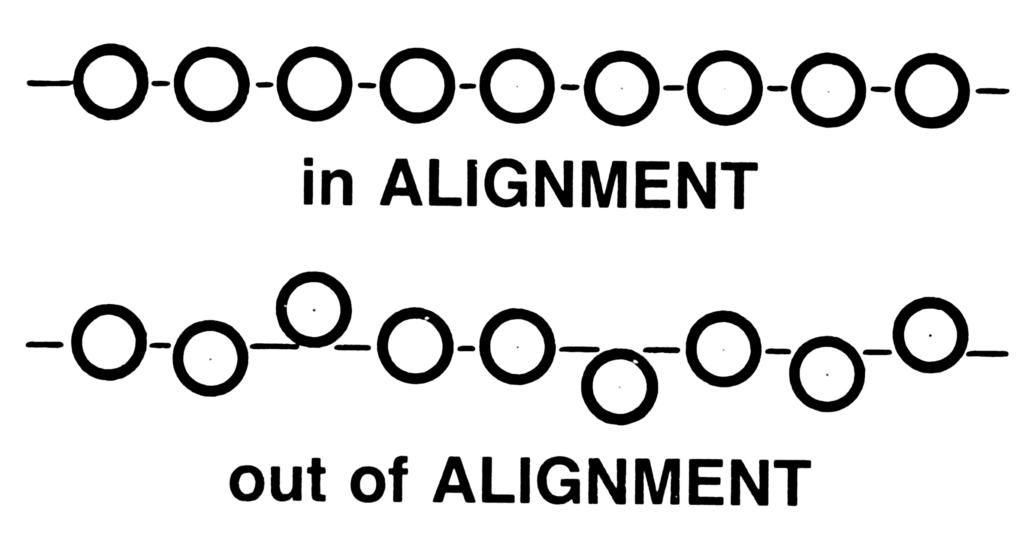
    The problem is poor alignment between what a job is advertised to be and what the employee actually experiences. On the outside, companies present an inspiring mission or vision.

    Look at almost any organization’s website, and you will see an inspiring mission or vision:

    1. Nike – To bring inspiration and innovation to every athlete in the world.
    2. Harvard – To advance new ideas and promote enduring knowledge.
    3. Salesforce – To empower companies to connect with their customers in a whole new way.

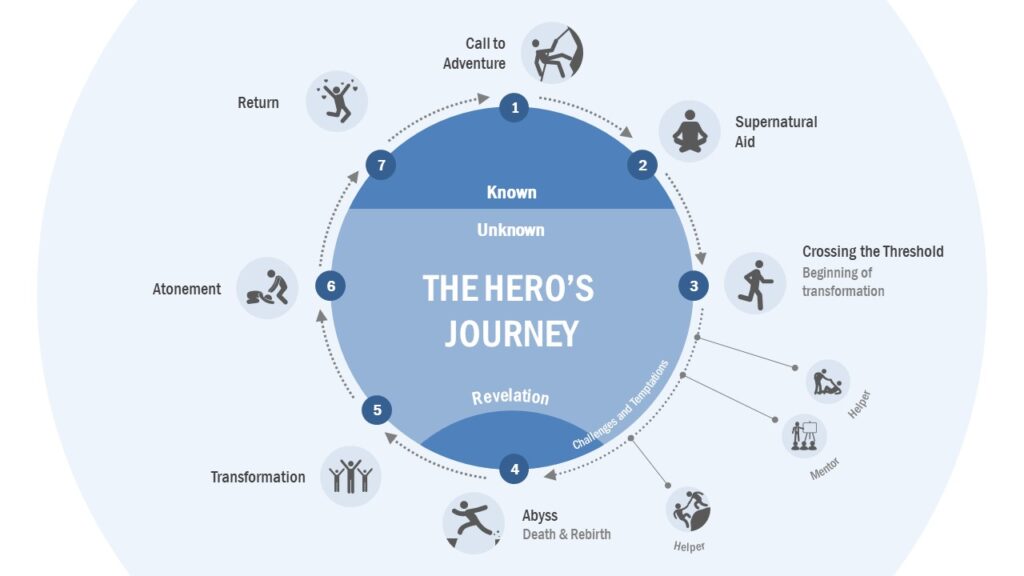
    What most companies present on the outside is a Call to Adventure. It’s the inspiring message that tells you there is a dragon out there that needs to be slain, you’re the one that can do it, and when you come back from that adventure, you and your community will be better for it.

    But, what most employees experience is far from that.

    One solution – Make the work mean something

    The solution is to make the work mean something. Companies need to help employees see the part they play in realizing the company’s mission. This can be done in a number of ways, but the most important thing is that businesses need to show their employees that their work matters.

    You don’t have to make everyone’s job exciting per se. You don’t have to give your call center manager the most innovative work in the business.

    But, you do need to help your employees see the part they play in realizing your mission.

    The most obvious contributor to employees not seeing this–and some potential employees not wanting to work for you–is that most businesses don’t bother to show their employees that their work matters. Employees all too often feel either like their job is meaningless or that it should mean something and no one realizes that.

    When you feel like you are a cog in a machine, you feel unseen. You feel like you are just one of many. And, you likely cannot see what your purpose really is. So while you’re spinning and doing your job, you do not sense any greater connection to a larger purpose or that anyone recognizes your value.

    You can change this for your employees by better communicating what your company makes real in the world and how each person plays an important part in that. And if you can do that, you stand a better chance of actually being able to get people to want to work at your company rather than just seeing you as another paycheck that maybe they’re no longer so motivated to seek out.

  • Create Your Dream Job: How to Write Your Own Job Description

    Create Your Dream Job: How to Write Your Own Job Description

    Are you looking to create the ideal job that aligns with your strengths, interests, and abilities? Writing your own job description can be a powerful way to take control of your career and create a position that benefits both you and your employer. I’ll walk you through the steps of how to write your own job description, including identifying a need for a new position, creating a job title, describing the role’s alignment with the company’s mission, and listing the job duties and qualifications. I’ll also provide a template and example to help guide you through the process. Follow these tips and take the first step towards finding your dream job.

    The steps to writing your own job description

    1. Identify the need for a new position.
      • Explain how your job solves a problem or meets a need that is currently not being addressed.
      • Use research and your own experience to back up your argument for why this position is necessary.
    2. Create a job title and description.
      • Choose a descriptive and professional title for your job.
      • Write a brief summary that outlines the purpose and main responsibilities of the position.
      • List the specific duties and tasks that you will be responsible for.
    3. Explain how the job aligns with the company’s mission and values.
      • Include a statement that shows how your job will support the company’s goals and values.
      • Explain how this position contributes to the company’s success.
    4. Describe the required qualifications and skills.
      • List the education, experience, and skills that are necessary for someone to be successful in this role.
      • Explain why these qualifications are important for the position.
    5. Provide a plan for pitching the job to your employer.
      • Identify who the appropriate person or group is to pitch the job to.
      • Outline the steps you will take to present your proposal, including any materials you will use (such as a written proposal or visual aids).
      • Consider possible objections or concerns that your employer may have, and prepare responses to address them.
    6. Follow up after the pitch.
      • If your proposal is accepted, thank your employer and follow through on any next steps that are necessary to implement the new position.
      • If your proposal is not accepted, consider whether there are any changes you can make to increase the chances of it being approved in the future.

    Step 1: Identify the need for a new position.

    For you to really take control of your career and have the best opportunities, you need to demonstrate vision, passion for that vision, and an understanding of what your organization needs to achieve its goals. In 20 years of my career to this point, I have been lucky to have the freedom to both explicitly write my own job description at times and also to develop my own job without writing the job description other times. What responsible owners and managers generally need to see though is how what you do–or will be doing–solves a problem for the organization.

    For example, my manager left the company I worked at years ago, and I was left as the most senior member of the team, but not by much. After discussing with my management, I crafted a job description that helped them to see how their overt need for a manager of that team aligned with both my current skill set and the skills and experience I could acquire if given the right support over the coming months.

    To do this, I research what managers of that type of role did at other organizations, what responsibilities they typically had before taking on a managerial role, and what I would need to do to develop from where I was to where the company needed me to be. I did this using job board searches and by reaching out to connections of connections on LinkedIn to ask if I could do an informational interview with them.

    Step 2: Create a job title and description.

    Picking a job title

    After clearly identifying, documenting, and being able to make the argument for your position, it is time to choose a descriptive and professional title. To do this, I recommend surveying titles at your existing company and performing searches on job boards.

    While Wizard of [pick a topic] or Head of Excellence and whatnot might all be applicable and interesting, they also might present some difficulties for colleagues, clients, and the market to understand. For example, let’s say that you are a high-powered project manager with the Head of Excellence title. Will you colleagues know to come to you for high-level project management guidance versus going to someone with a title like Head (or Director, VP, etc) of Project Management? And while I hope you stay at your current employer forever, the reality is that you might very well move on, but will potential future employers be able to quickly get a sense of what you do if you have a wacky title?

    Writing the job description

    At this point, keep your job description as brief as possible. You’ve hopefully searched job boards for similar roles, and you likely have pages of examples of roles, responsibilities, descriptions of what the day to day looks like, and so on. Those are all valuable, but the shorter you can make this the better at this point.

    You have the need and how it aligns with the company. You have a professional and descriptive job title. Now, write 1-2 paragraphs that outline the purpose for the job and the main responsibilities of the position. For example:

    The Chief Futurist role exists to leads the practice of Futurism and establish a consistent company viewpoint on this practice. The main responsibilities for this role are establishing the vision for what Futurism is and how we deliver it, leading high priority client projects in this area, and mentoring and managing our team of Futurists.

    Someone reading your high level description should be able to walk away with a strong understanding of what they can rely upon you to accomplish. This is not the How of your job. It is more like the central themes and goals.

    Next, you get into the How by describing the specific duties and tasks you will be responsible for. This is where your job board research comes into play again.

    Most job listings have innumerable bullet points listing everything people in those roles might have to do, skills they should possess, and so on. Pick the most relevant ones for your new roles and then adjust and add to them based on your vision for the role and how you see it aligning with what the company needs. The length of this list depends on what is appropriate for your company and role. As with many things though, I recommend you keep it as short as reasonably possible.

    Step 3: Explain how the job aligns with the company’s mission and values.

    By this point, you’ve explained the need for the role, established a descriptive and professional title, written the brief role summary, and documented duties and tasks. The next step is for you to explain how your job supports the company’s goals and values.

    Goal Alignment

    Thankfully, while many companies lack actual strategies to achieve their goals, few lack goals themselves. Many are unrealistic, more like dreams, but they still exist. So whether your company’s goals are to grow 10% in revenue this year, become the premier provider of paper products in the Northeast, or something else, your responsibility is to explain how your job will help the company achieve those goals.

    If for example your company’s goal this year is for revenue to grow 10%, but your job is largely an internally facing role, you can still impact revenue by ensuring that your work is delivered with such high quality, on time, and more that clients want to spend more money with you. Additionally, you might be able to ensure that your company has higher efficiency and/or saves money somehow around your work, so while you might not deliver more revenue, you can deliver more profit.

    Value Alignment

    Next, you have to align your new job with the company’s values. This can be difficult because most companies lack real values. They more than likely have unrealistic dreams or generic platitudes, that can be read any number of ways, such as “Respect” or “People First”. Still though, if you want success in this endeavor, you have to align your role with the company claims to value.

    My company for example has a value about consulting your network. The basic idea is that we want people that are always learning and who will build networks around them that make them and us better. As a result, if I were making an argument for a new leadership position, I could align it with this value by saying that a key aspect of me being in this job will be finding new ways of doing our work and new partners so that we are always improving and constantly bringing new things to the market.

    How you contribute to success

    You have likely done this throughout your job description, but you need to ensure that you have a clear statement about how your job will contribute to the company’s success. Will you being in your new role generate sales? Will it improve work product quality? Will it open new markets? Is there a need in the business not currently being met?

    State clearly how your role will contribute to the company’s success, and you will help executives imagine how what you are asking for aligns with greater company needs.

    Step 4: Describe the required qualifications and skills.

    Next up, it’s time to list the education, experience, and skills that are necessary for someone to be successful in this role and why they are important for this role. Thanks to you job board searches, you should have a large list of options. This is the space where you list “Bachelors degree in Marketing, Business, or a related field required” and so on.

    You cannot reasonably pitch to have a job if you do not have the qualifications, so ensure that the education, experience, and skills are both appropriate to you and also actually necessary for the role. There is no value is listing for example that a BA is required when it’s not. Similarly, if you have 20 years of experience, but someone could do the proposed job with 5 years, you need to list 5 not 20.

    Step 5: Provide a plan for pitching the job to your employer.

    At this point, your job description itself is likely complete or nearly complete, so beyond editing and refining, your next steps are to:

    1. Identify who the appropriate person or group is to pitch the job to.
    2. Outline the steps you will take to present your proposal, including any materials you will use (such as a written proposal or visual aids).
    3. Consider possible objections or concerns that your employer may have, and prepare responses to address them.

    If you have a boss already, but maybe you are pitching a role that would not report to them anymore, you might need to take political or power dynamics into account. There is no use for example pitching a role to your CEO if they’re going to go talk to your current boss and hear that that person knows nothing about your pitch. That might not look too good for you.

    As you prepare, ensure that you understand the need, how the company will benefit, and so on so that you can make a cogent and compelling argument. Also, prepare for any objections so that you are not stopped in your tracks at the first question.

    Assuming that the person you are pitching to has little knowledge of what you will talk to them about, begin the conversation with a statement of why you want to speak with them such as, “I have identified a need and an opportunity in [this area] and have a proposal for how to address that I would like to speak with you about.” Once you have described the need and opportunity, explain your understanding of how this aligns with the company’s goals and values, and be sure to ask if the person you are speaking to sees the issue in the same way.

    If they do not see the issue in the same way, take the time to understand how they see it because you might not still be able to move forward with your pitch. You need information about their perspective though before deciding.

    If they do see the issue in the same way you do, explain your pitch for a new role at a high level and then ask if they have any questions and/or would like you to get into details. This is not the time for you to give them a monologue. It would be better to let them talk as much as they are willing to so that they feel heard.

    Step 6: Follow up after the pitch.

    If your proposal is accepted, thank your employer and follow through on any next steps that are necessary to implement the new position. Typically, this involves an action plan with specific deadlines, and it might very well include a plan for how to replace you in your current role or otherwise cover the work you are currently doing.

    If your proposal is not accepted, consider whether there are any changes you can make to increase the chances of it being approved in the future. If at all possible, ask why your proposal was not accepted so that you understand if there is anything to be done and/or where you might not have been in alignment with the needs of the company.

    Conclusion

    1. Identify the need for a new position.
    2. Create a job title and description.
    3. Explain how the job aligns with the company’s mission and values.
    4. Describe the required qualifications and skills.
    5. Provide a plan for pitching the job to your employer.
    6. Follow up after the pitch.

    To conclude, writing your own job description is a great way to take control of your career development and find job satisfaction. By identifying a need, creating a job title and description, and presenting your proposal to your employer, you can create a position that aligns with your strengths, interests, and abilities. This can lead to more motivation and engagement in your work, as well as the opportunity to develop new skills and add value to the company. Take the time to create a job description that works for you and your employer, and you may find yourself in a fulfilling and enjoyable job tailored just for you. Encourage readers to share their experiences with creating their own job descriptions in the comments below, or to contact you for more information on how to do so.

    If you are writing your own job description and have questions, please shoot me a line at eric@inboundandagile.com. I would be happy to help if I can point you to any resources.

  • Personality tests do a terrible job telling us much about ourselves.

    Personality tests do a terrible job telling us much about ourselves.

    Business is drunk on personality testing.

    You take Myers-Briggs and find out you’re an INFP or some such nonsense. You take Enneagram and learn that you’re a Challenger.

    And, thanks to this. Your behavior suddenly makes sense.

    “No wonder I don’t always get along with people. My personality test says that I tend to be aggressive.”

    “Big surprise that I get overlooked at work. I’m an introvert.”

    Never mind that a supposedly aggressive person might be tame around their grandmother or that that introvert likes to get loud when playing poker with their buddies. We’ll just overlook that.

    The reality is that numerous studies over decades have shown that personality tests predict <10% of behavior. The reason for this is fivefold:

    One, context matters more than supposed personality traits at the level of individual situations. For example, maybe you argue hard in the board room or a court of law, but are easygoing around your kids. Why? The context requires different behavior from you.

    Two, you cannot reduce many things in life down to a single variable and have much reliability. Can you judge your health based solely on your cholesterol level? Sure, it’s important, but what about your physical activity, blood pressure, diet, stress level, and so on? Or, how about IQ? Raw brain power is important of course, but is a high IQ all it takes to pick out a “smart” person, a hard worker, or something else?

    Three, the trait has to be limited in scope and very specific to predict anything well. If you were seeking someone to model swimsuits, you would be better off asking someone with high body-esteem, because that is more specific, than someone with simply high self-esteem, which is simply too multi-faceted.

    Four, a person has to be pretty extreme in a trait for it to predict well. If for example you are a 95% in extraversion, we are more likely to be able to predict how you will act in most situations than if you are a 75% in extraversion. The reason is that your trait is less likely to be dampened by any situational specifics.

    Five, traits predict general patterns better than individual actions. It’s a little like the difference between weather and climate. Just because your climate has gotten warmer or dryer does not mean that you will not have colder or wetter days. The same is true of traits. Hire someone that tests high in flexibility, put them in a chaotic situation, and you might find that their reaction is to try to build some stability by implementing prescriptive or restrictive rules. But when they go home, they might very well revert to being flexible with their family.

    I share all of this because you are not as simple as a single measurement or personality trait.

    Your height does not describe you with any level of confidence that I could make real judgments about you.

    Your hair or skin color does not describe you well enough that I can draw conclusions with high confidence.

    The same is true of your cholesterol level, your waistline, or any number of other things.

    And, it is most definitely true with personality tests.

    Yet, employers seek to reduce the evaluation of job candidates–and even current employees–down to very few measurements so that they can simplify how they think about us, and we invite that because we’ve bought this line that our Myers-Briggs or DISC or whatever explain so much about us.

    Slowly but surely, we can change this though by refusing to others and ourselves people down to simplistic and broad measurements. You are not just a number or a skin color or a personality type. You are more than that, and so is everyone else.

  • Human beings are hardwired for threat detection, but our businesses do not have to suffer for it.

    Human beings are hardwired for threat detection, but our businesses do not have to suffer for it.

    Human beings are hardwired for threat detection.

    Some more so than others. And, some have whatever genetic level of anxiety or neuroticism they were born with amped up by the circumstances that brought them to today. So, some people might actually be predisposed to be, let’s say, risk takers, but for all intents and purposes, what you or I see is someone who is risk averse, skittish, pick-your-particular-flavor-of-threat-detection-behavior because maybe they grew up without a stable home, were in an abusive relationship, have been attacked, or something else.

    Again, at the end of the day, we all have some level of predisposition for avoiding threats, but some have that level amped up by their experiences.

    Imagine a young mother 5,000 years ago needing to decide if this stranger that just walked into her village might be a threat to her child. Or, imagine that child’s young father seeing that stranger and not knowing if he can leave for the hunt that day or if he needs to stay close for protection. Some people in those circumstances decided they were safe and left to do what they needed to (hunt, farm, barter, whatever), and their child (or whatever they were protecting) was harmed. Others stayed close to home, did not get done what they needed to, and suffered due to for example their family not having food or income.

    They could not predict the future. They could only place a bet. Some of them made the wrong bet by leaving, so maybe they didn’t pass on their genes because their child was murdered. And, some of them made the wrong bet by not leaving, so maybe their child starved because food was not brought home for the day when it was really needed, and again, their genes were not passed on.

    Ultimately though, if your child went hungry or your household had a little less income for a single day, you stood a chance of recovering, but if your child was–let’s say–killed by that stranger, there was no recovery from that. As a result of the ability to recover being different from one choice to the next, human beings are on average more averse to threats than we are attracted to opportunity because permanence of opportunity is unreliable. The permanence of death is quite reliable though.

    This is just one small contributor to the extreme attention we now pay to levels of protection that would seem odd to someone from decades or centuries past. That is not to say that for example seatbelts are unnecessary or that there is any problem with making bottles BPA free, but every potential threat piled on top of the next–no matter how small–creates a slippery slope, where we increasingly come to think of these threat avoidance measures as being necessary, and we forego potential benefits in favor of staving off threats.

    You or I might think for example that it’s harmless to just walk my daughter around the corner to play at the neighbor’s when she could have just walked by herself, but society leads me to believe it’s not acceptable to just let my daughter walk alone, so I go along with that expectation despite not feeling it is necessary. It’s safer and harmless right?

    But, as Todd Rose says, “Today’s collective illusions (the thing that no one believes, but goes along with, because we think everyone else believes it) become tomorrow’s norms.” And those norms just get built upon with more collective illusions, which again become norms. It’s a positive feedback loop.

    We’re working our way toward a society that values protection at all costs. No risk taking. No weighing of the costs and benefits. It’s like the extreme version of Dick Cheney’s 1% doctrine. If there is any chance of threat, that’s too much.

    And sadly, the media through which we increasingly engage with and understand the world amplify the collective illusions because that natural, human threat detection tendency reacts more strongly to the negative stories we encounter than the positive stories. This is why Hans Rosling said, “Good news is not news.”

    All of your information (let’s call them “news”) outlets are selling something. TV and websites need visitors so that they can sell ad space. Forum and social media users are selling a viewpoint. And, so on. If they weren’t selling something, they wouldn’t care about getting your attention.

    And sadly, if you’re one of those people that actually does not follow the collective illusion, if you think there are some gambles worth taking, you are now put in a position of being seen as untrustworthy because obviously you’re just not concerned about the environment or animals or children or God-knows-what. You’re too cavalier, but they (someone else) care even though you don’t. Clearly.

    In today’s environment, that “compassion”, that moral high ground wins in all arguments even if it’s over-protection and comes at the cost of other benefits that could be gained, such as for example teaching my daughter within a relatively safe setting how to navigate the world alone. No, protection today over long term protection or competence in the future, right?

    Within our businesses, this manifests not as an environment in which people can say and do hard things and where they can be safe to make mistakes while working toward our collective goals. Instead, this manifests as workplaces where you cannot say certain things because they make others uncomfortable, where–instead of being encouraged to do–you are mandated to no do.

    The downstream implications of this are workplaces in which most people do not feel comfortable being themselves because they have been told making the wrong joke, using the wrong phrase, looking at someone the wrong way is an unforgivable offense. So, people do not open themselves up and fully commit. Why commit when you cannot be yourself? And certainly, if I’m not committed and if I fear punishment for making mistakes, why work hard to try new things, to innovate?

    At the societal level, I don’t expect this to change. This is human nature, and the machinery we have built around us support it. The structures and the collective illusions we have built within most businesses support it.

    What you can do though if you question some of this security-at-all-costs is not stay silent.

    If you’re silent, that makes the collective illusions even stronger and more likely to become norms for the next generation. If you at least say something though, you create the opportunity that other likeminded people can find you and that–maybe, just maybe–someone predisposed to avoid that threat starts to question the value of avoiding it over the value they could get from spending their time and energy elsewhere.

    Within a business, that gives you the opportunity to build a culture in which people can be themselves, commit, find the mission and people they truly align with, and achieve something that every other organization foregoes in the interest of immediate “protection”.

  • What I Learned Guesting in 44 Mastermind Groups This Year

    What I Learned Guesting in 44 Mastermind Groups This Year

    I joined a mastermind network earlier this year and began guesting in meetings outside of my market in May. With 44 total guest appearances, that is an average of 5.5 90-minute meetings per month.

    The format for these meetings varies from group to group, but one of the most consistent things is that it is a 90-minute meeting once each month rather than for example the half or full day that some groups put in.

    After having guested in 44 of those groups, this is what I have learned about what it takes to both run and also be a solid contributor to a mastermind meeting.

    Leading a Great Mastermind Meeting

    Undoubtedly, it is more difficult to lead and build something than it is to take advantage of it after-the-fact. And, there are many more ways to do something poorly than there are to do it well. Fortunately, if you are motivated by opportunities for improvement, this is why the statement that the path to success runs through failure is so true. Hopefully, if you are a mastermind leader, you can use some of this information to make your investment return as much as possible.

    Without further ado, what I believe it takes to lead a great mastermind meeting:

    Respect the participants’ time.

    It is difficult to start meetings or anything else on time. I get that. We’re all running from one thing to the next, and it is nice to be able to ease into things with some personal conversations, discussions about the weather, or whatever else, but most mastermind groups are made up of people that are executives and CEOs, whose time is expensive. And, they’re paying to be there, so start your meetings on time, set an agenda, and stick to it. If anything I already mentioned, like personal conversations, are valuable to your potential outcomes, make a deliberate and overt decision to have that be part of the agenda.

    Prepare for the meeting.

    Unlike most participants, the meeting leader has to prepare. If you’re meeting in person, you have to secure the space and likely food or beverages. If it’s virtual, you still need an agenda and featured topics, members, or guests. Sadly, no one is going to take care of these things except the meeting or group leader or someone they delegate to.

    While not having food or beverages is not the worst thing in the world, not having a feature and having to ask, “Does anyone have anything they want to discuss?” is nearly always a meeting and value killer. It can occasionally result in valuable conversations, but that is far from guaranteed. And in my experience, that almost always results in a wasted meeting.

    Do not go into the meeting without a planned and prepared feature member, speaker, or topic.

    Establish continuity.

    In addition to developing a consistent format that you stick to, one of the least common, but most valuable, things I have seen group leaders do is a checkin at the beginning and end of every meeting. Typically, this takes the form of going around the room, asking for a 1-10 score/status on your personal and business life (lives?), and then soliciting an answer to a general question like, “What is the biggest news at home or at work from the last month?”

    The continuity piece comes in the ability to extend a conversation about one of these issues over multiple meetings. For example, I experienced one group speaking with a participant about what was going on in their business because their score had been low for months, but in this particular meeting, they finally raised it.

    Rather than just having a topic-of-the-month and not much more than the individuals or the format that tie things together, this checkin allows for participants to extend consideration of and discussion about a topic over a longer time, which also helps with the next item.

    Build community.

    The best groups I have guested in had members that demonstrated that they were invested in the group, the time, and their fellow members. This exhibited itself in how open and vulnerable some of the featured members were and how frank, but clearly caring, the other participants were with their questions and recommendations.

    The worst groups I have guested in had members that knew little to nothing about one another, featured members that had not prepared, and discussions that rarely got beyond the feedback that you could get from anyone on the street. Additionally, some of the worst groups typically had a majority of members that said that they wanted to be in person more, wanted greater depth of conversation, and so on. But as far as I could tell, they were not making an effort to drive to a meeting place, really focus on giving genuine help, or otherwise investing their time and effort. They might have wanted those things, but the individuals had either gotten tired of making the effort without it being reciprocated, or they simply talked the talk and never followed it up with action.

    I believe that a large portion of the potential for community in a group of 10-20 people from different industries, who often have no pre-existing connections to one another, comes from the natural predispositions of the members to genuinely invest in one another and connect one on one rather than for example from some already existing community standards that the members opt into or adopt when they join. That being said, the behaviors and activities that I could see fostered a strong sense of community were:

    1. The group leader investing in each new member. Getting to know them, helping them understand how to make the most of the group, and so on.
    2. Members working to build relationships outside of the meetings. Setting up one on one coffees, working to understand how they could help each other, having social times such as parties or happy hours, etc.
    3. Members investing their time and attention.
    4. Members being open, honest, and vulnerable.

    Set standards.

    Years ago, my wife and I went to Thailand. At one of the temples, they would not let us in because we were both wearing shorts. The fact that we had to purchase and don pants in order to enter the temple felt like an unnecessary restriction, but by enforcing a certain dress code, officials at that temple were working to establish a specific environment that generated certain outcomes.

    At any point in life, we can feel that some rules are silly or unnecessary, but in most cases, groups have rules and standards because those things facilitate achievement of the group’s goals. The same should be true of a mastermind group.

    Some of the basics should be:

    1. Stick to a schedule.
    2. Prepare an agenda.
    3. Ensure that your featured speaker or member is ready and equipped for their time.
    4. Enforce a discussion format. Generally, asking questions before moving to recommendations is a good idea for example.
    5. Encourage deep, genuine, and vulnerable conversation. I don’t mean vulnerable in the sense that people just talk about their weaknesses, but rather that the speakers are open and transparent in an effort to get to the best possible solutions.The encouragement part of this also involves members, or at least the leader, courageously calling out when for example someone veils a recommendation as a question during the question portion.
    6. Make sure that everyone shows up on time, stays the whole time, and pays attention. Unexpected things happen, and there are times when for example someone has to leave early for something they cannot miss, but the number of times I’ve been in bad meetings due to people multi-tasking, showing up late, or showing up just to pitch their company and then leaving is astounding.

    Being a Valuable Mastermind Participant

    Let’s be honest. It’s not that difficult to just show up and follow some rules. It is more difficult to be completely open and honest about personal flaws, insecurities, or sensitive topics, but that is also manageable if trust can be established.

    After guesting in 44 groups, this is what I believe it takes to be a good participant in a mastermind meeting:

    Invest your time and attention.

    It does not matter whether you’re a CEO, a hairdresser, or a stay-at-home parent. We’re all busy. We’re all short on time. Don’t disrespect your fellow participants by showing up late, not sticking around, or not paying attention. You and I have both paid to be here. Don’t waste my money and time because you don’t value yours.

    I get it that–especially with a virtual meeting–you’ve got your email and Google and who-knows-what-else right there. And for in-person meetings, you have your phone and smartwatch or whatever else. But, we’re all paying to be here, and some of us are really investing a lot in you and ourselves. If you’re multi-tasking, you’re not invested. If you show up late or leave early, that detracts from the flow and the quality of conversation. And if you really aren’t invested in being helpful, I could just as easily have talked to anyone. Why pay to be a member of a group of leaders if I cannot get better advice than what I might otherwise find on the street?

    Love the problem, not your solution.

    I have a bad habit, a common one but still a bad one. When I think I have the answer, I so want to be right. And when I think I have the solution to your problem, I tend to forget that maybe there are important details I don’t know about. And, I probably stop asking questions that might help me better understand the issue. Unfortunately, the same is true of a lot of people.

    Some of the best run mastermind meetings I have been in ask for the featured member to answer a standard set of questions in advance so that the other participants do not come in blind. They can have spent some time reviewing the topic or issue and letting it rattle around in their heads so that they come to the meeting prepared. Then at the meeting, the member is asked to give a synopsis of the issue and what they are seeking from the group. And finally, the group has two time blocks dedicated first to asking clarifying questions and second to making recommendations.

    Two of the most valuable aspects of the time for clarifying questions are that this often helps break the featured member free from their existing way of thinking about the challenge, so that they might actually solve the problem themselves, and it aids in the other members getting a better understanding so that they can give advice that might actually be unique and useful.

    Ask questions.

    If you think you know better than someone else, if you think you have the answer, you stop asking questions and demonstrating curiosity. And most of the time if you just tell someone what to do rather than having them come up with the solution themselves, you make it much more difficult for them to take responsibility for their actions.

    The reason is that, if what you recommend does not work, it’s your fault not theirs. It was your idea. And if what you recommend does work, you’ve encouraged that they seek creative solutions from others rather than believing that they can solve their own problems.

    Let’s be honest. In a group that includes a CPA, a lawyer, a banker, a management consultant, a marketer, and so on, there are a lot of challenges that each person might encounter that are unique to that industry or vertical. And if you are outside of the issue, it is unlikely you will have a better solution than the person that brought the challenge to the group. That being said, you might have a new way of thinking about the situation, so rather than saying, “Try this,” or, “Do that,” consider asking, “Have you thought about…” and, “What do you mean when you say…”

    Stick to the format and structure.

    My goodness, people. It’s not that hard. Almost no groups that I have guested in have been able to successfully follow through on this though.

    Group leader: “We spent a lot of time on introductions last meeting, so even though we have a few guests this time, let’s just do the shortest elevator pitch description of yourself you can do. Name, role, and industry. That’s it.”

    Inevitably, one or two people follow the format at first, the third forgets and doesn’t follow the format, the fourth tries to get back on track, and from the fifth on it’s just abandoned altogether. So, what could have been 20 people introducing themselves in 10 minutes or less turns into a 30-minute segment in which a feel people at first said 10 words over a 30-second intro and some of them say hundreds over 5-minute soliloquy.

    There is such as thing as positive constraints. These are generally defined as limitations that benefit the situation. Whether you are in a debate club, the NFL, or a court of law, an agreed upon set of rules that we all follow allows us to get more out of the engagement than we would without those constraints. The same is true in mastermind groups.

    If your group–or your group leader–provide some guidance for the benefit of the group, just follow the damn rules.

    Don’t sell. Help.

    Whether in the meetings themselves or in one-on-one discussions, the number one reason participants ever gave me for feeling the meetings were not valuable was that other participants were too salesy. While I hesitate to judge too much because I honestly did not experience much of that, I can imagine what it would be like. And as it relates to some of these points more broadly, you as a member of a group–and your fellow members as well–simply are not going to get as much out of the time as you could if you are more focused on overt lead generation than on actually trying to help your fellow meeting participants deal with the challenges they face.

    I hope this has been helpful–whether you are considering joining a mastermind, you’re a leader, or you are just a participant yourself. If I can help you with anything mastermind related, shoot me a line at eric@inboundandagile.com.


  • This is a light bulb.

    Light bulbs are amazing. Because of light bulbs, you can work, read, play, and do other things when the sun is not out. And, if you have the right kind of light bulb, you get heat too. Thanks to light bulbs, you benefit, the people around you benefit from them, and you each benefit from the activities of each other.

    For example, you can work later into the evening making yet another pair of shoes, and because you have that pair of shoes to sell, your family has just a little bit more income, which allows you to pay for your daughter’s education. And because your daughter can read by the light of that bulb, she tells you things you never knew about the world that open up new ways of thinking and better ways of making those shoes that generate money for your family.

    We all benefit from something as simple as a light bulb.

    Source: https://www.lightingafrica.org/

    A light bulb is a fragile thing. Incandescent bulbs in particular have thin glass and a delicate filament.

    Due to this fragility, it’s easy to break a light bulb. You can drop it, smash it, knock it, throw it, bump it against something, or breathe on it the wrong way. Believe me. I’ve seen it. There are thousands of ways to break a light bulb.

    There are very few ways to make a light bulb, and it’s difficult. Have you ever tried?

    When I was in elementary school, one of my science fair projects was a light bulb. It was a peanut butter jar that had been turned upside down. The lid was secured to a block of wood so that you could remove the jar (bulb) portion as needed, which I had to do a lot by the way. There were nails secured to the lid through the block of wood and wires attached to those. Between the nails, I connected bits of wire to use as the filament. The power source was a motorcycle battery.

    It looked something like this.

    Source: https://brinzaengineering.weebly.com/

    One of the problems with my homemade light bulb was that the filament sure would light up and get hot, but it would burn out after less than a minute of being on. Also, the battery had to be charged, and I couldn’t just use my light bulb anywhere. It didn’t plug into existing sockets. There were no replacement parts available for cheap in stores. You see where I’m going here.

    It was a great experiment, but the thing I built on my own–despite being less fragile–was much less useful than the light bulbs created by and based on standards that many people have contributed to.

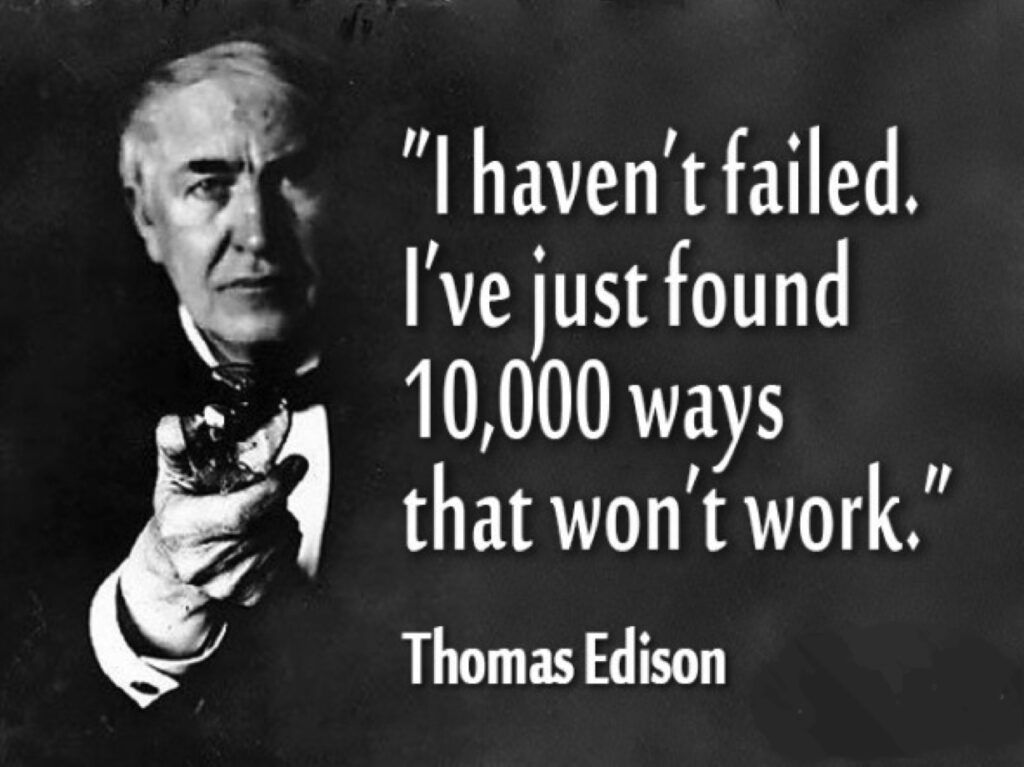
    Your organization’s culture is like a light bulb. More than likely, it took several (maybe even a lot) of people a substantial amount of time to build that culture. Whether they knew it or not and whether it was intentional or not, they tried a lot of things that did not work and arrived at something that finally did.

    Source: https://www.edisonmuckers.org/

    Like Edison’s first light bulb, like my light bulb, and like light bulbs today, are there things to be improved upon with your organization’s culture? You bet there are. There always are.

    But, like a light bulb’s light and heat, does your organization’s culture provide benefits that might be harder to find in a culture of your own creation? You bet it does.

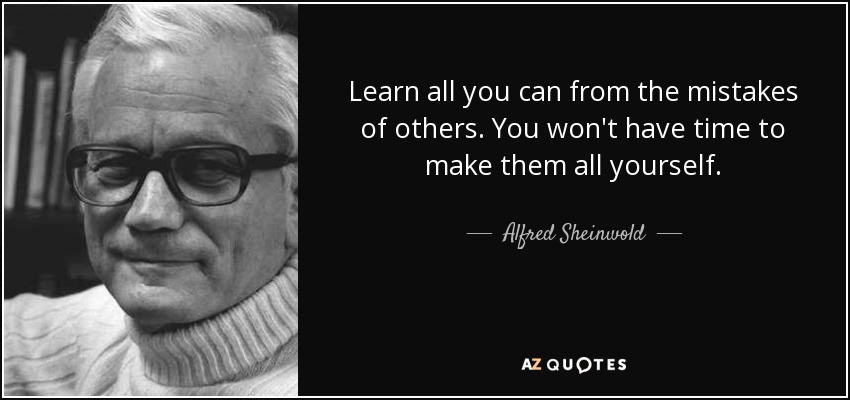
    And, as in the case of a light bulb, are you better off with a culture that has grown over time as opposed to just tearing it down and starting from nothing? Well, do you want to benefit from the successes and failures of others or do you want to start over from scratch?

    Source: https://www.azquotes.com/

    Unfortunately, when you look at a light bulb, it’s easy to not see how fragile it is, how difficult it was to create, and how hard it would be to replace. And because of this, we undervalue the miracle that is that light bulb just as many of us undervalue the miracle that is our organization’s culture. That is until we break it and find out that it is not so easy to fix or replace.

    If you find yourself thinking that your organization’s culture really does not do a good job providing what you believe it should, maybe think about how hard it would be to replace it with something of your own creation. And maybe even think about–despite how flawed that culture might be–how a lot of time, effort, and learning went into creating it and if maybe, just maybe, it’s something worth building upon rather than than tearing down and starting over alone.

  • A fully comprehensive way to write your own job description

    In the last five years, I’ve been asked to write my job description at least twice that I can recall. You’d think this would be a blessing because you get to create your own position. Unfortunately, it rarely is, so I’ve written this to help you avoid the mistakes too many people make in this situation.

    A job description should detail what a business needs from you, not what you can do. Some bosses ask you to write your own job description because they want you to feel control, they’re too busy, or they really don’t know what someone in your position should do and are hoping you’ll tell them.

    It’s particularly bad in the digital marketing space – where typically managers either are chasing trends and buzzwords or are clueless when it comes to new engagement opportunities, tools, processes, and more.

    The best way to start your job description

    List every task or responsibility you could possibly imagine you, or your company, wanting in your job description. In the recent past, I’ve written variations of these:

    • Run daily stand up meetings.
    • Share company performance with team.
    • Mentor the rest of the team.
    • Represent the company in industry publications and blogs.
    • Assess client needs and find products to address them.
    • Manage reporting for a growing client set while ensuring continual agency progress toward automation.

    Write as many as you can. You’re brainstorming. No idea is stupid.

    Once you have your list, group similar tasks into responsibilities. In the list above, I can reasonably group the first three into a single responsibility. Act as a team leader to both the team staff and the rest of the company. Continue doing that until you’ve eliminated all tasks and only have responsibilities.

    Tasks in a job description distract from the long-term vision and make it more like a manual. Any time you realize you’re getting into the specifics of how to do the job, pull back and rewrite it or group things together to answer these two questions. What am I doing? Why am I doing it? (I’ve added more potential questions to help you at the end of the post.)

    Shape your responsibilities to fit the company’s needs.

    One of the key failings of job descriptions we write for ourselves is that we write them to suit what we want and need and not what the company needs. In the list above, I remember removing Represent the company in industry publications and blogs because, as much as I thought that would be great for me, it wasn’t what the company needed from someone in that position.

    Imagine that I had left it in and my boss had supported it. That would have started an unfortunate downward spiral that goes like this.

    1. I’m asked to write my own job description because my boss and company don’t know what they need from someone in my position.
    2. I write it to satisfy my wants and not the company’s needs.
    3. My company supports the job description as written without realizing I now have duties and responsibilities that compete with the company’s forward progress.
    4. Because I spend at least a portion of my time on things that do not address business needs, we do not grow as much as we should and that leads the company to have unhappy clients, hire less, lay off staff, put more scrutiny on my department, or (worse yet) maybe be unhappy with me.
    5. We have a difficult time agreeing on what the problem is because they originally endorsed my job description, which made me feel empowered and supported, but now, they’re telling me that I’m part of the problem.
    6. They change my duties without asking me to contribute this time, and as a result, I feel I’m no longer empowered to control my own job/career.
    7. This leads to resentment, which leads to less work or less effective work being done.
    8. Eventually, I start looking for a new job, where I think I’ll be empowered, or I get fired because I’m no longer as effective as I was when I felt I had the freedom to choose my own path.

    If you can write your job description to fit the company’s needs, you can get picture of whether you’re the right person to do the job. If you’re not, can you grow into it? Do you want to? Finding out now ensures that you don’t end up in the downward spiral, and it gives you the opportunity to talk with your company about what you really want to do, while showing them that you recognize the needs of the business. Both of these are good things.

    When you’re done with this stage, the ideal job description will have 8-12 responsibilities. Any more and you’re probably being unrealistic about how much one person can do. Any less and you show you’re not sure what you should be doing.

    Be the trailblazer
    via RichardStep.com

    List the skills that pay the bills.

    Look at the list of responsibilities and write down every skill and personal trait someone would need to satisfy these. If one of the responsibilities is Lead improvements in weekly client reporting, you might reasonably list skills and personal traits like:

    • Advanced Excel, Access, and SQL experience.
    • High attention to detail.
    • Willing to leave no stone unturned in a search for answers.
    • Passion for [client’s vertical].
    • Willingness to travel for client meetings.

    Once you’ve listed the job responsibilities, skills and personal traits should be simple. Just make a list. Think of the keyword-type of things you would search for in an online job search like “Excel,” “No travel,” “Passion for marketing,” etc.

    When you’ve got your list, split it into two sections – Skills and Personal Traits. For my tastes, Skills is just a list of words and short phrases that shows that the person in this job needs experience with X, Y, and Z. Personal Traits is a little more wordy and gets into the personality of the employee. Who are they? What do they like? Where do they thrive? Why do they love this type of work? How do they do their job so well?

    Time for some job description research.

    Every job description needs a Title, Department, Reporting Structure, Location, Compensation (base, bonus, commission, etc), Vacation, and Scope.

    Department, Reporting Structure, and Location should be straightforward. What department will this job be in, who will the person report to, and where will they work?

    For Title, I use Linkedin Advanced Search and Google Trends to find relevant titles. If you know for example that you’re moving to the Director level and that you’ll be working in digital analytics, doing multiple Linkedin searches for variations of Director of Digital Analytics, Marketing Analytics Director, etc shows you how many people have that title. Google Trends gives you an idea of how frequently people search for that title so that you can see if it’s growing or shrinking in popularity.

    Picking an unpopular title guarantees:

    1. You won’t be found when potential hiring managers search online in the future.
    2. You’ll always have to explain what you actually did in that specific job.

    For Compensation and Vacation, my favorite tool is PayScale. For free, you can create a report based on what you currently know about the position and then find out what people get paid in your area, how much vacation they have, whether they get commissions or bonus, and more. Almost everything is on a range at PayScale though, so you need to assess your fitness for the job and then put an appropriate smaller range on your job description.

    While writing this up, I saw that $85,000 (at the 10% mark) to $130,000 (at the 90% mark) per year was the range for a test report I created and that the majority of people in that position had 2 weeks of paid vacation, but that some had up to 6 weeks. If I was writing a job description for the position, I would look at how well I could do the job compared to everyone else that might be able/willing to do it and then set my goal Compensation and Vacation there. For the purposes of the job description, I would place an appropriate range around that to give my employer room to adjust and also to avoid the potential negative psychological impacts of me being over-optimistic and them bringing me down to Earth by adjusting it down.

    If you set your sights unrealistically high, either you will be disappointed when your company adjusts down or your company will be disappointed when they realize they’re overpaying you.

    To finish your research, look at everything you’ve written so far and consider the scope of the position. Should you be working with people from the entire company, with all of the clients, or just a subset? Should you be only focused on a region or territory or thinking about, traveling to, or otherwise working with the whole country or world? How about effect within the company? Will you being making decisions that change the direction of the company or focused on a specific aspect of the business?

    Putting together your job description

    As of now, you should be able to list these in your job description:

    • Title
    • Location
    • Department
    • Reporting Structure
    • Responsibilities
    • Scope
    • Personal Traits
    • Skills
    • Compensation
    • Vacation
    • Experience

    The last big step is to look at everything you’ve put together and write the Position Summary, which I typically place before Responsibilities. The key here is to now put away everything you’ve been working on and write a 3-5 sentence, high level description of the job you want. Don’t worry about whether it gels with everything in the job description. Just write what your dream job would be.

    One Position Summary template I really like is:

    The [Job Title] focuses on [Client X, Company issue Y, Vertical Z, etc]. He [insert one thing you would dream of being able to do every day]. Additionally, the [Job Title] [insert the first thing that you would love to do that is also critical for the business]. He [a personality trait and set of skills that make that describe the ideal candidate]. Finally, the [Job Title] [write about the business effects of this person’s work].

    Once you’ve done this, paste the Position Summary into your job description and make final changes to align the Summary and everything else you’ve put together. Hopefully at this point, there are very few differences between your Position Summary and the Responsibilities. If there are though, keep in mind that a job description has to address the needs of the business or else you’ll end up in the downward spiral I showed earlier.

    If you can’t align the job description with what you really want to do or are suited to do, talk with your company. This is an opportunity to build a clear development path while also helping your boss see that you understand, and are committed to, the needs of the business. Managers appreciate that. It’s a huge advantage to have employees that get the big picture of the business.

    Final notes

    If you get stuck at any point, try answering these questions:

    • What are the trends my job addresses?
    • What are the company needs and problems my job addresses?
    • How do I make my boss look good?
    • What possibilities can I see?
    • What purpose do I serve?
    • How will I be used?
    • Who needs me?
    • What platforms work best for this job?
    • How can I find the best solutions?
    • What people can help me make the best decisions?

    Also, consider using these verbs in your job description:

    • Communicate
    • Plan
    • Manage
    • Monitor/report
    • Evaluate
    • Control
    • Produce
    • Maintain
    • Create/Develop
    • Recruit
    • Train
    • Developing policy
    • Formulate

    And lastly, these are some of the guidelines I recommend sticking to:

    • Limit Responsibilities to 8-12 short points.
    • Limit to responsibilities, not tasks.
    • Group tasks into responsibility areas.
    • Refer to manuals when possible rather than over-explaining.
    • Clarify employer expectations.
    • Provide a measurement basis, but avoid putting targets in the job description.
    • Place the position in the org chart.
    • Prevent arbitrary interpretation of the role.
    • Define the skill set.
    • Write it to match your dream job.
    • Keep long-term business objectives in mind.
    • Job descriptions should be written to fulfill a business need, not detail what an employee can do.

    Have you ever written your own job description? Are there other recommendations or guidelines you would add to this?

  • What are you afraid of?

    I know someone that won’t leave their house when it’s dark and their spouse isn’t in town. Another person won’t visit their family across the country because flying scares them so much. Yet, another hides all of their money IN CASH around their business and home because they’re afraid it’s not safe in a bank.

    I hope you’re asking yourself now:

    • How many things has that person missed by not going out after dark?
    • How much time and valuable experiences with their family has that person lost out on?
    • How much of that money has been stolen? What if there’s a fire? What if they forget where some of it is hidden?

    I can’t help but wonder what the real value of those fears are. How does entertaining those fears make any of those people’s lives better?

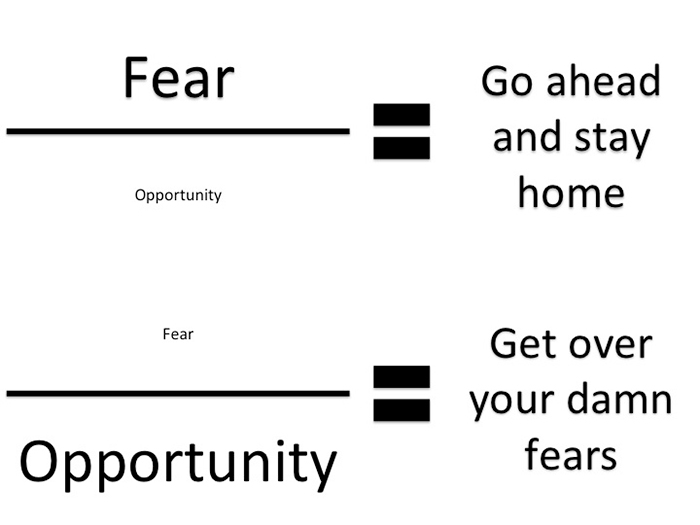
    Get over your fears

    Fear is a tough thing. It makes your heart race, makes your feel vulnerable and uncertain, and worse, but most of your fears are irrational, and they hold you back from experiencing, achieving, and reaching everything that you really could with your life.

  • You have a problem with analytics

    Years ago, I made a small name for myself through blogging about social media and tweeting pretty much anything that I could find on Reddit. I got to the point that I was getting a fair number of job offers, as well as just a lot of praise, so what did I do? I blogged and tweeted more. It got to the point that I would be out with my friends or family and spend most of the time on my phone because I knew that, if I blogged and tweeted more, I would see more progress. Even when I’d walk from one place to another, I’d be glued to my phone.

    Unfortunately, I never questioned whether it was the volume of blogging and tweeting that led to my progress or if maybe it was something else like me being a first mover or having the right personality or connections or something else. Had I questioned that, I might have seen the cost-benefit problem that was going on. While I was getting noticed and seeming to move my career along, I missed out on experiences with friends and family. I often wasn’t there when important things happened, and if I was, I was too busy on my phone to really be involved.

    Not asking the right questions
    via birgerking

    This is one of the things that frustrates me about “analytics” the most.

    Just because you can A/B test tweeting at 8am vs 9am or emailing on Mondays vs Tuesdays doesn’t mean that the answer tells you anything useful. When we see graphs of the best times to post to Facebook, we have to ask ourselves if the time a post goes live on Facebook has anything to do with its performance. Perhaps, it’s the day of the week, the topic, the phrasing, the thumbnail image, or something else?

    One of the most frustrating drivers of this seeming need to A/B test everything is the fact that it’s so easy now. With EdgeRank Checker or PageLever, I can see how my Facebook posts do. With Radian6 or any number of other monitoring tools, I can see how my brand does across the web. With Unbounce and Google Content Experiments, I can see how my landing pages perform, but A/B testing and even performance testing over time does not give us science fact. It simply gives us more questions.

    If I blog and get job offers, do I get more offers when I blog more? If so, did I get more offers because I blogged more or because of the topic or time that I published or something else?

    If you email your donors with a blue template and get more donations, was it the blue template or something else that cause the increase in donations?

    You need science
    via Amy Loves Yah

    This is not to say that you shouldn’t invest in analytics.

    You should, but you should invest in analysis that means something and people that ask the right questions. Just because someone knows how to gather a million tweets on political topics doesn’t mean they can tell you anything about how the election is going to go. That is one reason that I trust people like my friends at Analytical Ones or the folks at Edison Research (the people behind the presidential election exit polls).

    Analytics done right helps you make better decisions. Analytics done wrong helps you make decisions… aimless, pointless, potentially harmful decisions.