Tag: Organizational Learning

  • The Debrief Is Where Experience Becomes Intelligence

    The Debrief Is Where Experience Becomes Intelligence

    Something Christian “Boo” Boucousis said during our recent conversation on The Unfolding Thought Podcast has been sticking with me: fighter pilots debrief everything.

    They debrief good missions. They debrief bad missions. They debrief missions interrupted by weather or equipment problems. They do not wait for something dramatic to go wrong, and they do not assume that doing the work again means they learned from doing it the first time.

    Most businesses do.

    Think about a project that did not go as planned. Maybe it was a marketing campaign that did not produce enough qualified leads. Maybe a product launch was late. Maybe a good employee left, a client relationship deteriorated, or a strategy everyone liked never produced the expected result.

    What normally happens next?

    People explain. The audience was wrong. Sales did not follow up. The client changed the brief. Someone missed a handoff. The market shifted. We did not have enough time. The technology did something strange.

    Any one of those explanations might be true. Several might be true. But, more often than I think most leaders would like to admit, the explanation is accepted because it is plausible, not because anyone really tested it. The meeting ends, everyone goes back to work, and a few months later the organization encounters a suspiciously similar problem wearing different clothes.

    That is experience. It is not necessarily learning.

    Experience is only evidence. It becomes learning when it changes what you do next.

    Most companies repeat more than they iterate

    Businesses like to say they are iterative. Agile companies work in sprints. Marketing teams run experiments. Product teams release versions. Leaders collect metrics and talk about continuous improvement.

    But repetition and iteration are not the same thing.

    If you run the next sprint with the same assumptions, incentives, decision rights, and behaviors, you did not iterate. You just started over. If you collect customer feedback, put it in a report, and then proceed with the plan everyone already preferred, you did not close a feedback loop. You documented feedback.

    Boucousis makes a useful distinction between speed and velocity. Speed is movement. Velocity includes direction. A business can answer emails faster, create more content, ship more features, and hold more meetings while moving very quickly in the wrong direction.

    This is one reason a good debrief actually begins before the work. You need to know what you are trying to achieve well enough for reality to disagree with you.

    “Launch the campaign” is not a useful objective. That is an activity. “Create 40 qualified sales conversations from this audience without taking acquisition cost above the level we agreed upon” is an objective. It gives you a result to compare with an intention.

    The same is true of meetings, hires, technology implementations, and nearly everything else. “Install the CRM” tells you what people will do. It does not tell you what should be different when they are done. Without that difference being made explicit, the team can complete every task, celebrate the launch, and still have no reliable way to know whether the work was worth doing.

    We explain results before we understand them

    Human beings are very good defense attorneys for our own decisions.

    When a result is poor, circumstances were difficult. When a result is good, our strategy was smart. We might not say it that bluntly, but most of us can find a story that protects what we already believed about ourselves, our teams, and our choices.

    This is not because everyone is dishonest. It is because the story arrives almost immediately. We experience the result through our own expectations, identities, incentives, and incomplete view of what happened. By the time the meeting begins, each person might already have a different version of reality.

    The Plan-Brief-Execute-Debrief model Boucousis uses tries to slow that down with four questions:

    1. What was the objective?
    2. What result actually occurred?
    3. What caused the difference?
    4. What action will change before the next attempt?

    The sequence is important. Start with what you intended. Then describe what happened before explaining it. Otherwise, the explanation has a way of changing the standard by which the result is judged.

    You have probably seen this. A team misses its revenue goal, but the conversation quickly shifts to how much awareness the campaign created. A project is late, but everyone focuses on how much they learned while building it. A new system is barely used, but the implementation is called a success because it went live.

    Awareness, learning, and launching might all be valuable. They are not substitutes for the result you said you wanted before the work began.

    This is also why success needs to be debriefed. Success is much easier to accept and therefore easier to misunderstand. A good result can hide a bad process, an unrepeatable advantage, a near miss, or an assumption that happened not to hurt you this time. Research on after-event reviews found that people who examined successes and failures improved more than those who reviewed failures alone.

    If the campaign worked, you still need to know why. Otherwise, you may take the wrong lesson from it and confidently repeat the part that mattered least.

    This is not an excuse to avoid accountability

    Whenever a conversation turns toward systems, context, and root causes, someone worries that personal responsibility is about to disappear. If everything is a system problem, can anyone ever be held accountable?

    Of course they can.

    A person may have ignored evidence, violated a standard, failed to prepare, or simply not done the job. A leader may also have created incompatible incentives, withheld information, assigned responsibility without authority, or punished someone the last time they raised an uncomfortable issue. Both can be true.

    The point of a debrief is not to make responsibility disappear. It is to make responsibility more accurate.

    Most organizations use accountability too late. They invoke it after the result, when everyone is looking for the person who should own what went wrong. Real accountability starts before execution. It requires a clear objective, an owner, visible constraints, agreed evidence, and the ability to question the plan before everyone commits to it.

    It also requires people to be able to say what actually happened.

    If telling the truth about the work is dangerous, the debrief is theater.

    Boucousis describes debriefing as nameless and rankless. I like the intention, but rank does not disappear because the highest-ranking person says it has. Everyone watches what happens to the first person who contradicts the leader, admits an embarrassing mistake, or says that the favored strategy did not make sense.

    If that person is humiliated, interrupted, ignored, or quietly punished later, the organization still learns a lesson. It is just not the lesson the leader intended. People learn that protecting the story is safer than examining the result.

    Psychological safety sometimes gets described as making everyone comfortable. That is not how I think about it. It is what makes productive discomfort possible. Research on debriefing and psychological safety connects it with speaking up, sharing information, and learning from errors. Safety makes the evidence available. Accountability makes the evidence matter.

    Root cause can become too neat

    A few years ago, I wrote about how businesses tend to self-diagnose and then go straight to a specialist. Revenue is down, so the company decides it has a website problem and hires someone to build a new website. Six months later, the website is new, the underlying problem remains, and everyone is looking for the next solution.

    A debrief should help with this, but only if people resist the desire for an explanation that feels cleaner than reality.

    Organizations like a single root cause because a single cause creates a sense of control. The campaign failed because the offer was weak. The product was late because one team missed a handoff. The client left because the account lead did not communicate.

    Maybe. But complex outcomes usually emerge from several conditions interacting with one another. A weak offer might have worked with a different audience. A missed handoff might not have mattered if the project had enough slack. Poor communication might have been recoverable if months of inconsistent delivery had not already weakened the relationship.

    The goal is not to make the past look inevitable. The goal is to improve what the organization believes before it acts again.

    Sometimes that means ending the debrief with, “We do not know yet.” I would rather hear that than a confident story supported by little evidence. “We do not know whether the audience or the offer was the primary constraint, so our next test will separate them” is a useful conclusion. It turns uncertainty into a better next action.

    This is where red teaming can help. The red team is not there to complain or to make the meeting more dramatic. Its job is to ask what would make the preferred explanation false, which assumptions the next plan depends upon, and what an outsider might notice that the team has learned to ignore.

    AI will make the learning problem more obvious

    AI lowers the cost of doing things. We can produce analysis, copy, code, plans, reports, experiments, and variations much faster than before.

    That sounds like an unqualified advantage until you remember that organizations already have trouble learning from the amount of work they do now.

    When production becomes cheaper, the bottleneck shifts. Judgment, attention, and organizational memory become more valuable because the business now has more actions, results, and explanations to sort through.

    AI can help an organization remember. It can also help the organization repeat a bad explanation much faster.

    AI can compare a stated objective with the reported result. It can find contradictions across accounts, identify causes that recur across projects, retrieve a prior lesson during planning, and red-team a proposal before reality does it for you. Research systems such as Reflexion have even shown that an AI agent can use feedback, create a reflection, retain it as memory, and improve a later attempt.

    But storing a meeting transcript is not the same as creating organizational memory. A report is not intelligence simply because it contains more information. The lesson has to show up when someone is about to make a relevant decision, and it has to change what the person or system does.

    AI also cannot decide which purpose is worth pursuing, which tradeoff is acceptable, or whether a local success damaged the larger system. If the destination and values are vague, AI can help you move faster without helping you move in a better direction.

    What I would actually put in a debrief

    I do not think every project needs a long, ceremonial meeting. In many cases, 15 focused minutes would be an enormous improvement over the hour-long status meetings people are already attending.

    I would make the team answer these questions:

    1. What did we intend to change? Not what did we intend to do. What effect were we trying to create?
    2. What actually happened? Describe the result before anyone explains it.
    3. What evidence supports our explanation? Separate what we know from what we think.
    4. What else could explain the result? Give someone permission to challenge the explanation everyone prefers.
    5. What will we do differently next time? Name the action, the owner, and the condition that should trigger it.
    6. Where will this lesson live? Put it somewhere the next person will encounter it before repeating the decision.
    7. When will we find out if we learned the right lesson? The corrective action needs its own review.

    That final question matters. A corrective action is still a hypothesis. It might be reasonable and still fail. If no one checks, the organization can turn a mistaken lesson into a new standard operating procedure and call that learning.

    What changed because of the conversation?

    The advantage is not simply moving faster. It is learning faster.

    A business with a high learning rate does not need every decision to be right. It needs wrongness to become visible, discussable, memorable, and useful. It needs leaders who can tolerate evidence that complicates their own story. It needs success to be examined instead of merely celebrated.

    When the debrief is over, ask one last question: What changed because of this conversation?

    If the answer is nothing, you had a meeting. You did not debrief.


    This essay develops ideas from my conversation with Christian “Boo” Boucousis, CEO of Afterburner and a former Royal Australian Air Force fighter pilot. Watch or listen to “Why Fighter Pilots Debrief Everything” on The Unfolding Thought Podcast.

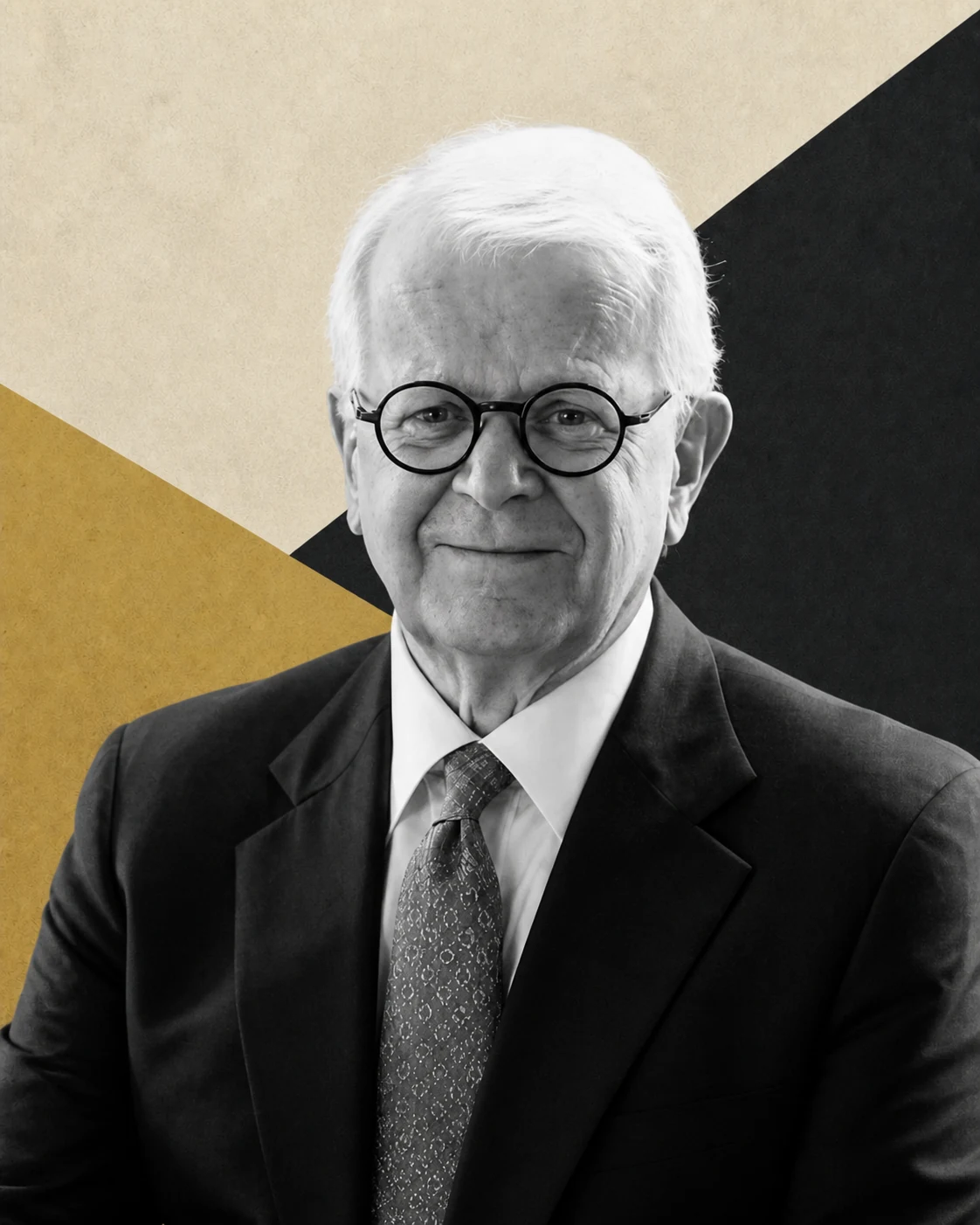
    Christian “Boo” Boucousis, former fighter pilot and CEO of Afterburner.
    Christian “Boo” Boucousis, CEO of Afterburner and former Royal Australian Air Force fighter pilot
  • When Success Makes a Soccer Club Weaker

    When Success Makes a Soccer Club Weaker

    What happens when a small youth soccer club develops a team that becomes better than the supposedly elite clubs around it?

    In an open system, the team would earn stronger competition and the club would gain status. In much of American youth soccer, there is no automatic path upward. The club’s best players are more likely to leave for organizations that already possess the right league badge. The original club can point to those departures as evidence that its coaches did good work, but the team that produced the evidence has been dismantled.

    Success can make the institution that created it weaker.

    That paradox reveals an information problem disguised as a competition problem. Parents are buying player development they cannot directly inspect, so they rely on league badges, wins, roster placement, facilities, and social proof. Then, when a smaller club produces convincing evidence of development, the system can move that evidence to organizations whose status has already been established.

    A system that cannot reliably elevate good development or expose poor development cannot tell parents which is which. Eventually, the appearance of development becomes easier to sell than development itself.

    This was the tension I kept hearing in my second interview with Rory O’Neill on The Unfolding Thought Podcast. Rory has spent years coaching and building youth soccer programs. Much of our conversation concerned closed leagues, pay-to-play, promotion and relegation, and the incentives around player movement. Underneath those issues is a harder question: how can a market reward good development if the people buying it cannot confidently recognize it?

    The person paying and the person developing are not the same

    In a simple purchase, one person may play every important role. I buy a sandwich, eat it, decide whether it was good, choose whether to return, and suffer the consequences if it makes me sick.

    Youth sports divide those roles among several people:

    • The parent pays.
    • The child receives the coaching.
    • The coach claims the expertise to evaluate development.
    • The parent usually decides whether the family stays or leaves.
    • The child bears most of the long-term consequences.

    Those forms of power can point in different directions. A child may need harder competition, less playing time, a different position, more unstructured practice, or an honest explanation that progress has stalled. None of those experiences is guaranteed to make the payer happy today.

    Calling the parent “the customer” is commercially accurate and developmentally incomplete. Calling the child “the customer” sounds principled but ignores who controls the revenue. The mistake is assuming that one word can describe a relationship in which payment, benefit, expertise, choice, and risk are divided.

    When satisfaction is visible and development is not, the system learns to sell satisfaction.

    Parents are buying something they cannot easily inspect

    Economists describe some expert services as credence services. Even after buying them, the customer may not be able to determine whether the right service was provided. Most patients cannot independently evaluate a medical diagnosis. Most car owners cannot inspect a transmission repair. Most parents cannot watch a practice and determine whether the coach made the right tradeoffs for a player’s development over several years.

    Youth development is especially difficult to judge because the result is partly counterfactual. The relevant question is not simply, “Is this player better than last year?” A growing child receiving almost any regular practice may improve. The harder question is, “How much better would this child have become in a different environment?” Families never get to observe both futures.

    When buyers cannot inspect the underlying quality, they look for signals. A winning record is a signal. A famous coach is a signal. Travel is a signal. Facilities are a signal. Being selected for an “elite” roster is a particularly powerful signal because it tells the parent that another authority has already evaluated the child.

    Signals are not useless. A strong league may provide better competition. A selective roster may contain better players. Winning may reflect good coaching. The danger comes when a signal becomes easier to produce and sell than the result it is supposed to represent.

    That distinction matters in a closed system. MLS NEXT membership is awarded through an application and evaluation process that considers philosophy, governance, coaching, player development history, affordability, geography, and other factors. Those are reasonable things to examine. But membership is still a selected certification, not a competitive rank that every club can continuously earn on the field. To a parent, the badge can therefore look like objective proof even though the route to obtaining it is more complicated.

    The short feedback loop usually wins

    A player’s development may take ten years. A club’s renewal decision arrives every season. A parent’s frustration can arrive after one lineup.

    The shorter loop produces louder information. The club sees a complaint, a departure, or an unpaid invoice immediately. It may not know for years whether a technically gifted 12-year-old learned to solve problems, whether a late-maturing player received enough patience, or whether a confident 15-year-old learned to accept responsibility.

    Organizations tend to manage what they can observe. Research on performance measurement and incentives has long warned that measurable proxies can distort behavior when they are mistaken for the harder-to-measure goal. In youth soccer, renewals, wins, league status, and roster size are easy to count. Development is not.

    This does not require bad people. A caring coach can know that a player needs a difficult truth. A well-intentioned director can know that a team should emphasize learning rather than a weekend result. But if telling the truth causes the family to leave, while reassurance protects the revenue that pays the coach, the business model has made honesty expensive.

    A coach can be serving the child and risking the customer at the same time.

    A more honest hierarchy would help, but it would not solve the whole problem

    Rory argues that promotion and relegation would make American soccer more meritocratic. A team that performs well could earn stronger competition. A club could not preserve status without repeatedly earning it through open competition simply because it already belonged to the right league.

    That would create useful information. Results would have consequences, and success could open a path that is currently controlled by membership decisions. In that sense, promotion and relegation is not just a sporting preference. It is a mechanism for testing claims.

    But a more objective team hierarchy is not the same as an objective development system. A club can win by recruiting the strongest current players rather than improving the players it has. It can favor early-maturing children, use conservative tactics, narrow positions, and reduce experimentation. A standings table can tell us which team won. It cannot tell us how much each child learned.

    The United States Olympic and Paralympic Committee’s American Development Model emphasizes age-appropriate development, access, quality coaching, fun, and attention to skill and effort. Those goals remind us that competitive results are one signal among several. Replacing a league badge with a winning record would improve one feedback loop while leaving the larger measurement problem intact.

    Success can make the club that produced it weaker

    Consider a small club that develops an unusually strong team. If that team cannot earn access to a higher level of competition, its best players may leave for clubs that already possess the desired badge. The original club can point to those departures as evidence that its coaches did good work, but the team that produced the evidence has been dismantled.

    Success has made the institution that created it weaker.

    That is more than an issue of fairness. It is a loss of information. Parents evaluating the original club no longer see the strong team. They see the remaining roster and the higher-status clubs that absorbed its players. The visible proof migrates away from the people who created it.

    There are attempts to address this. The MLS NEXT Development Grant Program can reward a qualifying elite academy when a player reaches specified professional milestones. That is meaningful progress, but eligibility is narrow and the grant goes to the immediately preceding qualifying academy. Many origin clubs and earlier coaches remain outside the mechanism.

    International soccer offers a broader idea. FIFA’s Clearing House distributes training compensation and solidarity contributions to clubs involved in a player’s development. The details are complex, and no payment system perfectly identifies causal contribution. The important principle is that development should leave some value behind for the institution that helped create it.

    If success causes your best evidence to leave, the system is not rewarding development. It is consuming it.

    Development needs a better scoreboard

    No single measure will solve this. That is the point. When the goal is complex, a responsible system uses several imperfect signals and makes their limitations visible.

    A club that claims to develop players should be able to show more than trophies and placements. It should be able to explain what it is trying to develop, how coaches assess progress, and what families should expect when the child’s needs conflict with the team’s short-term result.

    • Are individual goals documented and revisited over time?
    • Do assessments include technical, tactical, physical, and psychological development rather than one coach’s overall impression?
    • Can another qualified observer review a player’s progress?
    • Do players receive meaningful opportunities to apply what they are learning?
    • Does the club track voluntary retention, player enjoyment, affordability, injuries, and burnout alongside wins?
    • When a player advances elsewhere, does the originating club receive financial or reputational credit?
    • Are families told clearly that development does not guarantee a roster label, starting role, scholarship, or professional future?

    FIFA’s talent-identification guidance calls for a clear philosophy, defined player profiles, comprehensive scouting environments, player observation, data analysis, structured selection, and a process that can operate over the long term. A child cannot be reduced to one tryout, one coach, or one team result. Neither can the quality of the environment developing that child.

    Make the truth less expensive

    Transparency will not remove conflict. It can make conflict more honest.

    Before a season begins, clubs can separate the development promise from the status promise. They can explain how playing time is decided, what “elite” means, what evidence coaches use, and how a family can appeal or seek an independent view. They can make it easier for a child to move when another environment would be better. They can reward coaches for long-term progress and candor, not only wins and renewals.

    Parents also have a role. If we say we want development but punish every decision that makes our child uncomfortable, the club learns what we actually value. If we treat a badge as proof, we help turn the badge into the product. If we demand guarantees that no honest coach can make, reassurance will eventually displace judgment.

    The goal is not to make parents passive. It is to give them better information and clearer expectations so that dissatisfaction can reveal a real problem rather than merely the distance between a development process and an imagined outcome.

    This is not only a youth sports problem

    The same information problem appears in schools, healthcare, consulting, nonprofits, elder care, and business services. One person may pay, another may use the service, a third may evaluate quality, and the consequences may arrive after the contract ends.

    Customer satisfaction matters in all of those settings. It can tell us whether the payer received the experience they expected. It cannot, by itself, tell us whether the institution fulfilled its purpose. Leaders need to ask who pays, who benefits, who can judge quality, who decides whether the relationship continues, and who bears the cost if it fails. If the answers name different people, the most visible feedback is not necessarily the most important.

    American youth soccer does not lack people who care about children. It lacks a reliable way to keep care, truth, revenue, and development pointing in the same direction. Until development becomes more visible and more valuable to the institution producing it, status will remain easier to market than progress.

    The question is not whether American youth soccer has coaches capable of developing players. It is whether the system can recognize their work before success dismantles the proof.

    Listen and read further

    Rory O’Neill and Eric Pratum on The Unfolding Thought Podcast.
    Listen to Rory O’Neill on The Unfolding Thought Podcast.
  • When the Process Outlives the Problem It Was Built to Solve

    When the Process Outlives the Problem It Was Built to Solve

    An institution can be orderly, disciplined, and increasingly ineffective at the same time.

    That kind of failure is hard to see because it still looks like competence.

    The weekly report arrives on time. Every project clears the required stage gate. The dashboard is green. The audit finds no missing fields. Yet customers are leaving, quality is slipping, decisions take longer, and the people closest to the work have learned that raising an anomaly creates more trouble than ignoring it.

    Nothing is obviously broken because the organization has become excellent at demonstrating fidelity to its process. The difficulty is that fidelity to process and fidelity to purpose are not the same thing.

    That distinction is what I kept returning to after my conversation with Eliot Frick on The Unfolding Thought Podcast. Frick makes a much larger philosophical argument about whether modernity has entered the final stage of its life. His description of late-stage systems is immediately recognizable in organizations.

    A system begins with generative power. It solves problems that could not previously be solved. Its methods become credible because they work. Over time, however, the methods become inseparable from the system’s identity. When results deteriorate, the system rarely concludes that its operating assumptions may be exhausted. It concludes that people are no longer following them faithfully enough.

    So it adds oversight, tightens compliance, and treats deviation as the cause of decline. The process that once produced the outcome becomes the ritual through which the organization proves it still deserves to exist.

    A process is a memory of a problem

    Most recurring processes began for a reason. Someone shipped defective work, exposed the company to risk, made an expensive decision without enough evidence, or forced other people to reconstruct information that should have been recorded. A checklist, review, approval, or report was created to keep that failure from recurring.

    When the process works, the original problem becomes less visible. New employees encounter the solution without experiencing the conditions that made it necessary. They know the form must be completed but not what judgment the form was meant to improve. They know who must approve a decision but not what uncertainty that approval was supposed to reduce.

    The process is therefore a kind of organizational memory. It preserves an answer after the question has faded.

    That can be useful. We do not want every generation of employees to rediscover fire safety or financial controls from first principles. But a memory becomes dangerous when the organization cannot distinguish the enduring purpose from the historical method. Conditions change while the ritual remains. Eventually, people measure whether the process occurred because they have lost the ability to measure whether it still helped.

    Success teaches a system what to stop noticing

    Every successful institution develops an operating grammar. It creates categories, incentives, reporting systems, professional language, and approved ways of reasoning. This grammar lets large groups coordinate. It also makes the organization increasingly good at recognizing what it already knows how to see.

    James March described a related tension as the difference between exploiting old certainties and exploring new possibilities. Exploitation improves what the organization already knows how to do. Exploration searches for something better but produces uncertain returns. March’s warning was that adaptive systems often refine exploitation more quickly than exploration. That can make them effective in the short run and self-destructive over time.

    The problem is not that managers foolishly choose the old over the new. The old process comes with evidence, owners, budgets, benchmarks, and political support. The alternative begins as a question. One side can produce a forecast. The other can only promise learning.

    The imbalance compounds. The more an organization invests in a process, the more careers, systems, and explanations depend on that process remaining legitimate. Evidence that fits the current model is easy to absorb. Evidence that challenges the model arrives looking incomplete, undisciplined, or irrelevant.

    A failing institution often becomes more faithful to its process as it becomes less capable of producing its purpose.

    Threat makes the rulebook harder

    Declining results ought to create curiosity. In practice, they often create rigidity.

    Barry Staw, Lance Sandelands, and Jane Dutton’s work on threat rigidity describes two common responses to adversity: information processing narrows and control constricts. Organizations rely more heavily on familiar knowledge, reduce the number of voices involved, centralize authority, and formalize procedure.

    Those responses are understandable. A threat creates urgency, and coordination can matter more during an immediate crisis. The problem comes when a short-term crisis response becomes the operating model for a system whose assumptions are failing. The organization reduces variation at precisely the moment it most needs alternatives.

    This creates a cruel feedback loop. The system produces weaker results. Leadership tightens the system to protect performance. Tighter control suppresses dissent and experimentation. The organization receives less information about why the system is failing. Its leaders become even more convinced that inconsistent execution is the problem.

    People who question the process are then easy to cast as undisciplined. Yet they may be carrying the information the process was designed to exclude.

    Collapse stories can be another form of loyalty

    Frick makes a surprising argument about stories of collapse. We assume that someone predicting the end of a system has escaped its influence. Often the opposite is true.

    The defender says the institution must be saved. The critic says it must be destroyed. Both keep the institution at the center of the imagination. The defender uses its categories to explain what must continue. The critic uses the same categories to explain what must end. Neither has necessarily described what could make the old conflict less important.

    This pattern appears in organizations whenever two factions fight over control of a process whose usefulness neither side is examining. One department wants stricter enforcement. Another wants the process abolished. Both assume the available choices are compliance or rebellion.

    The opposite of defending a failing system is not attacking it. Both can keep the system at the center.

    A more useful question is what problem the process was built to solve and whether that problem still exists in the same form. If it does, perhaps the method needs repair. If it does not, the fight over the method may be consuming attention that belongs somewhere else.

    A new system may not win the old argument

    Thomas Kuhn’s account of scientific revolutions is helpful here. Transformative ideas do not always emerge by accumulating better answers inside the accepted model. Anomalies build until a different framework can organize them.

    A new framework may not defeat the old one by its own measures. It can change which observations matter, which problems deserve attention, and what counts as an explanation. Questions that once felt decisive can become smaller or disappear.

    Organizations routinely make this transition harder than it needs to be by requiring every experiment to justify itself with the current system’s metrics. But those metrics contain assumptions about value, time, quality, and risk. An idea that tests the assumptions cannot always prove itself using measures designed to preserve them.

    This does not mean experiments should escape accountability. It means their first obligation may be to produce information rather than scale, efficiency, or immediate financial return. Leaders need to know what the experiment is trying to learn and what evidence would cause it to stop. That is different from demanding that it look like a small version of the established business.

    Leadership is the preservation of options

    Frick uses the word “aperture” for a protected opening through which unfamiliar possibilities can develop. The metaphor matters because most new ideas do not begin with enough power to survive the full force of an established institution.

    A leader does not need to believe every unconventional proposal. Most will be incomplete, and many will fail. Leadership requires preventing the current operating system from eliminating all unfamiliar ideas before any can produce evidence.

    Amy Edmondson’s research on psychological safety helps explain one condition for such an opening. Teams learn when people believe they can take interpersonal risks. That does not mean conflict disappears. It means uncertainty, error, and disagreement can enter the conversation without immediately becoming evidence that someone does not belong.

    Authenticity matters too. Research by Charlan Nemeth, Keith Brown, and John Rogers found that a genuinely held minority position produced better quantity and quality of solutions than several forms of assigned devil’s advocacy. An organization does not receive the full benefit of dissent by appointing someone to perform disagreement inside a meeting whose real boundaries remain untouched.

    Leadership does not require knowing what comes next. It requires refusing to let the present eliminate every alternative.

    What protecting an aperture looks like

    Protected exploration does not have to mean an innovation lab separated from the real work. It can begin with a few operating choices:

    • Separate delivery work from exploratory work so the two are not judged by identical expectations.
    • Give small experiments explicit sponsors, modest budgets, and expiration dates.
    • Ask which measures reflect the purpose and which merely prove compliance.
    • Record anomalies before explaining them away.
    • Invite authentic dissent from people who actually hold a different view.
    • Require experiments to produce learning before requiring them to produce scale.
    • Periodically ask what problem each recurring process still solves.
    • Retire rituals whose connection to outcomes can no longer be demonstrated.

    These practices will not reveal the next paradigm on command. That is not the promise. Their value is that they preserve variation long enough for the organization to learn from it.

    Jim Dator’s four generic futures include continuation, collapse, discipline, and transformation. Frick’s argument rearranges that sequence, but the categories remain useful. Organizations are usually comfortable planning for continuation. They can imagine collapse because fear supplies the story. They understand discipline because tightening control feels actionable.

    Transformation is harder because it cannot be fully described in the language of the system it may replace.

    The practical question is therefore not whether modernity, an industry, or a company is truly at the end of its life. The better question is diagnostic: are our institutions still producing results, or are they spending more of their energy demonstrating loyalty to the way those results used to be produced?

    A process deserves protection when it remains connected to purpose. When that connection is gone, enforcing the process more intensely will not restore it. Leadership begins by noticing the difference and preserving enough room for another possibility to become visible.

    Listen and read further

    Eric Pratum and Eliot Frick on The Unfolding Thought Podcast.
    Listen to Eliot Frick on The Unfolding Thought Podcast.
  • Blame Is What Organizations Use Instead of Learning

    Blame Is What Organizations Use Instead of Learning

    A project misses its deadline. A customer leaves. A machine fails. A campaign spends the budget and produces almost nothing.

    The review begins with a reasonable question: What happened?

    But the question rarely remains open for long. Someone was careless. Someone did not communicate. Someone lacked urgency. Someone should have known better.

    Once the organization has a name, it also has a remedy. Give feedback. Add training. Put a note in the performance review. Replace the person if the failure was serious enough. The meeting ends with the satisfying feeling that accountability has occurred.

    Then a different person encounters the same incentives, the same missing information, the same overloaded process, and the same failure happens again.

    The organization did not solve the problem. It purchased narrative closure at the cost of understanding.

    In her episode of The Unfolding Thought Podcast, Factor.AI co-founder Lindsay McGregor describes what she calls the blame bias: our tendency to explain poor performance through the character of the person closest to the outcome, even when the surrounding system did more to produce it.

    That insight is often softened into a pleasant leadership slogan: blame the system, not the person. But the implication is more demanding than the slogan. System thinking does not remove accountability. It expands accountability beyond the person with the least power to change the conditions.

    Blame is what organizations use when they want the appearance of accountability without the work of learning.

    Blame compresses the causal field

    Every meaningful organizational outcome has more causes than can fit comfortably into a meeting.

    A missed deadline may involve a poor individual decision. It may also involve an unrealistic estimate, a sales promise made without delivery input, shifting priorities, a dependency no one owned, incentives that rewarded saying yes, and a reporting process that made trouble visible only after recovery was impossible.

    Blame compresses that causal field into a person. It converts a difficult investigation into a familiar moral story: a responsible person would have produced a different result.

    Social psychologist Lee Ross gave the fundamental attribution error its name in 1977. We tend to overestimate stable traits when explaining another person’s behavior and underestimate the situation in which the behavior occurred. In ordinary language, we see what someone did and quickly decide what kind of person would do it.

    Distance makes the story easier. An executive sees a careless operator. A person standing beside the machine sees the awkward control, the rushed handoff, the warning light everyone has learned to ignore, and the production target that makes stopping the line feel dangerous.

    The executive may have more authority and more data. The operator often has more causal knowledge.

    Blame gives an organization a culprit. Accountability gives it a next action.

    The same people can produce a different organization

    McGregor illustrates the power of context through NUMMI, the automobile plant General Motors and Toyota operated together in California.

    The plant’s previous workforce had been described as unreliable, antagonistic, and nearly impossible to manage. Toyota reopened the facility with many of the same workers but a different operating system. Employees were trained to identify problems, stop production, suggest improvements, test ideas, and treat quality as something they helped create rather than something management inspected after the fact.

    The people did not receive new personalities. The work gave different behaviors a reason to emerge.

    A California Management Review study of NUMMI describes how broad job classifications, teamwork, job rotation, employee involvement, and continuous improvement replaced direct supervision as the primary mechanism for performance. The point was not simply to be nicer to workers. It was to make their judgment part of the production system.

    W. Edwards Deming estimated from his experience that 94 percent of troubles and possibilities for improvement belonged to the system and were therefore management’s responsibility. The number should not be treated as a universal law. Its distribution of responsibility is the more important point.

    The higher a person sits in the organization, the more power that person usually has to shape goals, incentives, workload, information flow, staffing, tools, decision rights, and consequences. Yet performance conversations often place the greatest explanatory burden on the people with the least authority over those conditions.

    A system explanation does not say nobody is responsible. It asks whether responsibility has been assigned in proportion to power.

    The system is not an alibi

    There is an obvious objection. Some people lie, neglect their obligations, mistreat colleagues, or knowingly violate an important rule. A leader who explains every action through context can become as unserious as one who explains everything through character.

    System thinking should not erase agency. It should improve diagnosis.

    Four questions belong in the same review:

    • What choice did the person make?
    • What conditions made that choice more likely, more rational, or harder to detect?
    • Who had the authority to change those conditions before the event?
    • What individual and system changes will make recurrence less likely?

    An employee can be responsible for deception while a manager is responsible for a target that rewarded it. A manager can be responsible for ignoring a warning while an executive team is responsible for a culture in which delivering bad news ends careers. These responsibilities do not cancel one another.

    A system explanation does not erase individual responsibility. It reveals who had the power to prevent recurrence.

    Designing for the exception changes everyone’s work

    Bad actors create another system problem: they are memorable.

    McGregor describes the remote employee discovered to be working two full-time jobs. The violation is real. The leader’s anger is understandable. The danger comes next, when the organization redesigns work as though every employee were waiting for a chance to cheat.

    More monitoring appears. Decision rights narrow. Work becomes visible through activity rather than results. Approval steps multiply. The system may catch another offender. It also teaches conscientious employees that their judgment is not trusted and that appearing busy is safer than experimenting with a better way to work.

    Control is not free. It consumes attention, delays decisions, encourages performance theater, and transfers discretion away from the people closest to the problem.

    Research by Richard Ryan and Edward Deci on self-determination theory identifies autonomy, competence, and relatedness as conditions that support intrinsic motivation and healthy self-regulation. A control added for one exceptional case can weaken those conditions for everyone else.

    The design question is not whether to trust people blindly. It is how to contain misconduct without making the misconduct the model of human behavior on which the entire organization is built.

    When leaders design for the worst employee they can imagine, they often create the worst workplace everyone else has experienced.

    Blame destroys evidence

    The deepest cost of blame is not hurt feelings. It is lost information.

    James Reason distinguished the person and system approaches to error in a foundational article on human error. The person approach treats errors as products of inattention, carelessness, poor motivation, or moral weakness. Its remedies include retraining, new procedures, discipline, and shame. The system approach begins with the fact that people are fallible and asks how working conditions can prevent an error or limit its consequences.

    A blame-oriented review teaches employees to manage exposure. They disclose less, describe uncertainty more carefully, and wait until a problem is undeniable before attaching their names to it. The organization receives cleaner reports and worse knowledge.

    Amy Edmondson’s study of psychological safety and learning behavior found that teams where people felt safe taking interpersonal risks engaged more in behaviors such as discussing errors, seeking feedback, and experimenting. Learning behavior, in turn, helped explain performance.

    This does not mean every mistake should feel comfortable. It means the organization must be able to hear an accurate account before it decides what the account requires.

    A good metric can look like bad performance

    Systems also determine what counts as evidence.

    In the Toyota system McGregor describes, pulling the andon cord made a problem visible and could stop production. A manager optimizing only for short-term output might see fewer cord pulls as improvement. A manager responsible for learning might worry that fewer pulls meant employees had stopped surfacing problems.

    The same number can therefore describe two different organizations. One has fewer problems. The other has fewer reported problems.

    Most performance systems are much better at counting completed work than adaptive work. They measure units, calls, revenue, utilization, deadlines, and hours. They rarely measure useful questions, early warnings, experiments, prevented errors, or ideas that improved the process.

    When the visible score rewards output and the invisible score contains learning, people rationally protect output. Then leadership interprets the resulting silence as evidence that the system works.

    Accountability should end with a changed system

    A learning review should not begin by assuming innocence. It should not begin by assuming guilt either. It should begin by preserving the size of the question.

    Useful reviews ask:

    • What did the person know at the time, and what could that person reasonably have known?
    • What made the action seem sensible, necessary, or safe in that moment?
    • Would a capable peer in the same conditions have been likely to act differently?
    • Which target, workload, handoff, tool, incentive, or norm increased the probability of failure?
    • Where could an earlier signal have changed the outcome?
    • What individual choice requires correction?
    • What system change will make the better choice easier, earlier, or more visible?
    • Who owns that change, and how will the organization know it worked?

    If the review ends only with feedback for the employee, the organization has probably stopped one level too soon. If it ends only with a vague promise to improve the culture, it has stopped several levels too early.

    Accountability becomes real when it creates an obligation to repair. The employee may need to change a behavior. The manager may need to change the work. The executive may need to change the incentive that made the behavior predictable. Each owner should leave with an action proportionate to the power that owner had over the conditions.

    Learning requires a longer explanation

    Blame survives because it is emotionally efficient. It turns ambiguity into certainty, causation into character, and management failure into an employee problem.

    Learning is slower. It asks leaders to understand work they may have only seen through dashboards. It makes them examine controls they approved, incentives they praised, and constraints they never personally experienced. It may reveal that the person who made the visible mistake was adapting to a less visible mistake in the design.

    That is not softness. It is a more exacting form of accountability because it refuses to confuse punishment with prevention.

    Blame asks who deserves the pain. Accountability asks who owns the repair.

    Listen and read further

    Episode artwork for Lindsay McGregor’s appearance on The Unfolding Thought Podcast.
    Listen to Lindsay McGregor on The Unfolding Thought Podcast.
  • A Strategy That Cannot Fail Is Not a Strategy

    A Strategy That Cannot Fail Is Not a Strategy

    A leadership team asks for a strategy. What it really wants is a guarantee.

    The executives want to know which campaign will produce the forecasted revenue, which technology will create the promised efficiency, which market will grow, and which reorganization will solve the problem without creating another one. The strategist can provide research, models, experience, and a recommendation. What the room wants is certainty.

    So everyone participates in a familiar performance. Assumptions become projections. Projections become targets. Targets become commitments. The presentation grows more precise as the underlying situation remains stubbornly unpredictable.

    If the plan works, its authors were prescient. If it fails, they can point to the data, the methodology, the consultant, or the industry standard. Every decision was defensible. No one quite decided.

    This is not strategy. It is responsibility laundering.

    In his episode of The Unfolding Thought Podcast, strategist Steve Kozel describes strategy as a series of nested choices. At any altitude, he argues, strategy requires multiple feasible options, an understanding of the situation, a desired effect, and a choice among the alternatives.

    That definition carries a consequence organizations often try to avoid: if the alternatives are genuinely feasible and the future is genuinely uncertain, the choice can be wrong.

    A strategy that cannot fail is not a strategy. It is either an operating procedure, a foregone conclusion, or a story told to make uncertainty feel controllable.

    Strategy begins where prediction ends

    There are decisions for which certainty is a reasonable expectation. Payroll should run. An invoice should calculate correctly. A proven manufacturing process should stay within tolerance. When cause and effect are stable and repeatable, leaders should demand reliability.

    Strategy is different because it concerns choices whose value depends on reactions that have not happened yet. Competitors respond. Customers reinterpret what they want. Employees change the plan while implementing it. Technology alters the economics. The choice itself changes the environment in which its success will be judged.

    Frank Knight drew a useful distinction in Risk, Uncertainty, and Profit. Risk describes situations in which probabilities can be estimated. Uncertainty describes situations in which the probabilities themselves are not reliably knowable.

    Most organizations are comfortable managing risk. They create ranges, reserves, scenarios, and controls. They struggle when uncertainty cannot be converted into a percentage. The absence of a reliable probability feels like the absence of management.

    But uncertainty is not a temporary defect in the strategy process. It is the condition that makes strategy necessary. If the correct action and its outcome were already known, the organization would not need a strategist. It would need an operator.

    A plan becomes strategy only when it contains a consequential choice and accepts the possibility of being wrong.

    Certainty has a job inside the organization

    The demand for certainty is not simply a reasoning error. It serves an organizational purpose.

    A confident forecast lets a project receive funding. A familiar methodology reassures procurement. A famous consultancy gives an executive cover. A dashboard suggests control. A best practice allows everyone to say the decision met the accepted standard.

    These things reduce personal exposure even when they do not reduce uncertainty. That difference matters.

    Kozel calls the deeper pattern “Fear OS,” an unspoken operating system in which people are expected to maintain control, avoid failure, produce positive metrics, and explain the world as though it were more rational than it is. Under those conditions, the safest decision is often the one whose failure will be easiest to defend.

    This helps explain why a company can be filled with intelligent people and still repeat choices no one strongly believes in. Each participant is responding rationally to a local incentive. The analyst avoids an unsupported recommendation. The manager protects the quarterly number. The executive selects the respectable vendor. The board receives a forecast with enough detail to feel governed.

    The organization has not eliminated uncertainty. It has distributed responsibility so thoroughly that the eventual result will seem to belong to no one.

    Best practice cannot create strategic advantage

    Best practices are valuable when the goal is dependable execution of a known activity. I want the people operating an airplane, administering medication, or securing financial data to use procedures that have survived serious scrutiny.

    The problem begins when leaders ask best practice to answer a strategic question.

    Michael Porter’s explanation of strategy centers on a unique position, trade-offs, and fit among activities. Strategy requires choosing what not to do. An organization that copies the accepted practices of its category may become more competent. It does not become meaningfully different.

    This is the contradiction Kozel surfaces in the episode. Organizations want a proven solution and an advantage. They want evidence without experiments. They want innovation without the waste, ambiguity, and failed attempts through which new knowledge is produced.

    If every competitor follows the same research, hires the same experts, adopts the same technology, and optimizes against the same benchmark, best practice becomes a convergence mechanism. It improves the category while compressing the differences within it.

    Best practice can improve execution. It cannot explain why the company should win.

    An experiment is not an excuse

    None of this means leaders should become casual about evidence or celebrate failure as a cultural virtue.

    “We are experimenting” can become its own form of responsibility laundering. Teams can use the language of learning to excuse poor preparation, unclear goals, oversized bets, and projects that continue long after the original hypothesis has collapsed.

    A real experiment is more demanding than a confident plan because it must say what is not known and how the organization intends to learn it.

    Amy Edmondson describes an intelligent failure as an undesired result in new territory. The attempt should pursue a meaningful goal, rest on an informed hypothesis, and be no larger than necessary to produce the needed knowledge.

    Those constraints turn experimentation from a slogan into a management discipline.

    • What specific assumption are we testing?
    • What evidence would increase or reduce our confidence?
    • What is the smallest credible action that can produce that evidence?
    • What downside are we exposing, and who has agreed to it?
    • When will we stop, expand, or change direction?
    • Where will the learning alter a decision, budget, process, or belief?

    The purpose of an experiment is not to make failure harmless. It is to buy information at a price the organization can afford.

    Learning must reach the assumptions

    Organizations often claim to learn while protecting the belief that produced the disappointing result.

    A campaign misses its target, so the team changes the creative. A product struggles, so marketing receives a larger lead goal. A transformation stalls, so managers schedule more training. The response corrects activity without reconsidering the governing assumption.

    Chris Argyris distinguished this kind of correction from deeper learning. Single-loop learning asks how to perform the existing approach more effectively. Double-loop learning asks whether the underlying goals, rules, and assumptions still deserve to govern the work.

    In his work on defensive reasoning, Argyris argued that capable professionals often respond to difficulty by avoiding examination of their own contribution to it. Expertise can make the defense more articulate without making it less defensive.

    This is why adding more data does not necessarily make an organization more empirical. Data can test a claim. It can also decorate a conclusion the organization is unwilling to reconsider.

    Double-loop learning creates a more uncomfortable review:

    • Did the execution fail, or was the strategic premise wrong?
    • Are we improving the offer, or only improving the way we promote it?
    • Does the metric represent value, or is it merely easy to make rise?
    • Are we asking a team to solve a problem whose cause sits above its authority?
    • What would we stop believing if we took this result seriously?

    If every review ends with a better way to execute the same idea, the organization is not learning strategically. It is becoming more efficient at defending the past.

    Exploitation wins the quarterly argument

    Even leaders who understand this problem face a structural disadvantage.

    James March’s classic paper on exploration and exploitation in organizational learning describes the tension between refining what an organization already knows and searching for new possibilities. Exploitation produces clearer, nearer, and more predictable returns. Exploration is uncertain, delayed, and frequently disappointing.

    That asymmetry gives the known approach an advantage in every budgeting cycle. The established product has revenue. The existing channel has benchmarks. The familiar process has owners. The new option has a hypothesis.

    March warned that adaptive processes can become effective in the short run and self-destructive in the long run because organizations refine exploitation faster than exploration. The company becomes increasingly competent at a world that is becoming less relevant.

    This is another reason certainty can be dangerous. It does not merely misdescribe the future. It systematically moves resources toward whatever already has a history.

    The most dangerous experiment is the one an organization is already running while pretending the outcome is guaranteed.

    What honest strategy sounds like

    An honest strategy does not replace confidence with vagueness. It makes confidence proportional to evidence.

    It names the choice. It explains why this option is preferable to other feasible options. It distinguishes what is known from what is assumed. It defines the risk the organization is accepting. It makes clear who owns the decision. It identifies the earliest evidence that would justify changing course.

    It also separates commitments from predictions.

    A leader can commit to allocating resources, protecting an experiment, reviewing evidence, and changing direction when the premise no longer holds. A leader cannot honestly commit that customers, competitors, employees, regulators, and technology will behave according to the forecast.

    This kind of strategy can sound less impressive in the room. It replaces false precision with boundaries, hypotheses, and decision rules. It admits that expertise improves a choice without making the future obedient.

    That is not weaker leadership. It is leadership willing to remain responsible after the illusion of control has been removed.

    The choice comes before the certainty

    Organizations do not need more comfort with failure in the abstract. They need a more precise relationship with uncertainty.

    Preventable mistakes should be prevented. Known processes should be reliable. Large irreversible choices deserve more scrutiny than small reversible ones. Evidence should shape judgment wherever evidence exists.

    But strategy cannot wait until the uncertainty has disappeared. By then, the choice may be obvious, the advantage may be gone, or the organization may have spent years perfecting the wrong thing.

    The discipline is to decide without pretending to know, act without becoming reckless, and learn without protecting the assumptions that made the action possible.

    Strategy is not a promise that the future will obey. It is a commitment to choose, learn, and remain accountable before certainty arrives.

    Listen and read further

    Episode artwork for Steve Kozel’s appearance on The Unfolding Thought Podcast.
    Listen to Steve Kozel on The Unfolding Thought Podcast.