Tag: Strategy

  • The Cloud Has a Utility Bill. Who Pays When the Forecast Is Wrong?

    The Cloud Has a Utility Bill. Who Pays When the Forecast Is Wrong?

    What happens when a technology company explores building the same data center in several states, encourages each one to compete for the project, chooses the place that offers the best combination of price and speed, and walks away from the rest?

    Long before the decision is made, utilities and communities have already begun studying substations, transmission, generation, reserve capacity, land, incentives, and staffing. That planning costs real money. Some equipment and contracts may need to be reserved years before anyone knows whether the server racks will arrive.

    Who bears that cost when the company chooses somewhere else? Usually not the company that created the competition.

    The company keeps the option to change its mind. Utilities, communities, and ratepayers can be left with the cost of preparing for a future that never arrives.

    That is the less obvious infrastructure problem underneath the AI boom. It is not simply that data centers need enormous amounts of electricity. It is that technology companies can make fast, reversible bets while the systems competing to serve them must begin making slow, difficult-to-reverse commitments.

    That was the tension I kept hearing in my interview with Peter Kelly-Detwiler on The Unfolding Thought Podcast. Peter has spent decades in electricity markets. He describes data centers that place enormous interconnection requests because access to power may determine whether an AI investment succeeds. He also describes utilities trying to distinguish committed demand from speculative demand when the cost of guessing wrong can remain on customer bills for decades.

    AI moves in quarters. The grid moves in decades.

    The cloud has encouraged us to think of computing as nearly weightless. A company adds capacity, moves a workload, or releases a new model, and the change appears to happen everywhere at once. The physical system beneath that experience moves differently.

    Power plants, transmission corridors, and substations are not software deployments. They require land, equipment, permits, financing, engineering, and public consent. Once built, they are expected to serve customers long enough to recover their cost.

    Meanwhile, the demand forecast is changing at software speed. Lawrence Berkeley National Laboratory’s 2025 update estimated that U.S. data centers used about 4.7 percent of the nation’s electricity in 2024. Its reference case reaches 11.8 percent in 2030, while the modeled range runs from 9.5 to 15.3 percent. The authors caution that those bounds are not a confidence interval and that the most extreme assumptions are unlikely to occur together. The uncertainty is not a flaw in the research. It is evidence of the problem planners face.

    The North American Electric Reliability Corporation’s 2025 long-term assessment says data centers account for most of the projected increase in electricity demand over the next decade. It also describes projects that slow down, disappear, or consume far less than originally requested. In Texas, planners reduced projected demand from newer data centers after operating sites used, on average, about half of the capacity they had requested.

    The same forecast can therefore contain a real signal and a large amount of noise. The system may need much more power. It does not follow that every proposed megawatt will appear where and when an application says it will.

    A request for power is not the same as demand

    A developer benefits from preserving options. If it can apply for capacity in several regions, it can compare timelines, incentives, energy prices, regulatory conditions, and construction risks before choosing a site.

    That is rational behavior for the developer. It becomes a system problem when every option is treated as a commitment.

    If five utilities each prepare to serve the same project, society may reserve equipment, engineering time, and capital for four facilities that will never exist. If every utility heavily discounts every request, the one project that is real may arrive before the grid is ready.

    Traditional forecasting tries to estimate which future is most likely. That is necessary, but it cannot answer the more important governance question: who should carry the cost when the forecast is wrong?

    The problem is not uncertainty. The problem is allowing one party to create uncertainty while another party pays for it.

    A forecast should not be a blank check

    When a utility builds dedicated infrastructure for a large customer, the customer is receiving something more valuable than electricity. It is receiving an option on future capacity.

    An option has value even if it is never exercised. Equipment may be ordered. Other customers may be told that capacity is unavailable. A transmission plan may be changed. Capital that could have served another need may be committed.

    The contract should make that option visible. Deposits, milestone payments, minimum-demand charges, exit fees, and long-term commitments are not punishments for innovation. They are ways to keep a private option from becoming a public liability.

    This principle is now moving into regulation. The Federal Energy Regulatory Commission has called for cost-recovery agreements that protect other customers if infrastructure is built for a large load that does not arrive as planned. The point is straightforward: the party best positioned to judge whether a project is real should retain a meaningful share of the risk that it is not.

    A forecast should guide an investment. A contract should decide who carries the risk if the forecast is wrong.

    Speed to power has a price

    Peter uses the phrase “compute heat rate” for the electricity price at which the value of additional computation no longer justifies operating the data center. The concept matters because it reveals how differently an AI company and an ordinary customer may value the same megawatt-hour.

    For most businesses and households, electricity is a meaningful operating expense. For a company racing to train or deploy a valuable model, electricity can be the input that determines whether billions of dollars of chips produce revenue or sit idle.

    That can make time-to-power more important than the price of power. It explains the interest in co-located generation, private power plants, batteries, and temporary arrangements that let a project begin operating before the larger grid connection is ready.

    There is nothing inherently wrong with paying for speed. The problem comes when the price is hidden in another customer’s bill, in reduced reliability, or in infrastructure that remains after the business case disappears.

    The best new load may be a flexible one

    A data center is often described as a load, as though it were simply an enormous appliance. That leaves out an important possibility. Some computational work can move in time, move to another location, or briefly draw on onsite storage and generation.

    That flexibility can be valuable because the grid is built for its most difficult hours, not its average hour. A facility that avoids adding to the annual peak can consume more total electricity without requiring the same amount of new capacity.

    Electric Power Research Institute modeling found that shifting portions of data-center demand away from constrained hours reduced peak demand, the need for firm capacity, and the average price of electricity supplied to the facilities. EPRI is also testing operational approaches through its Data Center Flexible Load Initiative.

    Flexibility should not be treated as a hopeful description. It should be a measurable operating commitment. Different workloads have different latency, availability, and geographic constraints. A promise to reduce demand is useful only if the grid operator knows how much, how quickly, for how long, and with what consequences.

    The same is true of reliability. NERC’s work on emerging large loads warns that data centers can change consumption quickly enough to create risks the grid was not designed to manage. The facility cannot claim the reliability benefits of grid connection while treating its own electrical behavior as someone else’s problem.

    Build what remains useful when the forecast is wrong

    Uncertainty does not justify paralysis. It should change the order in which investments are made.

    Some improvements create value across many possible futures. Better sensors and dynamic line ratings can reveal when existing transmission lines safely carry more power. Advanced conductors can move more electricity through an existing right-of-way. Storage can reduce short peaks and improve power quality. More planners, engineers, and regulatory capacity can shorten decisions without pretending the decisions are simple.

    The Department of Energy describes these grid-enhancing technologies as faster ways to unlock capacity from infrastructure that already exists. They do not eliminate the need for new generation and transmission. They buy time, improve utilization, and remain useful if a particular data center never appears.

    Larger dedicated investments should follow stronger evidence of commitment. They can be staged against financing, land control, equipment orders, construction progress, and binding load agreements. The evidence required should rise with the irreversibility of the decision.

    • How much of the requested load is supported by committed capital and construction milestones?
    • Which investments benefit the wider system and which exist only for this customer?
    • What flexibility can the customer demonstrate and contractually guarantee?
    • Who pays if the project arrives late, operates below forecast, or disappears?
    • Which decisions can be staged, and which would be difficult to reverse?

    The grid does not need certainty about AI. It needs commitments proportional to the uncertainty AI creates.

    Planning is becoming a form of risk design

    The AI electricity debate is often framed as a choice between acceleration and restraint. Build everything quickly and risk higher costs, stranded assets, and reliability problems. Move slowly and risk losing investment, innovation, and economic opportunity.

    That framing is too narrow. The more useful question is how to make a sequence of decisions that remains sensible across several plausible futures.

    We do not need to know exactly how many proposed data centers will be operating in 2035. We need connection rules that distinguish curiosity from commitment. We need contracts that put project risk close to the party creating it. We need flexible operating agreements that make new demand useful to the grid when possible. We need public investments that retain value even when a private forecast fails.

    AI may transform the economy. It may also pass through investment cycles that make today’s confident forecasts look naive. The grid has to function in either case.

    That is why the deepest infrastructure skill is no longer prediction. It is designing commitments, options, and safeguards so that we can build before uncertainty disappears without pretending uncertainty has disappeared already.

    A household should not become an involuntary venture investor merely because someone else’s investment happens to plug into its grid.

    Listen and read further

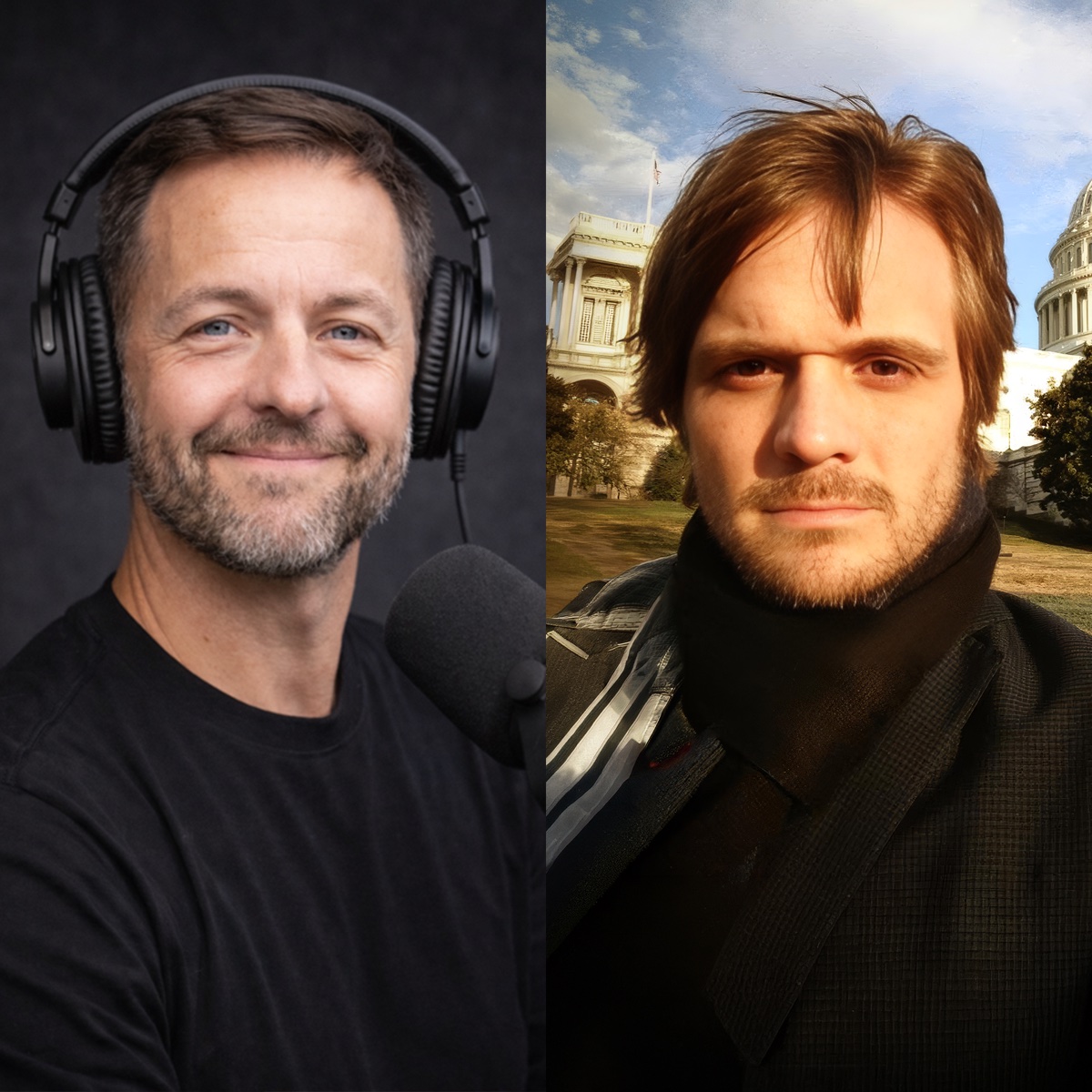
    Peter Kelly-Detwiler and Eric Pratum on The Unfolding Thought Podcast.
    Listen to Peter Kelly-Detwiler on The Unfolding Thought Podcast.
  • When the Process Outlives the Problem It Was Built to Solve

    When the Process Outlives the Problem It Was Built to Solve

    An institution can be orderly, disciplined, and increasingly ineffective at the same time.

    That kind of failure is hard to see because it still looks like competence.

    The weekly report arrives on time. Every project clears the required stage gate. The dashboard is green. The audit finds no missing fields. Yet customers are leaving, quality is slipping, decisions take longer, and the people closest to the work have learned that raising an anomaly creates more trouble than ignoring it.

    Nothing is obviously broken because the organization has become excellent at demonstrating fidelity to its process. The difficulty is that fidelity to process and fidelity to purpose are not the same thing.

    That distinction is what I kept returning to after my conversation with Eliot Frick on The Unfolding Thought Podcast. Frick makes a much larger philosophical argument about whether modernity has entered the final stage of its life. His description of late-stage systems is immediately recognizable in organizations.

    A system begins with generative power. It solves problems that could not previously be solved. Its methods become credible because they work. Over time, however, the methods become inseparable from the system’s identity. When results deteriorate, the system rarely concludes that its operating assumptions may be exhausted. It concludes that people are no longer following them faithfully enough.

    So it adds oversight, tightens compliance, and treats deviation as the cause of decline. The process that once produced the outcome becomes the ritual through which the organization proves it still deserves to exist.

    A process is a memory of a problem

    Most recurring processes began for a reason. Someone shipped defective work, exposed the company to risk, made an expensive decision without enough evidence, or forced other people to reconstruct information that should have been recorded. A checklist, review, approval, or report was created to keep that failure from recurring.

    When the process works, the original problem becomes less visible. New employees encounter the solution without experiencing the conditions that made it necessary. They know the form must be completed but not what judgment the form was meant to improve. They know who must approve a decision but not what uncertainty that approval was supposed to reduce.

    The process is therefore a kind of organizational memory. It preserves an answer after the question has faded.

    That can be useful. We do not want every generation of employees to rediscover fire safety or financial controls from first principles. But a memory becomes dangerous when the organization cannot distinguish the enduring purpose from the historical method. Conditions change while the ritual remains. Eventually, people measure whether the process occurred because they have lost the ability to measure whether it still helped.

    Success teaches a system what to stop noticing

    Every successful institution develops an operating grammar. It creates categories, incentives, reporting systems, professional language, and approved ways of reasoning. This grammar lets large groups coordinate. It also makes the organization increasingly good at recognizing what it already knows how to see.

    James March described a related tension as the difference between exploiting old certainties and exploring new possibilities. Exploitation improves what the organization already knows how to do. Exploration searches for something better but produces uncertain returns. March’s warning was that adaptive systems often refine exploitation more quickly than exploration. That can make them effective in the short run and self-destructive over time.

    The problem is not that managers foolishly choose the old over the new. The old process comes with evidence, owners, budgets, benchmarks, and political support. The alternative begins as a question. One side can produce a forecast. The other can only promise learning.

    The imbalance compounds. The more an organization invests in a process, the more careers, systems, and explanations depend on that process remaining legitimate. Evidence that fits the current model is easy to absorb. Evidence that challenges the model arrives looking incomplete, undisciplined, or irrelevant.

    A failing institution often becomes more faithful to its process as it becomes less capable of producing its purpose.

    Threat makes the rulebook harder

    Declining results ought to create curiosity. In practice, they often create rigidity.

    Barry Staw, Lance Sandelands, and Jane Dutton’s work on threat rigidity describes two common responses to adversity: information processing narrows and control constricts. Organizations rely more heavily on familiar knowledge, reduce the number of voices involved, centralize authority, and formalize procedure.

    Those responses are understandable. A threat creates urgency, and coordination can matter more during an immediate crisis. The problem comes when a short-term crisis response becomes the operating model for a system whose assumptions are failing. The organization reduces variation at precisely the moment it most needs alternatives.

    This creates a cruel feedback loop. The system produces weaker results. Leadership tightens the system to protect performance. Tighter control suppresses dissent and experimentation. The organization receives less information about why the system is failing. Its leaders become even more convinced that inconsistent execution is the problem.

    People who question the process are then easy to cast as undisciplined. Yet they may be carrying the information the process was designed to exclude.

    Collapse stories can be another form of loyalty

    Frick makes a surprising argument about stories of collapse. We assume that someone predicting the end of a system has escaped its influence. Often the opposite is true.

    The defender says the institution must be saved. The critic says it must be destroyed. Both keep the institution at the center of the imagination. The defender uses its categories to explain what must continue. The critic uses the same categories to explain what must end. Neither has necessarily described what could make the old conflict less important.

    This pattern appears in organizations whenever two factions fight over control of a process whose usefulness neither side is examining. One department wants stricter enforcement. Another wants the process abolished. Both assume the available choices are compliance or rebellion.

    The opposite of defending a failing system is not attacking it. Both can keep the system at the center.

    A more useful question is what problem the process was built to solve and whether that problem still exists in the same form. If it does, perhaps the method needs repair. If it does not, the fight over the method may be consuming attention that belongs somewhere else.

    A new system may not win the old argument

    Thomas Kuhn’s account of scientific revolutions is helpful here. Transformative ideas do not always emerge by accumulating better answers inside the accepted model. Anomalies build until a different framework can organize them.

    A new framework may not defeat the old one by its own measures. It can change which observations matter, which problems deserve attention, and what counts as an explanation. Questions that once felt decisive can become smaller or disappear.

    Organizations routinely make this transition harder than it needs to be by requiring every experiment to justify itself with the current system’s metrics. But those metrics contain assumptions about value, time, quality, and risk. An idea that tests the assumptions cannot always prove itself using measures designed to preserve them.

    This does not mean experiments should escape accountability. It means their first obligation may be to produce information rather than scale, efficiency, or immediate financial return. Leaders need to know what the experiment is trying to learn and what evidence would cause it to stop. That is different from demanding that it look like a small version of the established business.

    Leadership is the preservation of options

    Frick uses the word “aperture” for a protected opening through which unfamiliar possibilities can develop. The metaphor matters because most new ideas do not begin with enough power to survive the full force of an established institution.

    A leader does not need to believe every unconventional proposal. Most will be incomplete, and many will fail. Leadership requires preventing the current operating system from eliminating all unfamiliar ideas before any can produce evidence.

    Amy Edmondson’s research on psychological safety helps explain one condition for such an opening. Teams learn when people believe they can take interpersonal risks. That does not mean conflict disappears. It means uncertainty, error, and disagreement can enter the conversation without immediately becoming evidence that someone does not belong.

    Authenticity matters too. Research by Charlan Nemeth, Keith Brown, and John Rogers found that a genuinely held minority position produced better quantity and quality of solutions than several forms of assigned devil’s advocacy. An organization does not receive the full benefit of dissent by appointing someone to perform disagreement inside a meeting whose real boundaries remain untouched.

    Leadership does not require knowing what comes next. It requires refusing to let the present eliminate every alternative.

    What protecting an aperture looks like

    Protected exploration does not have to mean an innovation lab separated from the real work. It can begin with a few operating choices:

    • Separate delivery work from exploratory work so the two are not judged by identical expectations.
    • Give small experiments explicit sponsors, modest budgets, and expiration dates.
    • Ask which measures reflect the purpose and which merely prove compliance.
    • Record anomalies before explaining them away.
    • Invite authentic dissent from people who actually hold a different view.
    • Require experiments to produce learning before requiring them to produce scale.
    • Periodically ask what problem each recurring process still solves.
    • Retire rituals whose connection to outcomes can no longer be demonstrated.

    These practices will not reveal the next paradigm on command. That is not the promise. Their value is that they preserve variation long enough for the organization to learn from it.

    Jim Dator’s four generic futures include continuation, collapse, discipline, and transformation. Frick’s argument rearranges that sequence, but the categories remain useful. Organizations are usually comfortable planning for continuation. They can imagine collapse because fear supplies the story. They understand discipline because tightening control feels actionable.

    Transformation is harder because it cannot be fully described in the language of the system it may replace.

    The practical question is therefore not whether modernity, an industry, or a company is truly at the end of its life. The better question is diagnostic: are our institutions still producing results, or are they spending more of their energy demonstrating loyalty to the way those results used to be produced?

    A process deserves protection when it remains connected to purpose. When that connection is gone, enforcing the process more intensely will not restore it. Leadership begins by noticing the difference and preserving enough room for another possibility to become visible.

    Listen and read further

    Eric Pratum and Eliot Frick on The Unfolding Thought Podcast.
    Listen to Eliot Frick on The Unfolding Thought Podcast.
  • A Strategy That Cannot Fail Is Not a Strategy

    A Strategy That Cannot Fail Is Not a Strategy

    A leadership team asks for a strategy. What it really wants is a guarantee.

    The executives want to know which campaign will produce the forecasted revenue, which technology will create the promised efficiency, which market will grow, and which reorganization will solve the problem without creating another one. The strategist can provide research, models, experience, and a recommendation. What the room wants is certainty.

    So everyone participates in a familiar performance. Assumptions become projections. Projections become targets. Targets become commitments. The presentation grows more precise as the underlying situation remains stubbornly unpredictable.

    If the plan works, its authors were prescient. If it fails, they can point to the data, the methodology, the consultant, or the industry standard. Every decision was defensible. No one quite decided.

    This is not strategy. It is responsibility laundering.

    In his episode of The Unfolding Thought Podcast, strategist Steve Kozel describes strategy as a series of nested choices. At any altitude, he argues, strategy requires multiple feasible options, an understanding of the situation, a desired effect, and a choice among the alternatives.

    That definition carries a consequence organizations often try to avoid: if the alternatives are genuinely feasible and the future is genuinely uncertain, the choice can be wrong.

    A strategy that cannot fail is not a strategy. It is either an operating procedure, a foregone conclusion, or a story told to make uncertainty feel controllable.

    Strategy begins where prediction ends

    There are decisions for which certainty is a reasonable expectation. Payroll should run. An invoice should calculate correctly. A proven manufacturing process should stay within tolerance. When cause and effect are stable and repeatable, leaders should demand reliability.

    Strategy is different because it concerns choices whose value depends on reactions that have not happened yet. Competitors respond. Customers reinterpret what they want. Employees change the plan while implementing it. Technology alters the economics. The choice itself changes the environment in which its success will be judged.

    Frank Knight drew a useful distinction in Risk, Uncertainty, and Profit. Risk describes situations in which probabilities can be estimated. Uncertainty describes situations in which the probabilities themselves are not reliably knowable.

    Most organizations are comfortable managing risk. They create ranges, reserves, scenarios, and controls. They struggle when uncertainty cannot be converted into a percentage. The absence of a reliable probability feels like the absence of management.

    But uncertainty is not a temporary defect in the strategy process. It is the condition that makes strategy necessary. If the correct action and its outcome were already known, the organization would not need a strategist. It would need an operator.

    A plan becomes strategy only when it contains a consequential choice and accepts the possibility of being wrong.

    Certainty has a job inside the organization

    The demand for certainty is not simply a reasoning error. It serves an organizational purpose.

    A confident forecast lets a project receive funding. A familiar methodology reassures procurement. A famous consultancy gives an executive cover. A dashboard suggests control. A best practice allows everyone to say the decision met the accepted standard.

    These things reduce personal exposure even when they do not reduce uncertainty. That difference matters.

    Kozel calls the deeper pattern “Fear OS,” an unspoken operating system in which people are expected to maintain control, avoid failure, produce positive metrics, and explain the world as though it were more rational than it is. Under those conditions, the safest decision is often the one whose failure will be easiest to defend.

    This helps explain why a company can be filled with intelligent people and still repeat choices no one strongly believes in. Each participant is responding rationally to a local incentive. The analyst avoids an unsupported recommendation. The manager protects the quarterly number. The executive selects the respectable vendor. The board receives a forecast with enough detail to feel governed.

    The organization has not eliminated uncertainty. It has distributed responsibility so thoroughly that the eventual result will seem to belong to no one.

    Best practice cannot create strategic advantage

    Best practices are valuable when the goal is dependable execution of a known activity. I want the people operating an airplane, administering medication, or securing financial data to use procedures that have survived serious scrutiny.

    The problem begins when leaders ask best practice to answer a strategic question.

    Michael Porter’s explanation of strategy centers on a unique position, trade-offs, and fit among activities. Strategy requires choosing what not to do. An organization that copies the accepted practices of its category may become more competent. It does not become meaningfully different.

    This is the contradiction Kozel surfaces in the episode. Organizations want a proven solution and an advantage. They want evidence without experiments. They want innovation without the waste, ambiguity, and failed attempts through which new knowledge is produced.

    If every competitor follows the same research, hires the same experts, adopts the same technology, and optimizes against the same benchmark, best practice becomes a convergence mechanism. It improves the category while compressing the differences within it.

    Best practice can improve execution. It cannot explain why the company should win.

    An experiment is not an excuse

    None of this means leaders should become casual about evidence or celebrate failure as a cultural virtue.

    “We are experimenting” can become its own form of responsibility laundering. Teams can use the language of learning to excuse poor preparation, unclear goals, oversized bets, and projects that continue long after the original hypothesis has collapsed.

    A real experiment is more demanding than a confident plan because it must say what is not known and how the organization intends to learn it.

    Amy Edmondson describes an intelligent failure as an undesired result in new territory. The attempt should pursue a meaningful goal, rest on an informed hypothesis, and be no larger than necessary to produce the needed knowledge.

    Those constraints turn experimentation from a slogan into a management discipline.

    • What specific assumption are we testing?
    • What evidence would increase or reduce our confidence?
    • What is the smallest credible action that can produce that evidence?
    • What downside are we exposing, and who has agreed to it?
    • When will we stop, expand, or change direction?
    • Where will the learning alter a decision, budget, process, or belief?

    The purpose of an experiment is not to make failure harmless. It is to buy information at a price the organization can afford.

    Learning must reach the assumptions

    Organizations often claim to learn while protecting the belief that produced the disappointing result.

    A campaign misses its target, so the team changes the creative. A product struggles, so marketing receives a larger lead goal. A transformation stalls, so managers schedule more training. The response corrects activity without reconsidering the governing assumption.

    Chris Argyris distinguished this kind of correction from deeper learning. Single-loop learning asks how to perform the existing approach more effectively. Double-loop learning asks whether the underlying goals, rules, and assumptions still deserve to govern the work.

    In his work on defensive reasoning, Argyris argued that capable professionals often respond to difficulty by avoiding examination of their own contribution to it. Expertise can make the defense more articulate without making it less defensive.

    This is why adding more data does not necessarily make an organization more empirical. Data can test a claim. It can also decorate a conclusion the organization is unwilling to reconsider.

    Double-loop learning creates a more uncomfortable review:

    • Did the execution fail, or was the strategic premise wrong?
    • Are we improving the offer, or only improving the way we promote it?
    • Does the metric represent value, or is it merely easy to make rise?
    • Are we asking a team to solve a problem whose cause sits above its authority?
    • What would we stop believing if we took this result seriously?

    If every review ends with a better way to execute the same idea, the organization is not learning strategically. It is becoming more efficient at defending the past.

    Exploitation wins the quarterly argument

    Even leaders who understand this problem face a structural disadvantage.

    James March’s classic paper on exploration and exploitation in organizational learning describes the tension between refining what an organization already knows and searching for new possibilities. Exploitation produces clearer, nearer, and more predictable returns. Exploration is uncertain, delayed, and frequently disappointing.

    That asymmetry gives the known approach an advantage in every budgeting cycle. The established product has revenue. The existing channel has benchmarks. The familiar process has owners. The new option has a hypothesis.

    March warned that adaptive processes can become effective in the short run and self-destructive in the long run because organizations refine exploitation faster than exploration. The company becomes increasingly competent at a world that is becoming less relevant.

    This is another reason certainty can be dangerous. It does not merely misdescribe the future. It systematically moves resources toward whatever already has a history.

    The most dangerous experiment is the one an organization is already running while pretending the outcome is guaranteed.

    What honest strategy sounds like

    An honest strategy does not replace confidence with vagueness. It makes confidence proportional to evidence.

    It names the choice. It explains why this option is preferable to other feasible options. It distinguishes what is known from what is assumed. It defines the risk the organization is accepting. It makes clear who owns the decision. It identifies the earliest evidence that would justify changing course.

    It also separates commitments from predictions.

    A leader can commit to allocating resources, protecting an experiment, reviewing evidence, and changing direction when the premise no longer holds. A leader cannot honestly commit that customers, competitors, employees, regulators, and technology will behave according to the forecast.

    This kind of strategy can sound less impressive in the room. It replaces false precision with boundaries, hypotheses, and decision rules. It admits that expertise improves a choice without making the future obedient.

    That is not weaker leadership. It is leadership willing to remain responsible after the illusion of control has been removed.

    The choice comes before the certainty

    Organizations do not need more comfort with failure in the abstract. They need a more precise relationship with uncertainty.

    Preventable mistakes should be prevented. Known processes should be reliable. Large irreversible choices deserve more scrutiny than small reversible ones. Evidence should shape judgment wherever evidence exists.

    But strategy cannot wait until the uncertainty has disappeared. By then, the choice may be obvious, the advantage may be gone, or the organization may have spent years perfecting the wrong thing.

    The discipline is to decide without pretending to know, act without becoming reckless, and learn without protecting the assumptions that made the action possible.

    Strategy is not a promise that the future will obey. It is a commitment to choose, learn, and remain accountable before certainty arrives.

    Listen and read further

    Episode artwork for Steve Kozel’s appearance on The Unfolding Thought Podcast.
    Listen to Steve Kozel on The Unfolding Thought Podcast.
  • Organizations Cannot Change Until They Grieve What Is Ending

    Organizations Cannot Change Until They Grieve What Is Ending

    A leadership team learns that the future it planned for is not going to arrive.

    The market moved. The merger did not create the expected value. A technology changed the economics of the business. Customers stopped behaving the way the strategy assumed they would. The product that once organized the company’s identity is becoming less important every year.

    So the leaders schedule a strategy session.

    They bring in new data, debate scenarios, revise the forecast, rename a few priorities, and leave with a transformation plan. Yet the plan still depends on the future they were supposed to have abandoned. The same products must remain central. The same people must retain authority. The same capabilities must be protected. The same story about why the organization matters must survive.

    The strategy is new. The future underneath it is not.

    In her episode of The Unfolding Thought Podcast, futurist and death doula Juli Rush brings an unusual idea into the work of foresight: sometimes a future has to be treated as something that is dying.

    That language may sound too intimate for a strategy meeting. I think that is precisely why it is useful.

    Organizations are usually comfortable discussing change as an analytical problem. They are much less comfortable discussing it as a loss. But a future can disappear before a company, community, or person has emotionally and structurally stopped living inside it. When that happens, more evidence does not necessarily create movement. The organization may understand what has changed and still be unable to act as though it understands.

    A plan is never just a plan

    We like to imagine that a strategic plan is a neutral description of choices, resources, and expected results. It is also a collection of promises.

    It promises a salesperson that a market will continue to value the relationships she spent twenty years building. It promises a product leader that the expertise which made him important will remain important. It promises an executive that the organization he knows how to lead will still exist. It promises employees that the sacrifices they made were part of a story that leads somewhere.

    Those promises are rarely written in the plan. They are still real.

    This is one reason organizations can acknowledge a change intellectually while rejecting its consequences operationally. They accept that the market is different, then preserve the budget built for the old market. They say the business must become more customer-centered, then leave decision rights with the functions furthest from the customer. They describe a legacy product as declining, then require every new investment to protect its revenue, status, and internal constituency.

    The future in a strategy is not just a forecast. It is a promise about what will matter, who will matter, and which sacrifices will have been worthwhile.

    Research on organizational identity helps explain why this is so difficult. In one study of employees going through a corporate takeover, people adjusted better when they could experience either continuity with a valued identity or the gain of a credible new one. When neither path was available, strong identification with the old organization could deepen the loss.

    The implication is not that leaders should preserve everything people value. That would make meaningful change impossible. It means that ending a plan can also disturb status, competence, community, memory, and identity. If leaders discuss only the business case, they leave the rest of the transition to happen underground.

    Facts cannot end a future people are still living inside

    When change stalls, leaders often assume the missing ingredient is information.

    They commission another market study. Add detail to the transformation roadmap. Ask finance for a more precise forecast. Build a larger dashboard. Bring in a consultant to repeat what people inside the organization have already been saying.

    Sometimes better evidence is exactly what is needed. Sometimes the evidence has already done its job.

    The problem is that evidence can tell us a choice is no longer working without dissolving our attachment to it. In Barry Staw’s classic research on escalation of commitment, people became more willing to invest in a failing course of action when they felt personally responsible for having chosen it. More information did not automatically produce better correction. Responsibility could become a reason to defend the past.

    Organizations make this effect collective. A strategy acquires sponsors, specialists, reporting lines, incentives, rituals, and language. Entire careers grow around making it appear sensible. By the time the evidence turns, the organization is not reconsidering an isolated decision. It is reconsidering part of itself.

    This is why a declining initiative can survive years of disappointing results. Each round of investment is described as the final adjustment needed to prove the original idea. Each delay protects the people involved from having to decide what the ending means.

    There is an important difference between uncertainty and ambiguity. Uncertainty means we do not yet know which outcome will occur. Ambiguity can mean we do not even agree on what is ending, what remains, or what the loss should be called.

    Psychologist Pauline Boss developed the idea of ambiguous loss to describe losses that resist clean resolution. The organizational version is obviously not equivalent to the disappearance or psychological absence of a loved one. The concept is still useful. A company can announce a transformation while leaving the former system half-alive. People lose familiar roles but continue to be measured against their old responsibilities. A strategy is declared over, but no one can say which commitments are actually released.

    Nothing has clearly died, so nothing can be fully grieved or replaced.

    Resistance is often grief with an operational vocabulary

    In business, grief rarely announces itself as grief.

    It sounds like a request for more proof. A concern about timing. A debate over scope. A warning that customers are not ready. An insistence that the old process needs one more quarter. A proposal to run the new model without taking resources from the old one.

    Any of those objections might be valid. Treating every disagreement as an emotional reaction is a convenient way for leaders to avoid criticism. But treating every objection as an analytical judgment is equally convenient. It allows the organization to negotiate indefinitely with a future that has already left.

    Resistance is often grief with an operational vocabulary.

    The popular habit of assigning organizational change to a neat sequence of grief stages is not especially helpful. Grief is not a predictable staircase, and employees are not patients to be managed through denial on the way to acceptance. People can support a strategic decision and still mourn what it removes. They can be excited by a new role and miss the competence they felt in the old one. They can disagree with the decision for sound reasons while also feeling threatened by it.

    The useful move is not diagnosing people. It is making the losses discussable.

    What will employees no longer be proud of? Which relationships will become less central? What expertise will carry less authority? Which customer, community, or tradition will feel abandoned? What story about the organization will no longer be true?

    If leaders cannot answer those questions, they probably do not yet understand the change they are asking other people to make.

    Hospice: stop treating the incurable as a turnaround

    Rush has since formalized her work as a framework of Hospice, Vigil, and Compost. Those three words describe work that conventional strategy often skips.

    Hospice begins with a difficult distinction: what needs more effort, and what needs an ending?

    Leaders are rewarded for fixing, growing, and sustaining things. Ending something can feel like admitting that the prior investment was mistaken. That makes it tempting to label every failing system a turnaround opportunity.

    But purpose and mechanism are not the same. A university can remain committed to learning while ending a program. A company can remain committed to customers while retiring the product through which it once served them. A nonprofit can remain committed to a need while admitting that its intervention no longer produces the intended result.

    Hospicing a future does not mean declaring the work worthless. It means stopping the attempt to make one mechanism immortal.

    Practically, I would ask leaders to make the ending specific:

    • Which assumption no longer deserves to organize the strategy?
    • Which product, process, role, or investment will stop?
    • What evidence made that decision necessary?
    • What would cause the organization to reconsider?
    • Who has the authority to prevent the ending, and for how long?

    Without that specificity, “letting go” becomes another slogan sitting on top of unchanged budgets and power.

    Vigil: stay with the loss long enough to learn

    Organizations are often impatient with the space between an ending and a replacement.

    A product is discontinued on Monday and the new growth narrative is presented on Tuesday. A reorganization is announced with a slide explaining why everyone should be excited. A founder leaves, and the company immediately declares that the culture will not change.

    That speed is meant to create confidence. It can also communicate that what people invested in the old future is inconvenient.

    A vigil does not require months of therapeutic meetings or ceremonial language that feels false to the organization. It requires enough attention to distinguish what should end from what should be honored.

    What did the old strategy make possible? Which capabilities did it create? What did people learn while making it work? Which relationships and values should survive its end? What harm did it cause that should not be romanticized?

    This matters because organizations frequently make one of two mistakes. They preserve the old system so completely that the new future cannot emerge, or they denounce the old system so completely that people who built it hear the change as an indictment of their contribution.

    Neither produces honest learning.

    The vigil is where a company can say, “This served us, and it cannot take us where we need to go.” Both halves of that sentence matter.

    Compost: carry forward what can still feed the system

    Compost is not preservation. The original form does not survive.

    What survives are elements that can become useful in a different system.

    A legacy product may contain customer knowledge the new team needs. A discontinued program may have built a community that should not disappear with its budget. A failed strategy may reveal a capability the organization undervalued because it was attached to the wrong outcome. A departing leader may carry relationships and tacit knowledge that cannot be transferred through a folder of documents.

    Composting asks a harder question than, “What lessons did we learn?” Organizations answer that question too easily. They produce a list, thank the team, and return to work.

    The better question is, “Where will the lesson live?”

    Will a decision rule change? Will a metric disappear? Will authority move? Will a capability receive funding? Will a hiring profile change? Will a customer promise be rewritten? If the old strategy taught something but nothing in the operating system changes, the organization did not compost the experience. It buried it.

    This cannot become change-management theater

    There is an obvious danger in bringing the language of grief into organizational life. Leaders can use it to make a decision feel humane without making the decision itself more honest.

    A ritual cannot compensate for a deceptive explanation. Listening sessions do not create dignity if the outcome was predetermined and leaders pretend otherwise. Honoring the past is not meaningful if employees absorb every cost while executives protect their own roles. Asking people to grieve can become insulting when the organization refuses to name who chose the change and who benefits from it.

    If nothing stops, loses funding, or gives up authority, the ending was symbolic.

    The work of ending a future does not replace strategy. It makes strategy testable.

    A responsible ending should show up in the allocation of money, attention, people, and decision rights. It should release someone from an obsolete expectation. It should create room for a new experiment that the old strategy would have crowded out. It should make clear which part of the organization’s identity is a purpose worth carrying and which part was only one temporary expression of that purpose.

    The most strategic question may be: what has ended?

    Most strategy processes begin with some version of, “What future do we want?”

    It is a necessary question. It may not be the first one.

    Before an organization can choose a future, it may need to identify the future it is still trying to recover. The market position that is not coming back. The growth curve that depended on temporary conditions. The career ladder built for work that no longer exists. The cultural story that stopped matching employees’ experience. The strategy that succeeded once and became an identity long after it stopped being an advantage.

    Rush’s insight is not that organizations should become preoccupied with endings. It is that beginnings become more credible when endings receive real attention.

    The future is not built on an empty site. It is built amid structures, promises, loyalties, and expectations that already occupy the ground. Some deserve to be restored. Some deserve to be repurposed. Some deserve a careful ending.

    The strategic discipline is knowing which is which, and having the courage to make the distinction operational.

    Sometimes the most responsible beginning looks a little like a funeral.

    Listen and read further

    Episode artwork for Juli Rush’s appearance on The Unfolding Thought Podcast.
    Listen to Juli Rush on The Unfolding Thought Podcast.