What happens when a technology company explores building the same data center in several states, encourages each one to compete for the project, chooses the place that offers the best combination of price and speed, and walks away from the rest?
Long before the decision is made, utilities and communities have already begun studying substations, transmission, generation, reserve capacity, land, incentives, and staffing. That planning costs real money. Some equipment and contracts may need to be reserved years before anyone knows whether the server racks will arrive.
Who bears that cost when the company chooses somewhere else? Usually not the company that created the competition.
The company keeps the option to change its mind. Utilities, communities, and ratepayers can be left with the cost of preparing for a future that never arrives.
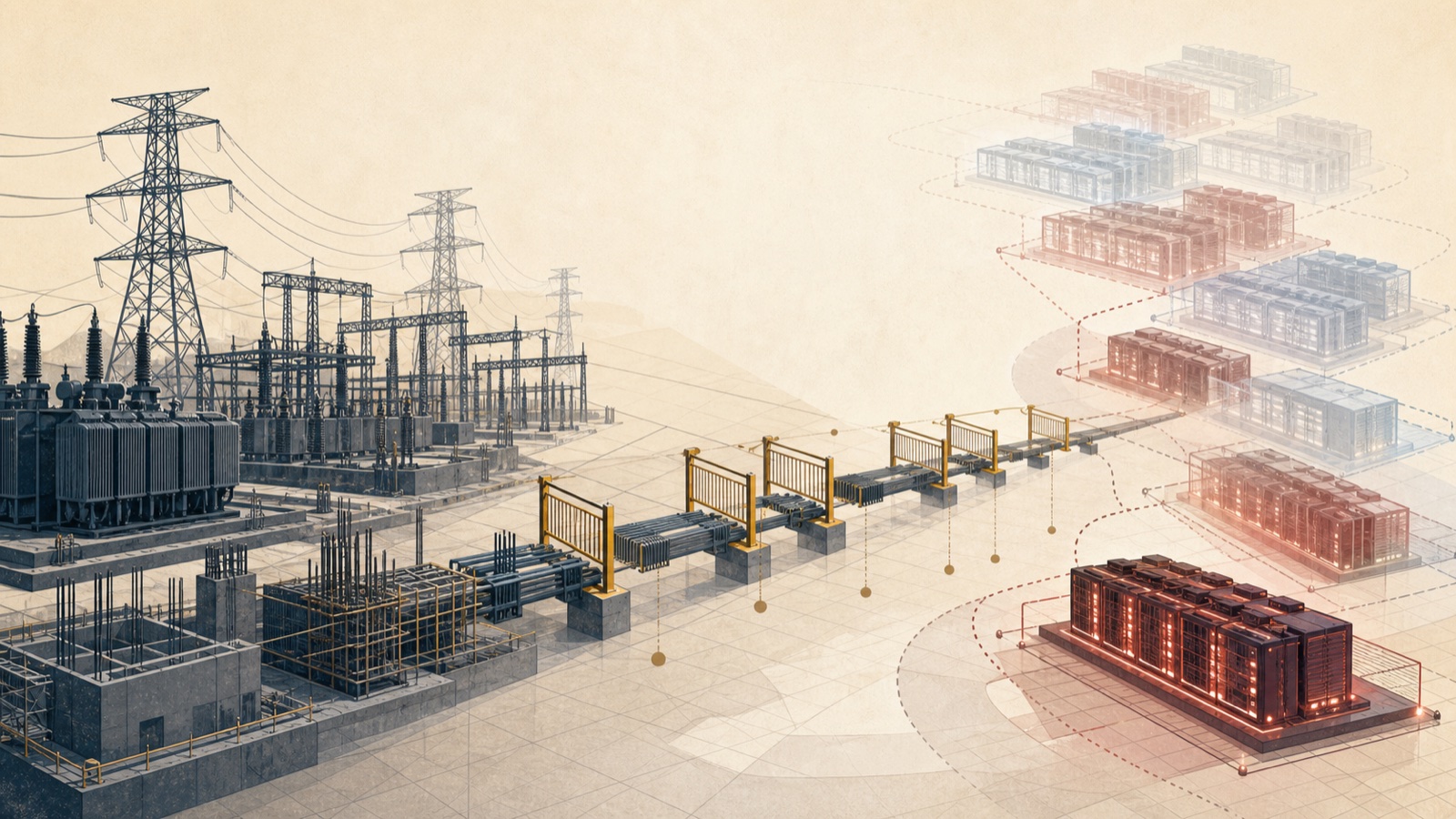
That is the less obvious infrastructure problem underneath the AI boom. It is not simply that data centers need enormous amounts of electricity. It is that technology companies can make fast, reversible bets while the systems competing to serve them must begin making slow, difficult-to-reverse commitments.
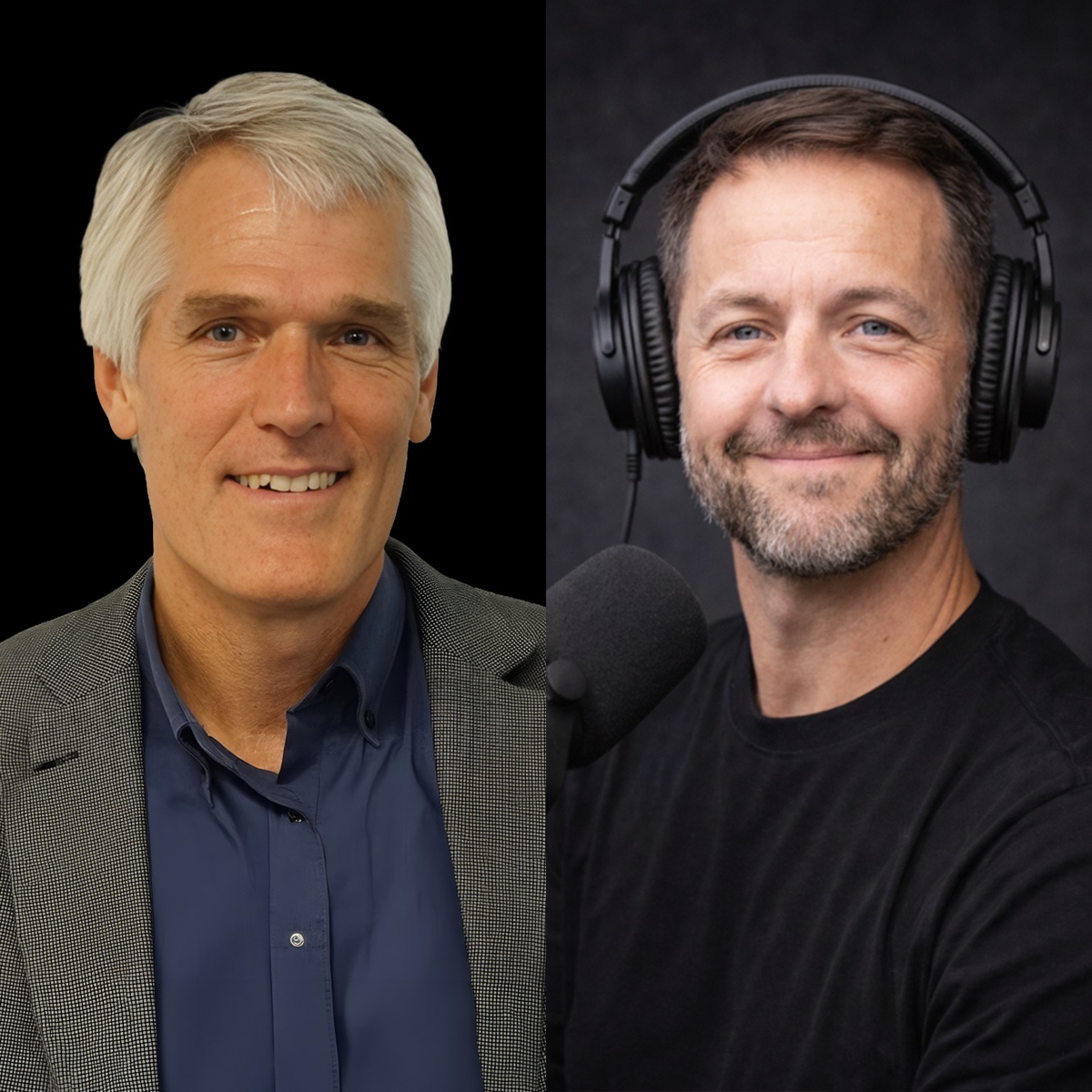
That was the tension I kept hearing in my interview with Peter Kelly-Detwiler on The Unfolding Thought Podcast. Peter has spent decades in electricity markets. He describes data centers that place enormous interconnection requests because access to power may determine whether an AI investment succeeds. He also describes utilities trying to distinguish committed demand from speculative demand when the cost of guessing wrong can remain on customer bills for decades.
AI moves in quarters. The grid moves in decades.
The cloud has encouraged us to think of computing as nearly weightless. A company adds capacity, moves a workload, or releases a new model, and the change appears to happen everywhere at once. The physical system beneath that experience moves differently.
Power plants, transmission corridors, and substations are not software deployments. They require land, equipment, permits, financing, engineering, and public consent. Once built, they are expected to serve customers long enough to recover their cost.
Meanwhile, the demand forecast is changing at software speed. Lawrence Berkeley National Laboratory’s 2025 update estimated that U.S. data centers used about 4.7 percent of the nation’s electricity in 2024. Its reference case reaches 11.8 percent in 2030, while the modeled range runs from 9.5 to 15.3 percent. The authors caution that those bounds are not a confidence interval and that the most extreme assumptions are unlikely to occur together. The uncertainty is not a flaw in the research. It is evidence of the problem planners face.
The North American Electric Reliability Corporation’s 2025 long-term assessment says data centers account for most of the projected increase in electricity demand over the next decade. It also describes projects that slow down, disappear, or consume far less than originally requested. In Texas, planners reduced projected demand from newer data centers after operating sites used, on average, about half of the capacity they had requested.
The same forecast can therefore contain a real signal and a large amount of noise. The system may need much more power. It does not follow that every proposed megawatt will appear where and when an application says it will.
A request for power is not the same as demand
A developer benefits from preserving options. If it can apply for capacity in several regions, it can compare timelines, incentives, energy prices, regulatory conditions, and construction risks before choosing a site.
That is rational behavior for the developer. It becomes a system problem when every option is treated as a commitment.
If five utilities each prepare to serve the same project, society may reserve equipment, engineering time, and capital for four facilities that will never exist. If every utility heavily discounts every request, the one project that is real may arrive before the grid is ready.
Traditional forecasting tries to estimate which future is most likely. That is necessary, but it cannot answer the more important governance question: who should carry the cost when the forecast is wrong?
The problem is not uncertainty. The problem is allowing one party to create uncertainty while another party pays for it.
A forecast should not be a blank check
When a utility builds dedicated infrastructure for a large customer, the customer is receiving something more valuable than electricity. It is receiving an option on future capacity.
An option has value even if it is never exercised. Equipment may be ordered. Other customers may be told that capacity is unavailable. A transmission plan may be changed. Capital that could have served another need may be committed.
The contract should make that option visible. Deposits, milestone payments, minimum-demand charges, exit fees, and long-term commitments are not punishments for innovation. They are ways to keep a private option from becoming a public liability.
This principle is now moving into regulation. The Federal Energy Regulatory Commission has called for cost-recovery agreements that protect other customers if infrastructure is built for a large load that does not arrive as planned. The point is straightforward: the party best positioned to judge whether a project is real should retain a meaningful share of the risk that it is not.
A forecast should guide an investment. A contract should decide who carries the risk if the forecast is wrong.
Speed to power has a price
Peter uses the phrase “compute heat rate” for the electricity price at which the value of additional computation no longer justifies operating the data center. The concept matters because it reveals how differently an AI company and an ordinary customer may value the same megawatt-hour.
For most businesses and households, electricity is a meaningful operating expense. For a company racing to train or deploy a valuable model, electricity can be the input that determines whether billions of dollars of chips produce revenue or sit idle.
That can make time-to-power more important than the price of power. It explains the interest in co-located generation, private power plants, batteries, and temporary arrangements that let a project begin operating before the larger grid connection is ready.
There is nothing inherently wrong with paying for speed. The problem comes when the price is hidden in another customer’s bill, in reduced reliability, or in infrastructure that remains after the business case disappears.
The best new load may be a flexible one
A data center is often described as a load, as though it were simply an enormous appliance. That leaves out an important possibility. Some computational work can move in time, move to another location, or briefly draw on onsite storage and generation.
That flexibility can be valuable because the grid is built for its most difficult hours, not its average hour. A facility that avoids adding to the annual peak can consume more total electricity without requiring the same amount of new capacity.
Electric Power Research Institute modeling found that shifting portions of data-center demand away from constrained hours reduced peak demand, the need for firm capacity, and the average price of electricity supplied to the facilities. EPRI is also testing operational approaches through its Data Center Flexible Load Initiative.
Flexibility should not be treated as a hopeful description. It should be a measurable operating commitment. Different workloads have different latency, availability, and geographic constraints. A promise to reduce demand is useful only if the grid operator knows how much, how quickly, for how long, and with what consequences.
The same is true of reliability. NERC’s work on emerging large loads warns that data centers can change consumption quickly enough to create risks the grid was not designed to manage. The facility cannot claim the reliability benefits of grid connection while treating its own electrical behavior as someone else’s problem.
Build what remains useful when the forecast is wrong
Uncertainty does not justify paralysis. It should change the order in which investments are made.
Some improvements create value across many possible futures. Better sensors and dynamic line ratings can reveal when existing transmission lines safely carry more power. Advanced conductors can move more electricity through an existing right-of-way. Storage can reduce short peaks and improve power quality. More planners, engineers, and regulatory capacity can shorten decisions without pretending the decisions are simple.
The Department of Energy describes these grid-enhancing technologies as faster ways to unlock capacity from infrastructure that already exists. They do not eliminate the need for new generation and transmission. They buy time, improve utilization, and remain useful if a particular data center never appears.
Larger dedicated investments should follow stronger evidence of commitment. They can be staged against financing, land control, equipment orders, construction progress, and binding load agreements. The evidence required should rise with the irreversibility of the decision.
- How much of the requested load is supported by committed capital and construction milestones?
- Which investments benefit the wider system and which exist only for this customer?
- What flexibility can the customer demonstrate and contractually guarantee?
- Who pays if the project arrives late, operates below forecast, or disappears?
- Which decisions can be staged, and which would be difficult to reverse?
The grid does not need certainty about AI. It needs commitments proportional to the uncertainty AI creates.
Planning is becoming a form of risk design
The AI electricity debate is often framed as a choice between acceleration and restraint. Build everything quickly and risk higher costs, stranded assets, and reliability problems. Move slowly and risk losing investment, innovation, and economic opportunity.
That framing is too narrow. The more useful question is how to make a sequence of decisions that remains sensible across several plausible futures.
We do not need to know exactly how many proposed data centers will be operating in 2035. We need connection rules that distinguish curiosity from commitment. We need contracts that put project risk close to the party creating it. We need flexible operating agreements that make new demand useful to the grid when possible. We need public investments that retain value even when a private forecast fails.
AI may transform the economy. It may also pass through investment cycles that make today’s confident forecasts look naive. The grid has to function in either case.
That is why the deepest infrastructure skill is no longer prediction. It is designing commitments, options, and safeguards so that we can build before uncertainty disappears without pretending uncertainty has disappeared already.
A household should not become an involuntary venture investor merely because someone else’s investment happens to plug into its grid.
Listen and read further
- AI Companies Are Building Their Own Power Plants. Here’s Why., The Unfolding Thought Podcast with Peter Kelly-Detwiler
- A Metric Related to Data Centers and Electricity that May Matter, Peter Kelly-Detwiler
- United States Data Center Energy Usage Report: 2025 Update, Lawrence Berkeley National Laboratory
- 2025 Long-Term Reliability Assessment, North American Electric Reliability Corporation
- Remarks on Large Load Cost Recovery Agreements, Federal Energy Regulatory Commission
- Powering Data Centers: U.S. Energy System and Emissions Impacts of Growing Loads, Electric Power Research Institute
- Large Loads Action Plan, North American Electric Reliability Corporation
- Smart Transmission Tools Modernize America’s Power Grid, U.S. Department of Energy